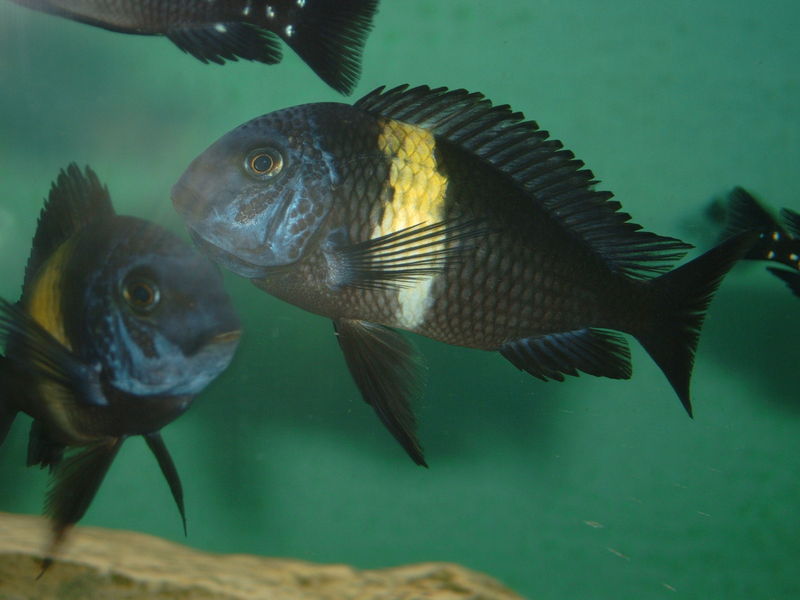
Tropheus are, on paper, the perfect fish for water like mine. They come from Lake Tanganyika, the hardest and most alkaline of the great Rift Lakes, so my 22 to 23 °dGH tap that soft-water fish hate is close to what they evolved in. They are stunning, they graze the rocks all day like little goats, and a settled colony in a big tank is one of the finest sights in the hobby. So why do I steer most people away from them? Because Tropheus punish two mistakes harder than almost any other cichlid: the wrong diet and the wrong group size. Get either wrong and you will not get a warning, you will get dead fish.
This is not a beginner fish, and I want to be straight about that before you read on. If you are new to hard-water cichlids, start with shell dwellers or an electric yellow and come back to Tropheus once you have a couple of years and a bigger tank behind you.
Free PDF
Free aquarium water cheat sheet (PDF)
Grab the one-page reference for your tank: target ranges for pH, hardness, ammonia, nitrite and nitrate, plus a plain walkthrough of the nitrogen cycle. No fluff, unsubscribe any time.
Free, unsubscribe any time. The download starts as soon as you sign up.
Where they come from and why hard water suits them
Lake Tanganyika sits at a pH around 8 to 9 with very hard, mineral-rich water and remarkable stability. Tropheus live in the rocky shallows, grazing the film of algae and tiny organisms that coats the rocks, known as aufwuchs. That rocky, high-oxygen, hard-water world is what you are trying to recreate, and if your tap runs hard and alkaline you are already most of the way there.
My tap comes out around pH 7.2, which is a touch low for them, but it climbs and holds in the high 7s to low 8s over rock and Tanganyikan substrate without any fuss. I do not chase pH with chemicals; I let the hard water and the right substrate do the work. If you want the detail on holding a stable high pH for Rift Lake fish, I wrote it up in buffering hard water for Rift Lake tanks. Aim for pH 7.8 to 9, hardness comfortably into the teens of °dGH or higher, and a temperature of 24 to 27 °C. Soft-water keepers have to work hard to get here; hard-water keepers get it for free, which is the whole reason this fish belongs on a site like this one.
The diet that kills them: understanding bloat
This is the single most important section, so read it twice. Tropheus are strict herbivores with an extraordinarily long, specialised gut built to process algae, and a matching inability to handle rich, protein-heavy food. Feed them the wrong thing and they develop what keepers call Tropheus bloat: a digestive collapse that swells the belly, puts the fish off food, and very often kills it before you realise anything is wrong. Bloat is the number one killer of these fish in captivity, and it is almost always down to diet or overfeeding.
The rules I keep to without exception:
- Feed a herbivore diet. Spirulina flakes, a quality vegetable-based cichlid pellet, and algae-based foods. That is the staple, all day, every day.
- No high-protein foods. Skip beefheart entirely, and go very easy on protein-rich frozen foods like bloodworm and brine shrimp. These are what trigger bloat. Some keepers avoid them completely, and honestly that is the safe call.
- Little and often, never a big meal. Several small feeds across the day suit their grazing gut far better than one large one. A stuffed Tropheus is a Tropheus at risk.
- A fasting day helps. One day a week with no food gives the gut a rest and does them no harm at all.
Bloat can be worsened by stress and poor water quality too, which is why the colony size and water changes below are not optional extras. If a fish does bloat, isolation and treatment are difficult and success rates are poor, so with Tropheus the entire strategy is prevention. This is a general overview of a health issue, not veterinary advice; my write-up on African cichlid bloat goes further into the condition itself.
The book behind Lagonia
The Hard Water Aquarium
My practical guide to working with hard, alkaline tap water instead of fighting it: reading your water, choosing and setting up the tank, and keeping and breeding the fish that thrive in it, from livebearers to Rift Lake cichlids and shell-dwellers.
Ad · Amazon affiliate links. I earn a small commission on a purchase, at no extra cost to you.
Why you need a crowd, not a pair
Here is the second trap. Tropheus are relentlessly aggressive towards their own kind, and males in particular will chase and harass constantly. The counterintuitive fix is to keep a lot of them. In a large group the aggression is spread thin across many targets, so no single fish gets picked to death. In a small group, the dominant fish concentrates its bullying and wipes out the rest.
The practical guidance from experienced keepers, which matches what I have seen, is to keep a colony of at least 12 to 15 fish, and more is better. The usual approach is to buy 20 to 30 young fish and grow them on together, then let the group settle into its own hierarchy. Adults are expensive and do not accept newcomers kindly, so you build the colony young and you build it once.
That crowd needs space. A single-species Tropheus colony really wants a tank of around 350 to 450 litres as a floor, and more if you can manage it. This is not a fish for a 100 litre tank, whatever a shop tells you. Run your planned group and tank through the stocking calculator and check the real volume with the volume calculator before you commit, because underestimating either is how colonies fail.
Tank setup
Give them rock. Piles of stone stacked into caves and broken sight-lines let subdominant fish get out of view, which takes the heat out of the aggression. A sand substrate suits their grazing and their digging, and pale Tanganyikan sand looks the part. My Tanganyika tank setup guide covers the rockwork and aquascaping side properly.
Two non-negotiables beyond the rock: strong filtration and high oxygen. Tropheus come from oxygen-rich water and produce a lot of waste for their size given how much they eat, so over-filter rather than under-filter and keep good surface movement. Then back it up with generous water changes, 30 to 50 percent weekly, to keep nitrate down and conditions stable. Unstable water quality feeds bloat, so this genuinely matters. If your nitrate creeps up between changes, my guide on lowering nitrate will help.
Species and choosing stock
There are many Tropheus, and the two you will meet most often are Tropheus moorii, which comes in a huge range of regional colour forms, and Tropheus duboisi, the black fish with white spots as juveniles that shift to a blue head and yellow band as adults. Care is essentially the same across the genus.
One rule matters more than which you pick: do not mix colour forms or geographic variants in the same tank. They can interbreed and produce muddy, worthless hybrids, and mixing also tends to worsen aggression. Choose one form, buy a proper group of that one form from a single good source, and keep it pure. That also means keeping Tropheus in a species-only tank, which is what almost all serious keepers do, because their aggression and their special diet do not play nicely with typical community or even other Tanganyikan fish.
Breeding
If your colony is healthy, breeding tends to happen on its own. Tropheus are maternal mouthbrooders: the female holds the fertilised eggs and then the fry in her mouth for around four weeks, not eating properly the whole time, before releasing a small number of large, well-developed babies. The male takes no part beyond spawning and will chase the female off afterwards.
Two honest notes. Sexing them is genuinely hard; there are no reliable external differences, which is exactly why you grow on a big group and let pairs sort themselves out rather than trying to buy a set ratio. And a brooding female is under real strain, so a heavily stripped or harassed female is at risk, which loops back once again to keeping a large enough colony that no single fish carries all the pressure.
Is Tropheus the fish for you?
If you have hard, alkaline tap water, a tank of 350 litres or more, the patience to feed a strict herbivore diet with discipline, and the budget for a colony of 15 to 30 fish, then Tropheus are one of the most rewarding hard-water cichlids you can keep, and your water is already on their side. If any of those pieces is missing, this is the wrong fish and there is no shame in choosing something more forgiving. I keep coming back to Tanganyikans precisely because my water suits them; for the gentler end of that same lake, look at cyprichromis or the shell dwellers before you take on the goats of the rock zone.
The figures here are working guides from my own tanks and from keepers I trust, not hard laws. Tanks, colonies and individual fish all vary, so watch your own animals and let their behaviour and condition steer your decisions.