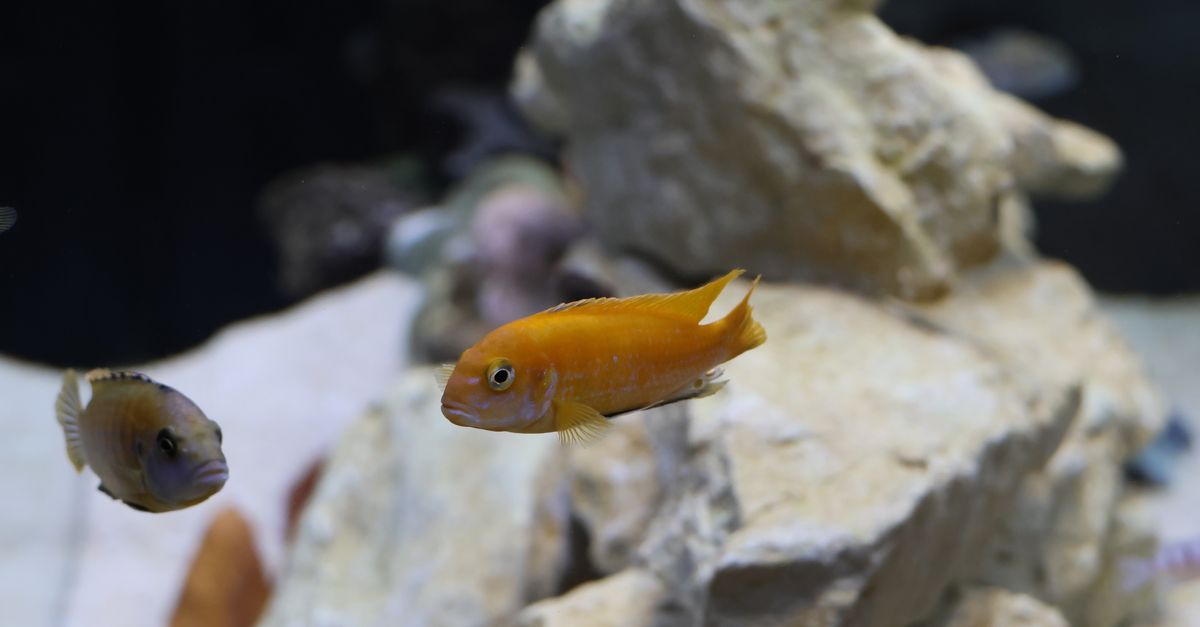
The tank I look at most often is not my biggest or my prettiest. It is a low, wide box sitting on a shelf in the bathroom, holding maybe fifty litres of very hard water and a floor covered in empty snail shells. Inside it, a colony of the smallest cichlid in the world runs its own affairs with almost no help from me. These are shell-dwelling cichlids, Neolamprologus multifasciatus, and after several years of keeping them I am still not bored of watching. This is the practical account of how I keep the colony, what my hard tap water does for it, and the handful of things I got wrong before I got them right. If you want the full species profile, I have written one already on Neolamprologus multifasciatus; this piece is the lived version, the day to day of actually running a shellie tank.
Free PDF
Free aquarium water cheat sheet (PDF)
Grab the one-page reference for your tank: target ranges for pH, hardness, ammonia, nitrite and nitrate, plus a plain walkthrough of the nitrogen cycle. No fluff, unsubscribe any time.
Free, unsubscribe any time. The download starts as soon as you sign up.
Why a shell-dweller, and why this one
Shell-dwelling cichlids are exactly what the name promises. They are small Tanganyikan cichlids that have built their entire way of life around empty snail shells. In Lake Tanganyika, vast beds of Neothauma snail shells cover parts of the lake bed, and generations of small cichlids have moved in, breeding, hiding and squabbling inside them. There are several species in the trade, but multies are the ones I keep and the ones I recommend to anyone starting out.
The appeal is that you get genuine cichlid behaviour in a tiny package. A big male multi is around five centimetres, and the females are smaller still, closer to half that. Despite the size they behave like proper cichlids: they hold territory, they dig, they raise their young, they recognise their neighbours and keep running feuds with them. Most of the lake’s famous fish need large tanks and careful planning. Multies give you the same drama on a shelf. If you have hard, alkaline water and limited space, I honestly think they are one of the best fish in the hobby.
The tank: footprint over volume
The first thing to understand is that these fish live in the bottom few centimetres of the water and essentially ignore the rest. Height does nothing for them. What they want is floor. So when I set up for shellies I look for the widest, longest tank I can fit rather than the tallest, and I stopped caring about litres the moment I understood that.
A footprint of around sixty by thirty centimetres suits a starter colony well, which lands somewhere around forty to sixty litres depending on height. If you are working out whether a particular tank holds what you think it holds, the volume calculator will give you a real figure from the dimensions, and it is worth doing, because tank labels are optimistic and shell-dwellers judge a home by its floor area, not its badge.
Filtration should be gentle. I run a simple sponge filter driven by an air pump, and nothing more. The bioload of a group of thumbnail-sized fish is modest, and a sponge handles it easily while producing the calm water these fish come from. Anything that blasts current across the sand is a mistake, both because the lake bed they evolved on is still and because a strong flow scatters the sand they spend all day carefully arranging, which visibly annoys them.
The book behind Lagonia
The Hard Water Aquarium
My practical guide to working with hard, alkaline tap water instead of fighting it: reading your water, choosing and setting up the tank, and keeping and breeding the fish that thrive in it, from livebearers to Rift Lake cichlids and shell-dwellers.
Ad · Amazon affiliate links. I earn a small commission on a purchase, at no extra cost to you.
Sand and shells, the two things you cannot skip
There are two non-negotiables in a shellie tank, and getting either wrong ruins the whole thing.
The first is sand. Not fine gravel, not “small” gravel, actual soft sand. Digging is central to how these fish live. They pick up mouthfuls of substrate, carry them off and spit them out somewhere else, and they do this constantly, all day, every day. On sand they can do it. On gravel they cannot, and a multi denied the ability to dig is a multi denied its main occupation. I use two to three centimetres of plain, fine sand and do not bother landscaping it, because the fish will redesign the entire floor within a week regardless of what I want.
The second is shells, and the rule here is simple: more than you think, then add more. Empty escargot shells from the supermarket are perfect, cheap and the right size, and a good stand-in for the Neothauma shells they use in the wild. I put down at least three shells for every fish, heaped and scattered so the colony can sort them into arrangements it likes. A generous shell pile is the single biggest thing you can do for peace in the tank. A fish with a spare shell within reach has no reason to fight hard over its neighbour’s front door. When I have seen shellie tanks turn nasty, a shortage of shells has almost always been the reason.
Hard water is the gift, not the problem
Here is where my tap water stops being a nuisance and becomes an advantage. It comes out of the mains at roughly twenty-two to twenty-three degrees of German hardness, calcium dominant, with a pH a little above seven and it rises higher in the tank as it settles. For most of the delicate soft-water fish people fall for, that water is a wall. For Tanganyikan shell-dwellers it is close to ideal, and I do nothing to it beyond dechlorinating.
Lake Tanganyika is one of the hardest, most alkaline, most mineral-saturated bodies of fresh water on the planet, sitting up around pH eight to nine with high, stable hardness. Multies want the same. My liquid limestone gives it to them straight from the tap, and the colony has never looked back. This is the honest heart of shell-dweller keeping: if your water is hard, you have been handed the perfect fish, and you should stop apologising for your tap and start stocking to it.
If your water is soft, be honest with yourself before you buy. You would be committing to remineralise every single water change, forever, to hold the hardness and buffering these fish need. It can be done. The remineralise calculator will tell you how much of a mineral mix to add to hit a Tanganyikan target, and if you are cutting hard tap with RO or blending your own, the RO mix calculator does the ratio maths. But it is a permanent discipline, and for soft-water keepers there are easier fish. Shellies are for people whose tap already looks like the lake.
Stocking: start small and let them do the rest
The temptation is to buy a crowd and fill the tank on day one. Resist it. A shell-dweller colony has a structure, and that structure has to grow rather than be installed. I start with a small group, five or six juveniles, or a couple of males and three or four females if I can sex them, and then I wait.
The reason is behavioural. Fish born into a colony slot in at the bottom of the pecking order and work their way up as they mature, and the colony accepts them. Adult strangers dropped into a settled tank are treated as invaders and have to fight out a hierarchy from scratch in a confined space. So the cheapest and most peaceful route to a big colony is to buy a founding handful and let them breed the numbers themselves, which they will do with enthusiasm. Because the whole point of these fish is that they multiply, it is worth thinking about the ceiling before you start. The stocking calculator gives a sensible sense of how much life a given tank can carry, and shell-dwellers do genuinely fill the floor over time.
Expect the first couple of weeks to look tense. There is chasing, flared fins and posturing while the territories get drawn, and one or two fish may sulk behind the filter for days. As long as the shell supply is generous, it settles into theatre rather than warfare, and real injuries in a properly furnished tank are rare.
Behaviour and breeding, which is to say, doing nothing
For their size, multies are absurdly bold. Mine come to the front glass when I walk into the room and will square up to a finger during maintenance, all five centimetres of outrage. The endless entertainment is the digging. Every fish is a stubborn little engineer, no arrangement of sand is ever finished, and a raised ridge will appear overnight between two territories like a border wall thrown up in the night.
Breeding is the part where I genuinely do nothing. Once the colony feels secure, a female spawns inside her shell, tends the eggs in there out of sight, and one day you notice tiny slivers of movement hovering a centimetre from the shell mouth, vanishing back inside when a shadow passes. That first sighting of fry you did not know existed is one of the quiet pleasures of the hobby. There is no breeding tank, no egg tumbling, no separating anyone. The colony tolerates its own young, the fry graze on what they find plus a dusting of crushed flake, and generation stacks on generation until the tank starts to feel full. The only management they leave to me is thinning the numbers now and then and passing juveniles on to other keepers, who are always glad of them.
Feeding and tankmates
Small fish, small mouths, small food. Mine take crushed flake as the staple, with frozen cyclops and baby brine shrimp as the treats that really pull the whole colony out of its shells. Cyclops in particular seems perfectly sized, and it doubles as a first food for the fry that are always somewhere in a working colony. I feed modest amounts once or twice a day and give it a moment to sink, because these are bottom fish and food swept into a corner by the filter is food wasted.
On tankmates, my advice is short: keep them alone. A shell-dweller colony is a complete, self-running display and it does not need company. If you cannot resist, the only sensible addition is a small group of peaceful open-water fish that live near the surface and never contest the floor. Nothing that digs, nothing keen on eating fry, nothing large enough to loom. I have seen far more shellie tanks spoiled by ambitious stocking than by anything the shellies did to themselves. The colony is the show.
The mistakes I made so you do not have to
Nearly every shell-dweller failure I know of, mine included, comes down to the same short list. I used too few shells at first and watched the bickering turn mean until I tripled the pile. I very nearly used fine gravel because it looked close enough in the shop, and it is not. I have heard of people running them in soft water and wondering why the fish never settled or bred. And the classic, buying too many adults at once and forcing a war instead of letting a small group breed its way up in peace.
Get four things right, hard water, soft sand, a surplus of shells and a modest founding group, and shell-dwelling cichlids are close to foolproof. Mine have been quietly running their own tiny civilisation for years now, asking nothing of me but food, weekly water changes and the occasional rehoming of the surplus. For the smallest cichlid in the world, kept in the hardest water I could give them, they give back a remarkable amount.