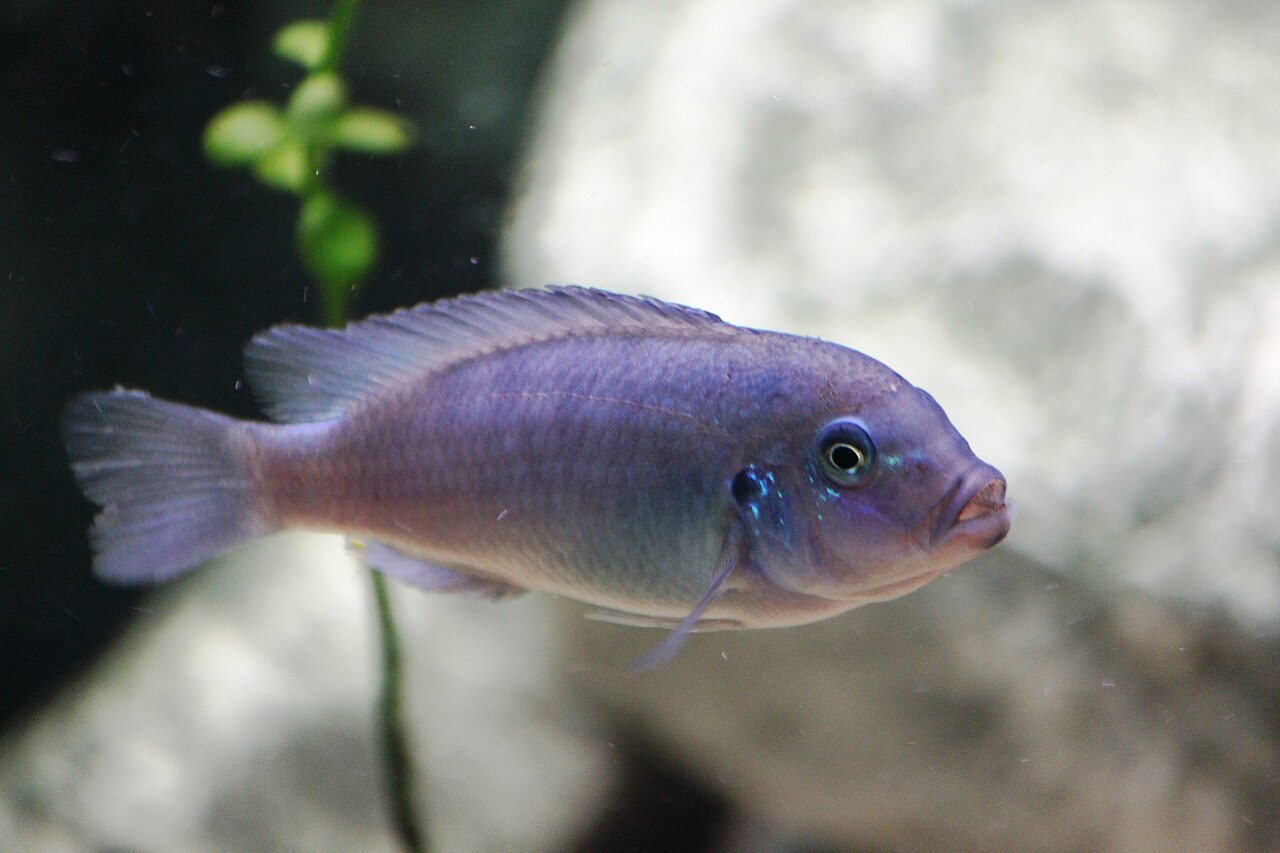
If you keep African cichlids for long enough, one day a fish that was fine last week will be sulking in a corner, refusing food, and trailing a length of clear or white stringy waste. That is the start of what most keepers call Malawi bloat, and it is the single problem that has cost me the most fish over the years. It moves faster than you expect, it does not always respond to treatment, and the advice online is a mess of half-truths. The most useful thing I can tell you up front is that bloat is very rarely about your water being too hard. On my tap, which runs about 22 dGH and alkaline, Rift Lake cichlids are exactly where they want to be. What tips them into bloat is almost always what goes in their mouths, and how stressed they are while it happens.
Free PDF
Free aquarium water cheat sheet (PDF)
Grab the one-page reference for your tank: target ranges for pH, hardness, ammonia, nitrite and nitrate, plus a plain walkthrough of the nitrogen cycle. No fluff, unsubscribe any time.
Free, unsubscribe any time. The download starts as soon as you sign up.
What bloat actually is
Bloat is not one clean disease with one cause. It is a syndrome: a collection of things going wrong in the gut at the same time, and by the time you see a swollen belly the fish usually has more than one problem. When fish that died of bloat have been examined, the majority carried an intestinal bacterial infection, a large minority carried a protozoan flagellate often lumped under the name hexamita, and a smaller share had intestinal worms. So you are rarely looking at a single bug you can target. You are looking at a digestive system that has stopped working, gut flora that have gone haywire, and opportunistic organisms multiplying in the wreckage.
That matters for how you think about treatment. People reach for one medication expecting a clean cure, and when the fish dies anyway they blame the product. The truth is that a fish deep into bloat has organ stress and a gut that has effectively shut down, and no single dose fixes all of that at once.
Telling bloat apart from ordinary constipation
Before you medicate anything, work out which of three things you are actually looking at, because they need very different responses.
Constipation is the mild one and the most common. The fish is a bit swollen, maybe less keen on food, but it still eats when offered and it still passes waste. This is a diet-and-fibre issue, not an infection. A day or two without feeding, then a few de-shelled, squished peas, usually sorts it. Most “my cichlid looks fat” panics are this.
Bloat is the middle case and the dangerous one. The fish goes off food properly, hides, hangs stringy pale faeces, and the belly swells from the inside. The tell that separates it from simple constipation is the loss of appetite combined with the stringy white waste. A constipated fish is hungry; a bloated one is not.
Dropsy is the end stage of systemic failure, where fluid builds up so badly the scales lift and the fish looks like a pine cone from above. Pineconing usually means the kidneys are failing and the outlook is grim. Bloat can slide into dropsy, but they are not the same thing, and a fish that is merely bloated has not necessarily reached that point.
If your fish is still eating, it almost certainly does not have full-blown bloat. Hold that thought, because it stops you from dumping medication into a tank that does not need it.
The book behind Lagonia
The Hard Water Aquarium
My practical guide to working with hard, alkaline tap water instead of fighting it: reading your water, choosing and setting up the tank, and keeping and breeding the fish that thrive in it, from livebearers to Rift Lake cichlids and shell-dwellers.
Ad · Amazon affiliate links. I earn a small commission on a purchase, at no extra cost to you.
Why it happens, and why hard water is not the culprit
The classic bloat victim is a mbuna: the rock-dwelling Malawi cichlids that graze algae and tiny invertebrates off stone in the wild. Their gut is built for a high-fibre, low-fat, largely vegetable diet. Feed that gut a rich meaty pellet, beefheart, or a fatty flake, especially in the quantities an enthusiastic new keeper tends to offer, and you are asking a herbivore’s digestion to cope with something it did not evolve to process. Add the stress of aggression in an under-stocked or badly aquascaped tank, or a tank with poor water quality, and the immune system drops its guard while those gut organisms bloom. That combination is what sets bloat off.
Notice what is not on that list: mineral hardness. Rift Lake cichlids come from some of the hardest, most alkaline water on the planet, harder than my tap. High GH and KH is what keeps them healthy, not what harms them. If anything, people fighting their hard water to soften it for Rift cichlids are working against the fish. So when a forum thread blames someone’s bloat outbreak on “hard water”, treat it as a red herring and look at the feeding routine instead. If you want to understand what your GH and KH numbers actually mean for these fish, I have gone through it in GH and KH explained.
One genuine water-related trigger does exist, and it is the opposite of hardness: salt misused as a cure-all. Sodium chloride is not the same as the calcium and magnesium hardness Rift cichlids need, and adding aquarium salt in the belief it treats bloat mostly just adds osmotic stress to an already struggling fish. I go into where salt does and does not belong in the truth about aquarium salt.
What I do when I catch it early
I want to be honest here: once a fish is clearly bloated, off its food, and swelling, my success rate is poor. Caught in the first day, before the fish has stopped eating entirely, the odds are much better. Here is the sequence I run, and none of it is a guarantee.
First, stop feeding the tank for a day or two. A gut that has seized up does not need more going into it, and a short fast harms nothing.
Second, get the water pristine. A generous water change, matched for temperature and topped back up with the same hard tap the fish are used to, removes waste and reduces the bacterial load in the system. If you want to size the change properly rather than guess, the water change calculator does the maths. Keep the tank clean daily while the fish is poorly.
Third, if the fish is genuinely bloated and not merely constipated, the medication that targets the protozoan side of the problem is metronidazole. It works best fed in food while the fish is still eating, bound onto the food so it is actually swallowed rather than leaching into the water. Once a fish has stopped eating, food dosing is useless and keepers switch to dosing the water column instead, though uptake that way is far less reliable. Commonly cited figures sit around a few hundred milligrams per forty-odd litres, redosed with water changes over a week or more, but medication strengths vary and the packet instructions beat any number I give you here. Epsom salt, which is magnesium sulphate and nothing like aquarium salt, is often added at roughly a teaspoon per twenty litres as a mild muscle relaxant and laxative to help the fish pass what is stuck.
I am deliberately keeping the dosing vague, because bloat medication is a case where following the specific product’s directions, or asking an aquatic vet, matters more than a round number from a stranger. Under-dosing does nothing and over-dosing stresses a fish that is already on the edge.
Fourth, if you can, move the sick fish to a hospital tank. It spares the rest of the colony from both the medication and any pathogen shedding, and it lets a weakened fish escape the tank aggression that probably contributed in the first place. If bloat has hit and you are wondering what else might be going on in the tank, why are my fish dying walks through the usual suspects.
Stopping it before it starts
Prevention is where you actually win with bloat, because the cure is unreliable and the prevention is easy.
Feed your herbivores like herbivores. Mbuna and other vegetable grazers want a spirulina or algae-based staple, fed in small amounts, with fatty and high-protein foods kept as an occasional treat rather than the daily ration. My own rule is small feeds, twice a day at most, and I would far rather a Rift cichlid looked a touch lean than round. Overfeeding is the commonest single trigger I see. There is more on getting portions and food types right in feeding aquarium fish.
Quarantine new arrivals. The protozoan and worm side of bloat often walks in on a new fish that looks perfectly healthy in the shop. A few weeks in a separate tank, watching how it eats and what it passes, has saved me a whole-colony outbreak more than once. My routine is in quarantining new fish.
Keep aggression manageable. A fish that is constantly harried, hiding, and out-competed for food is a stressed fish, and stress is the door bloat walks through. Rift Lake tanks are often stocked deliberately full and well broken up with rockwork so no single fish becomes a permanent target. My approach to the Tanganyikan side of that is in setting up a Tanganyika tank, and if you keep the yellow labs that are so popular with beginners, electric yellow cichlid care covers their particular needs.
Get the water quality right and leave the hardness alone. On hard alkaline tap, you are already giving Rift cichlids the mineral profile they thrive on. Spend your effort on filtration, on not overstocking beyond what the biology can handle, and on regular maintenance, rather than on chasing a softer pH these fish do not want.
Bloat earns its fearsome reputation, but it is not bad luck and it is not your tap water. It is nearly always a fish being fed the wrong thing, too much of it, in a tank that stresses it. Fix those three things and you will rarely, if ever, meet it.
A note of caution: fish medications are real drugs and dosing errors can kill. Treat the figures here as general context, follow the specific product’s instructions, and consult an aquatic vet where you can, especially before medicating a whole tank.