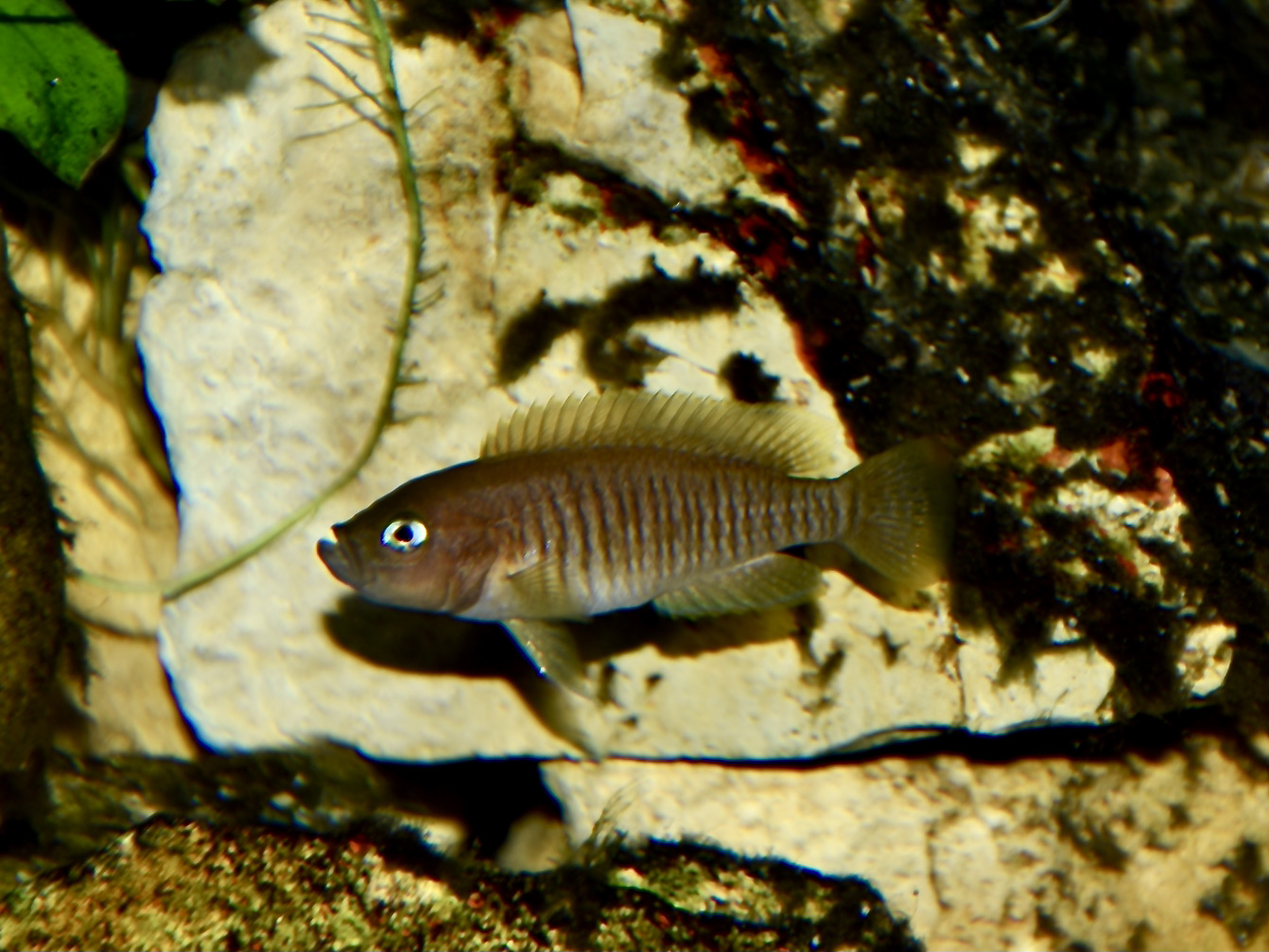
Walk into the cichlid section of any shop and you will find a shelf of tubs promising to turn your tap water into Lake Tanganyika or Lake Malawi. Buffers, cichlid salts, trace element blends. The useful thing to say first is this: if your tap water is genuinely hard and alkaline, you almost certainly do not need any of them. I keep Tanganyikan shell-dwellers on tap water that runs about 22 dGH, and I have never once reached for a tub of buffer. My fish breed, colour up and get old. The shelf is aimed at people whose water is soft, and if that is not you, you are being sold a fix for a problem you do not have.
That is the short version. The longer version is worth reading, because “you probably don’t need it” is not the same as “nobody does”, and knowing the difference means testing your own water rather than guessing.
Free PDF
Free aquarium water cheat sheet (PDF)
Grab the one-page reference for your tank: target ranges for pH, hardness, ammonia, nitrite and nitrate, plus a plain walkthrough of the nitrogen cycle. No fluff, unsubscribe any time.
Free, unsubscribe any time. The download starts as soon as you sign up.
What Rift Lake cichlids actually want
The African Rift Lakes are old, mineral-rich and stable. The two that matter to the hobby are Tanganyika and Malawi, and both sit at the very hard, very alkaline end of what freshwater fish live in.
Rough figures for the lakes themselves:
| Lake Tanganyika | Lake Malawi | |
|---|---|---|
| pH | 8.6 to 9.2 | 7.8 to 8.6 |
| General hardness (GH) | high, roughly 12 to 20 dGH | moderate to high, 6 to 10 dGH |
| Carbonate hardness (KH) | very high, 16 to 18 dKH | high, 6 to 8 dKH |
The numbers move around depending on which source you read and where in the lake the reading was taken, so treat them as a picture rather than a target. What matters is the shape of it. These fish evolved in water loaded with calcium and magnesium, well buffered against pH swings, and sitting comfortably above pH 8. Tanganyika is the more extreme of the two, which is why it is such a rare gift for those of us stuck with liquid-rock tap.
The thing people get wrong is fixating on the pH figure. A cichlid does not read a number. What it needs is the mineral content and, above all, stability. Hardness is what gives you that stability, because a well buffered tank does not lurch when you feed it or do a water change. Chase the exact lake pH with additives and you often trade a slightly-too-low reading for an unstable one, which is a bad swap. I wrote more about why a high, stable pH is nothing to fear in my honest take on high-pH tanks.
What hard tap water already gives you
Here is where the buffer shelf falls apart for hard-water keepers. My tap runs around 22 dGH, the KH is high with it, and once there is calcareous sand, a pile of rock and a scatter of shells in the tank, the pH settles comfortably into the high 7s and low 8s. In other words, my tap water already supplies almost everything on the label of a Rift Lake buffer.
Break down what those products do and you can see the overlap:
- Carbonate buffers (mostly sodium bicarbonate, sometimes with sodium carbonate) raise KH and nudge pH up. Hard alkaline tap already has high KH.
- Cichlid salts add calcium, magnesium and potassium to raise GH. Hard tap is calcium-heavy and already high in GH.
- Trace blends add small amounts of things like iodide and iron. A varied diet and regular water changes cover this for the most part.
So if your water is hard, buying a GH-raising salt is like salting a dish that is already salted. If you are not sure what your figures are, this is the moment to test rather than assume; my guide to GH and KH walks through what each reading means and how to take it. Test the tap, test an established tank, and compare against the lake shape above. Most people on hard supply will find they are already in the zone, or close enough that the fish will never know the difference.
There is a genuine edge to hard water here, and it runs against the usual hobby story that soft water is easier. For Rift Lake fish, hard water is the easy mode. If your tap already looks like the lake, you have the least work of anyone. I go into which species make the most of that in my piece on fish for hard water, and the practical build in setting up a Tanganyika tank.
The book behind Lagonia
The Hard Water Aquarium
My practical guide to working with hard, alkaline tap water instead of fighting it: reading your water, choosing and setting up the tank, and keeping and breeding the fish that thrive in it, from livebearers to Rift Lake cichlids and shell-dwellers.
Ad · Amazon affiliate links. I earn a small commission on a purchase, at no extra cost to you.
When a buffer genuinely earns its place
I am not against these products in principle. There are keepers who need them, and it would be dishonest to pretend otherwise.
You have a real case for buffering or adding minerals if:
- Your tap water is soft. If you are on a soft or moderately soft supply, you cannot keep Rift Lake fish properly without raising the hardness. This is the group the products are actually for. You would build your water up from a known base, and the remineralise calculator helps work out doses if you are mixing your own.
- You keep pure Tanganyikans and want the top end. My tap gives me low-8s pH, which every shell-dweller and most Tanganyikans are entirely happy with. If you are keeping something that genuinely wants pH 9, a little carbonate buffer gets you there. This is a fine-tuning choice, not a rescue.
- Your KH is low despite hard GH. It is uncommon on hard supply, but not impossible, to have high general hardness and a weaker carbonate buffer. If your KH is genuinely low and your pH drifts down between water changes, a carbonate source stabilises it.
Notice that none of those is “because the tub says so”. Each starts with a test result. If you have soft water and want to go down the reverse osmosis route to build a controlled base, my take on whether you need RO is worth reading first, because for most hard-water keepers the answer is a firm no.
A homemade buffer, for those who do need one
If you have soft water, or you want to lift a pure Tanganyika tank toward the top of its range, you do not have to buy a branded tub. The active ingredients are cheap and sold in any supermarket. This is the same chemistry the commercial blends use.
- To raise KH and lift pH: sodium bicarbonate, plain baking soda. Start with about a quarter teaspoon per 20 litres, mixed into new water, and retest. It works fast, so go in small steps.
- To raise GH, specifically magnesium: magnesium sulfate, Epsom salt. Roughly an eighth of a teaspoon per 20 litres. This adds the magnesium that calcium-only sources miss.
- For calcium and long-term buffering, passively: a bag of crushed coral or aragonite sand in the filter or as substrate. It dissolves slowly as the pH tries to fall, which makes it close to self-regulating and, to my mind, the most sensible option of the lot. My substrate guide covers using it as a base layer.
Two rules if you go this way. Mix everything into the new water before it goes in, never dose the tank directly with fish in it, and match the new water to the tank so a change does not become a swing. And measure. A kitchen teaspoon and a test kit will get you further than any tub, but only if you actually read the results. These figures are starting points, not laws; your water and your kit will differ from mine.
The honest bottom line
For the hard-water keeper the buffer shelf is mostly a solution looking for a problem. Test your tap, test your tank, and if the numbers already sit in the Rift Lake shape, keep your money. Save the additives for the people on soft water who genuinely have to build their hardness from nothing, and for the occasional Tanganyika keeper reaching for the very top of the pH range on purpose.
If you are still working out your stocking around all this, the stocking calculator will keep you honest on how many cichlids your tank can actually hold, which matters far more to their health than whether the pH reads 8.0 or 8.4. Get the water hardness right, get the numbers stable, then stop fiddling. Rift Lake fish reward a keeper who leaves good water alone.