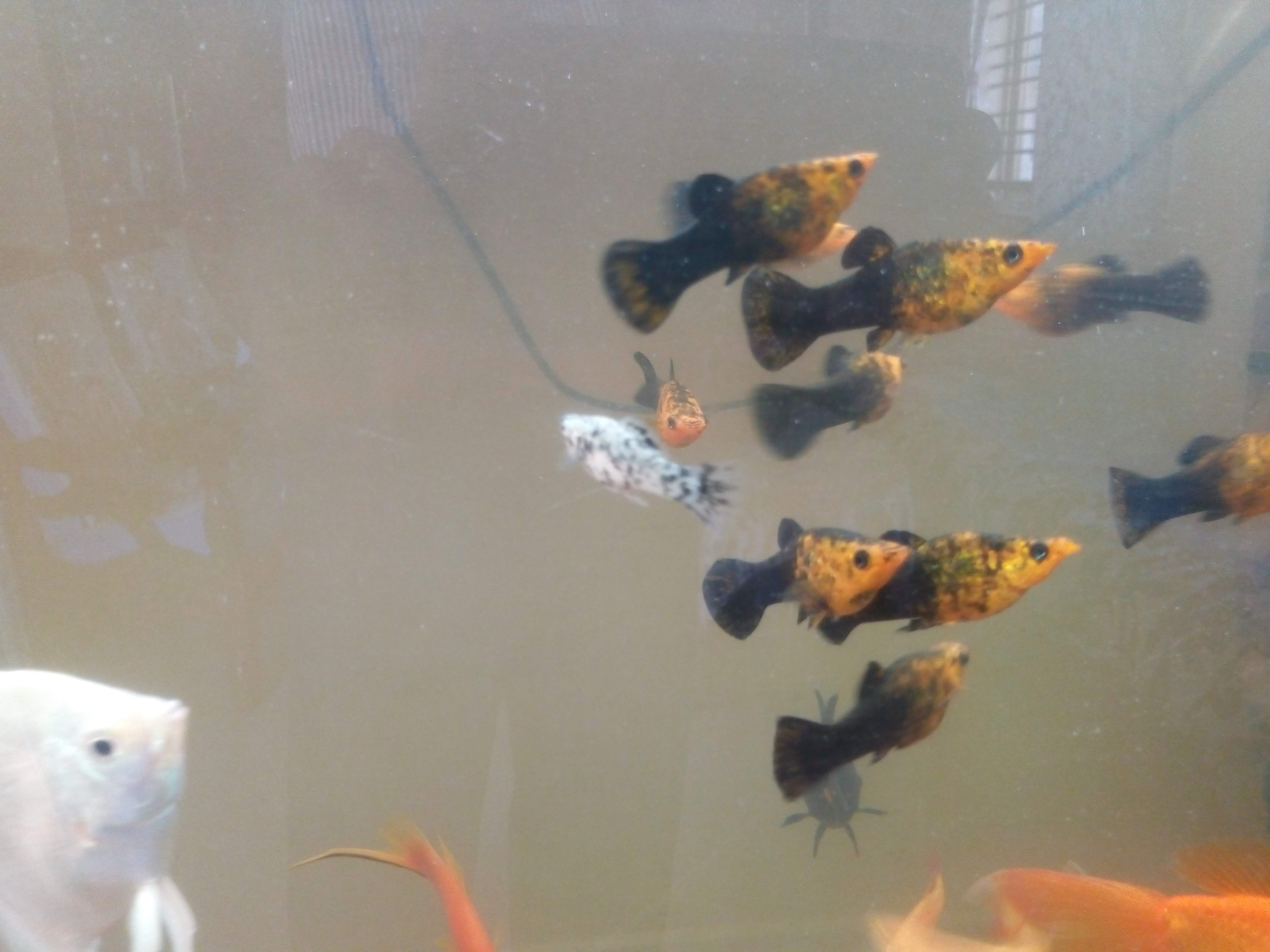
If your tap water is hard and alkaline, and a lot of ours is, the molly is close to the ideal fish. Most of the popular community species were bred for softer, more acidic water and only tolerate what comes out of my tap; the molly actively wants it. Warm, mineral-rich, slightly alkaline water is exactly the environment these fish evolved in, so for once the water that fights you with tetras and rasboras is working in your favour. Here is how I keep mine, and where people go wrong with them.
Free PDF
Free aquarium water cheat sheet (PDF)
Grab the one-page reference for your tank: target ranges for pH, hardness, ammonia, nitrite and nitrate, plus a plain walkthrough of the nitrogen cycle. No fluff, unsubscribe any time.
Free, unsubscribe any time. The download starts as soon as you sign up.
Why mollies suit hard water
Mollies come from the coastal streams, lagoons and estuaries of Central America and the southern United States, and some populations live in genuinely brackish water. That heritage tells you everything about what they want in a tank. They thrive at a pH of roughly 7.5 to 8.5 and a general hardness anywhere from about 15 dGH upwards. My own tap sits around 22.5 dGH, which would give a shrimp keeper a headache, and the mollies could not care less; they colour up, breed and behave exactly as they should.
The mistake I see again and again is people trying to soften water for a fish that does not want it soft. Mollies kept in soft, acidic water tend to look faded, sulk, and eventually develop the shivering condition hobbyists call the shimmies. If you are working out whether your water is a good match, the GH and KH explainer walks through what those numbers mean, and my longer piece on hard water fish puts the molly in context alongside the other species that flourish in it.
Tank size and setup
Do not be fooled by how small a molly looks in the shop tank. Common mollies reach seven to ten centimetres, and the sailfin varieties get bigger and broader still. They are busy, constantly grazing fish that use every inch of the tank, so a cramped setup shows quickly in stunted growth and squabbling.
I would not keep them in anything under about 75 litres, and 90 or more is better once you factor in the fry they will inevitably produce. A 60 litre nano is fine for a trio at a push, but mollies do best in a small group with room to move. Work out what your tank actually holds, including the space lost to substrate and decor, using the volume calculator, then check your intended group against the stocking calculator before you buy. Mollies are heavier waste producers than their size suggests, so give the filter something to work with; my thoughts on matching filtration to a tank are in the filtration guide.
They like it warm. I run my molly tanks at 25 to 27 degrees, and they slow down noticeably if the water drifts below 24. A steady temperature matters more than the exact figure, so size the heater properly rather than guessing; the heater calculator will tell you the wattage your tank needs. Planting helps too. Mollies graze on the biofilm that grows on leaves and hardscape, and a well planted tank with some open swimming space keeps them occupied and calmer.
The book behind Lagonia
The Hard Water Aquarium
My practical guide to working with hard, alkaline tap water instead of fighting it: reading your water, choosing and setting up the tank, and keeping and breeding the fish that thrive in it, from livebearers to Rift Lake cichlids and shell-dwellers.
Ad · Amazon affiliate links. I earn a small commission on a purchase, at no extra cost to you.
Water parameters that keep them healthy
The single most important thing is a fully cycled, stable tank. Mollies are hardy once settled, but they are sensitive to ammonia and nitrite spikes like anything else, and a lot of “my molly suddenly died” stories are really uncycled or overstocked tanks. If you are still setting up, read the fishless cycling guide first and do not rush it.
Here is what I aim for:
- Temperature: 24 to 27 degrees Celsius.
- pH: 7.5 to 8.5. Higher is fine; do not chase it downwards.
- GH: 15 dGH and up. Very hard tap is genuinely an advantage here.
- Ammonia and nitrite: zero, always.
- Nitrate: below about 40 ppm, kept down with regular water changes.
Because mollies eat and excrete a lot, I stay on top of water changes rather than letting nitrate creep. Weekly changes of a quarter to a third suit a moderately stocked tank; if you want to work out the right volume and rhythm for your setup, the water changes article covers the reasoning. One thing I never do is add aquarium salt as a routine. Mollies can tolerate brackish conditions, and a little salt can help a sick fish recover, but plants and many tank mates dislike it, and hard fresh water already gives mollies the minerals they need.
Feeding: lean towards the greens
Mollies are omnivores with a strong vegetarian streak, and this is where a lot of otherwise well kept fish fall short. In the wild they spend their days rasping algae and biofilm off surfaces, so a diet of nothing but protein-heavy flake leaves them prone to bloating and constipation.
I feed a good quality flake or small pellet as the base, ideally one with a decent plant content, and I make sure at least half of what they get over a week is vegetable matter. Spirulina flake, blanched courgette, a slice of cucumber weighted down, and the odd bit of blanched spinach all go down well. Live or frozen treats such as brine shrimp or daphnia are fine a couple of times a week, but they are the treat, not the staple. A tank with a bit of natural algae growth is a bonus rather than a problem, because the mollies will pick at it all day. If you want the full picture on getting fish diet right, I have written it up in the feeding guide.
Tank mates and the male problem
Mollies are peaceful towards other species and make easy community fish, but the males have a one-track mind. A lone female kept with two or three males will be pestered relentlessly, which stresses her and can make her ill. The fix is simple: keep more females than males, ideally two or three females for every male, or keep a group of males only if you can accept there will be no fry and some low-level jostling.
For company, the obvious partners are other hard-water livebearers. Platies, guppies and swordtails all want the same water and the same warmth, and they mix happily. I have care guides for platies and guppies if you fancy building a livebearer community. Peaceful bottom dwellers and many of the smaller Rift Lake fish also suit hard water. What I would avoid is pairing mollies with fish that need soft, acidic conditions, because someone always loses out. The best beginner fish roundup flags which species genuinely tolerate hard water and which only put up with it.
Breeding happens whether you plan it or not
Put a male and a few females together and you will have fry within weeks; it is not so much a project as an inevitability. Females give birth to live, free-swimming young roughly every four to six weeks, thirty or more at a time from a mature fish, and they will happily eat their own offspring given the chance.
If you want the fry to survive, give them cover. A thicket of fine-leaved plants, a clump of floating plant at the surface, or a dense corner of moss gives the tiny fish somewhere to hide during those first vulnerable days. I rarely bother with breeding traps, which stress the mother, and instead let nature thin the numbers while keeping enough planting that a good few make it. Feed the fry finely crushed flake or purpose-made fry food several times a day and they grow quickly. The general approach carries across all the livebearers, so my breeding livebearers piece goes into more detail if you get the bug.
Common problems, honestly
The condition you will hear most about is the shimmies, where a molly rocks or shivers on the spot without really going anywhere. It is not one disease so much as a sign the fish is unhappy, and the usual culprits are water that is too cold, too soft, or too polluted. Nine times out of ten, warming the tank a touch, sorting the water quality, and confirming the hardness is high enough puts it right.
Beyond that, mollies are as prone as any fish to white spot when chilled or stressed, which the white spot guide covers, and to the bloating that comes from an all-protein diet. Keep them warm, keep the water hard and clean, feed them their greens, and mollies are among the most rewarding and least demanding fish you can put in hard tap water. Running the numbers on what a warm, well-lit tank costs to keep going is worth doing too; the running cost calculator takes the surprise out of the electricity bill.