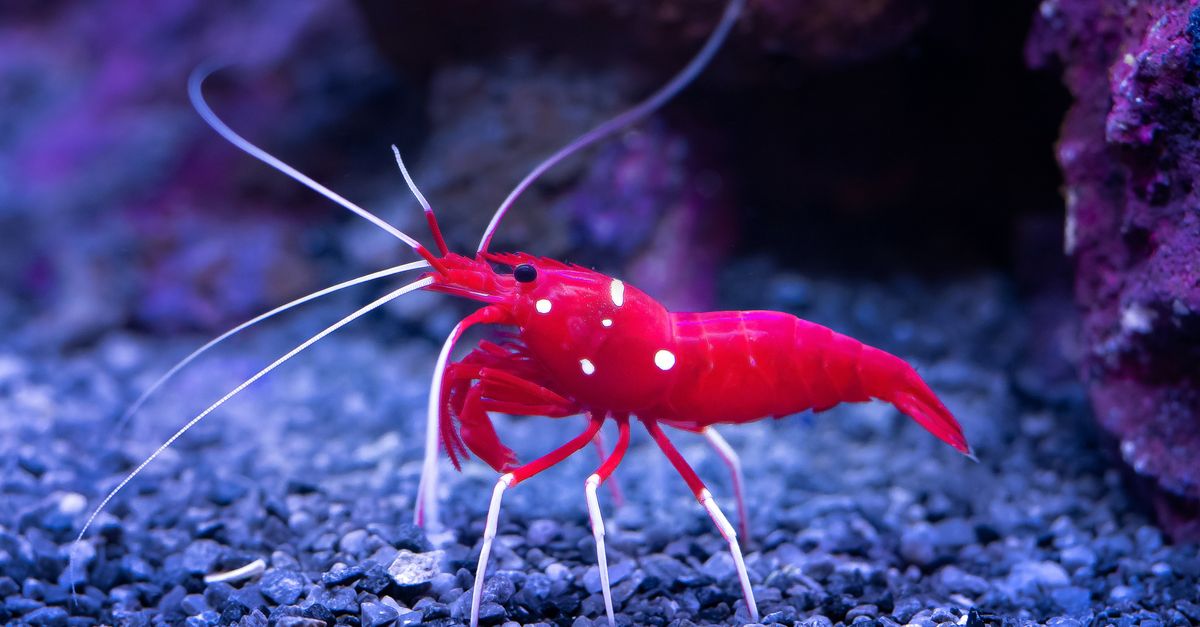
The ideal GH depends on the shrimp: Neocaridina, the common cherry shrimp and their colour forms, want a GH of roughly 6 to 12 dGH, while Caridina, the crystal reds and bee shrimp, want it far softer at around 4 to 6 dGH. GH matters more to shrimp than almost any other reading, because shrimp build a fresh calcium-rich exoskeleton every time they moult, and the water is where that calcium comes from.
Free PDF
Free aquarium water cheat sheet (PDF)
Grab the one-page reference for your tank: target ranges for pH, hardness, ammonia, nitrite and nitrate, plus a plain walkthrough of the nitrogen cycle. No fluff, unsubscribe any time.
Free, unsubscribe any time. The download starts as soon as you sign up.
Why GH is the reading that matters for shrimp
General hardness measures the dissolved calcium and magnesium in your water. Every time a shrimp moults it grows a new shell, and it draws the minerals for that shell straight from the water column. Too little GH and moults fail, producing the notorious white ring of death where the shell splits behind the head and the shrimp cannot free itself. Too much is rarely a problem for hard-water species, though it can shorten the softer Caridina.
The numbers by species
- Neocaridina (cherry, blue, yellow, orange): 6 to 12 dGH is the sweet spot, and they tolerate more. My own tap runs 22 to 23 dGH and my cherry shrimp moult cleanly and breed constantly in it, so hard water is a genuine advantage here rather than a handicap.
- Caridina (crystal red, bee): 4 to 6 dGH, paired with soft, slightly acidic water. These are a soft-water project and a poor fit for hard tap.
The book behind Lagonia
The Hard Water Aquarium
My practical guide to working with hard, alkaline tap water instead of fighting it: reading your water, choosing and setting up the tank, and keeping and breeding the fish that thrive in it, from livebearers to Rift Lake cichlids and shell-dwellers.
Ad · Amazon affiliate links. I earn a small commission on a purchase, at no extra cost to you.
How I know the GH is right: watch the moults
You do not have to trust the test kit alone. A shrimp colony tells you whether the GH suits it. In water with enough calcium, moulting is quick and quiet: you find the odd empty translucent shell caught in the plants, the shrimp carries on grazing, and the colony grows. In water that is too soft, you start finding dead shrimp with a split behind the head and a body half out of the old shell, the white ring of death. If you see that repeatedly in a Neocaridina tank, the answer is almost never “too hard”. It is too soft, and the fix is remineralising salt, not more water changes with the same soft tap.
The other sign is berried females. A colony that is comfortable breeds constantly, and females carry eggs under the tail more or less permanently once they get going. In my hard tap the cherry shrimp never really stop. If your colony sits static for months with no young and no berried females, look at temperature and GH before you look at anything exotic.
RO and soft-water keepers: the harder job
Everything above is easy mode for hard-water keepers. If your tap is soft, or you run RO water, you are in the odd position of having to build the GH up rather than worry about it being too high. A remineralising salt made for shrimp, added to each fresh batch of water to a measured target, is the tool for that. Mix to the number, do not eyeball it, because a moving GH between water changes is its own kind of stress. The GH and KH explained guide covers how the two numbers move independently, which is the part that trips up most people dosing RO for the first time.
A quick FAQ
Is my water too hard for cherry shrimp? Almost certainly not. Neocaridina thrive in hard water, and the far more common failure is water that is too soft for a clean moult.
How do I raise GH for shrimp? If your source water is very soft, a remineralising salt made for shrimp lifts GH to target. RO users add it to every batch. Hard-water keepers rarely need to touch it.
GH or KH, which matters more for shrimp? GH, because that is the calcium and magnesium they build shells from. KH still matters for holding pH steady, but GH is the one shrimp physiology feels directly.
For the full picture on GH, KH and why hard, mineral-rich water suits so many aquarium animals, see the guide to keeping fish in hard water. For everything else about building a colony, read the cherry shrimp care guide.