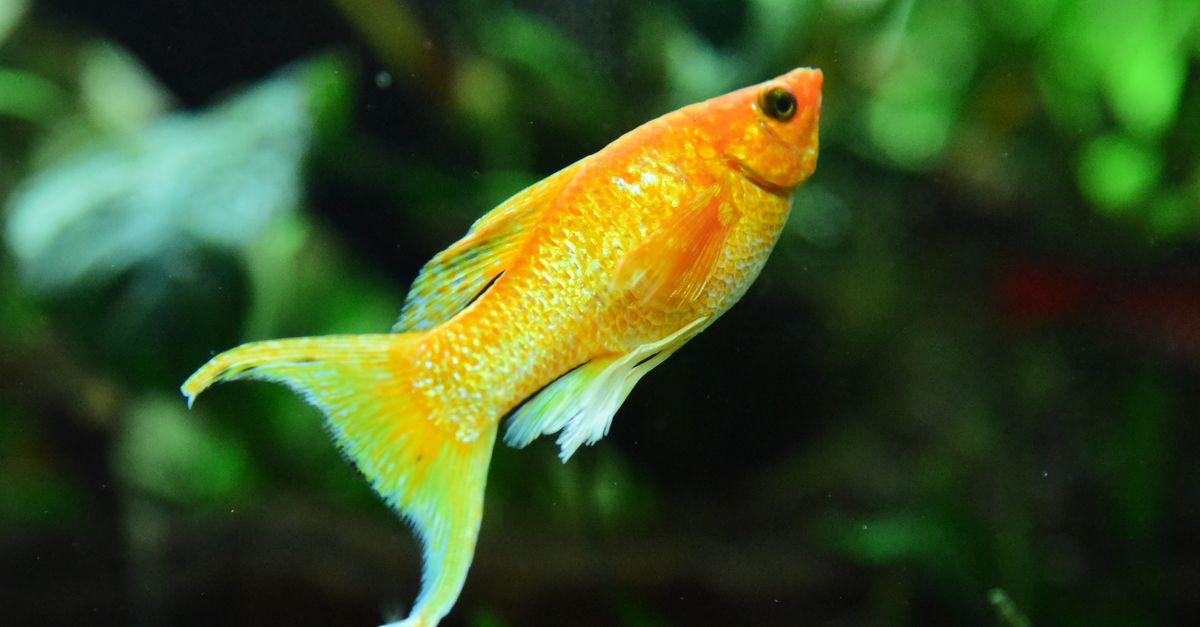
If you want to breed fish, start with livebearers. Guppies, endlers, mollies and platies do not need conditioning, spawning triggers, egg guarding or artificial hatching. They need a male, a female and water. I keep a line of endler and guppy crosses that has been running for generations in one of my tanks, and my honest job as their keeper is not persuading them to breed. It is deciding what happens to the results. That second part is where this article will spend some honest time, because most breeding guides gloss over it.
Free PDF
Free aquarium water cheat sheet (PDF)
Grab the one-page reference for your tank: target ranges for pH, hardness, ammonia, nitrite and nitrate, plus a plain walkthrough of the nitrogen cycle. No fluff, unsubscribe any time.
Free, unsubscribe any time. The download starts as soon as you sign up.
Why they are so easy
Livebearers skip the egg stage entirely. The female carries fertilised eggs internally and releases free swimming, fully formed fry that can eat, hide and swim from the first minute. There is no delicate egg phase to fungus over, no larval stage needing microscopic food. A newborn guppy fry eats crushed flake on day one.
Better still, females store sperm. A single mating can fertilise several consecutive broods over months, which is why a lone female bought from a shop so often produces fry in a tank with no male present. If you buy livebearers, assume every adult female is already pregnant.
They are also, and this matters more than people realise, hard water fish. Guppies, mollies and platies come from mineral-rich, alkaline waters and they thrive in exactly the liquid limestone that comes out of many taps. My water is very hard and my livebearers have never needed a single adjustment to it. Mollies in particular sulk and sicken in soft water. If your tap water is hard, livebearers are not a compromise choice, they are the correct one, and I have written more broadly about that in keeping fish in hard water.
Sexing them
Sexing adult livebearers takes about five seconds once you know the trick. Look at the anal fin, the one on the underside behind the belly. On a female it is an ordinary fan shape. On a male it is modified into a narrow rod called a gonopodium, which he uses to mate. That single feature is reliable across guppies, endlers, mollies and platies.
There are supporting clues. Male guppies and endlers are smaller and carry all the colour; females are larger, plainer and grey bodied. Female bellies are deeper, and a gravid female shows a dark patch near the vent where the eyes of the developing fry show through. But the anal fin is the definitive check, and it is visible from about eight weeks old if you look closely.
Ratios matter for the females’ sake. Males court constantly and a single female with two males gets no rest. Keep at least two females per male, and more is kinder. In my tank one selected male runs with six females, which keeps any one female from being harassed and keeps the paternity of the next generation exactly where I want it.
The book behind Lagonia
The Hard Water Aquarium
My practical guide to working with hard, alkaline tap water instead of fighting it: reading your water, choosing and setting up the tank, and keeping and breeding the fish that thrive in it, from livebearers to Rift Lake cichlids and shell-dwellers.
Ad · Amazon affiliate links. I earn a small commission on a purchase, at no extra cost to you.
Gestation and the drop
Gestation runs around four weeks, a little faster in warm water and slower in cool. A female close to dropping becomes noticeably boxy, almost square in outline from the side, and the gravid patch darkens. Brood sizes range from a handful of fry from a young female to fifty or more from a big mature molly.
You do not need to do anything to trigger any of this. Feed the adults well, with some frozen or live food if you want bigger broods, keep the water clean with normal weekly water changes, and the four week cycle runs itself.
Skip the little plastic breeding traps, or at most use one for a day when a female is visibly about to drop. Confining a heavily pregnant female in a tiny box for a week is stressful enough to cause premature broods. Cover for the fry is the better answer.
Raising the fry
The awkward truth is that adult livebearers eat their own fry, enthusiastically. In a bare tank few survive. You have two workable options.
The first is cover. A dense tangle of plants gives fry somewhere the adults cannot follow. Floating plants with trailing roots are the best fry cover there is, and a thicket of hornwort, guppy grass or java moss at one end of the tank does the same job lower down. All of those are easy species from my beginner plants list. In a well planted tank a reasonable fraction of each brood makes it through on their own wits, and the survivors are the quick, alert ones, which does your line no harm at all.
The second is a separate fry tank. A small cycled tank, a sponge filter so nobody gets pulled into an intake, and some moss. Move the visibly gravid female over, let her drop, then move her back and grow the fry on. This route saves nearly the whole brood, which sounds like the better result right up until you count them.
Feeding fry is undramatic. Crushed flake works from day one. Powdered fry food, microworms or freshly hatched brine shrimp grow them faster. Feed small amounts several times a day and keep up with water changes, because fry tanks carry a heavy feeding load. Fry reach sexual maturity at roughly two to three months, which is exactly why the numbers get away from people.
Selection and culling, honestly
Here is the part most articles mumble through, and I will not. A pair of guppies becomes hundreds of guppies within months. Every livebearer keeper, without exception, ends up managing numbers and deciding which fish breed. Pretending otherwise just means the decision gets made badly, by overcrowding, by the local shop’s bin, or by a polluted tank.
Plan the destinations before the first brood. Local fish shops often take healthy home-bred livebearers, sometimes for store credit, though they want them at a saleable size, which means weeks more growing on. Aquarium clubs and their auctions are better again. Local keepers will take good stock. None of these outlets is bottomless, and shop-strain guppies in particular are not in demand.
Selection is the other half. If you keep every fish, your line drifts back to small grey wild type within a few generations, because you are letting chance choose the sires. Choosing your best male and your best females, and only letting those breed, is the entire craft of livebearer keeping, and it is how every named strain in the hobby came to exist. Separating the sexes early, at around eight to ten weeks before males mature, is the practical tool that gives you that control.
And some fish should not be passed on at all. Livebearer lines throw the occasional deformed fry, bent spines being the common one, and inbred lines throw more. A deformed fish should not be sold, given away or bred from, and a keeper has to be willing to cull affected fish humanely. Clove oil overdose is the accepted humane method for small fish. I take no pleasure in writing that, but leaving it out of a breeding article is how new breeders end up cornered with a hundred fish, no outlet and no plan. Decide your approach before you start, not during.
A good first project
None of that last section should put you off. It is simply the whole picture. As a first breeding project livebearers are unmatched: you will see courtship, live birth, fry hunting food in the moss, and the visible results of your own selection within a few generations, all in ordinary hard tap water with no special equipment. Just go in with your eyes open and your fry outlets thought through, and it is one of the most satisfying corners of the hobby.