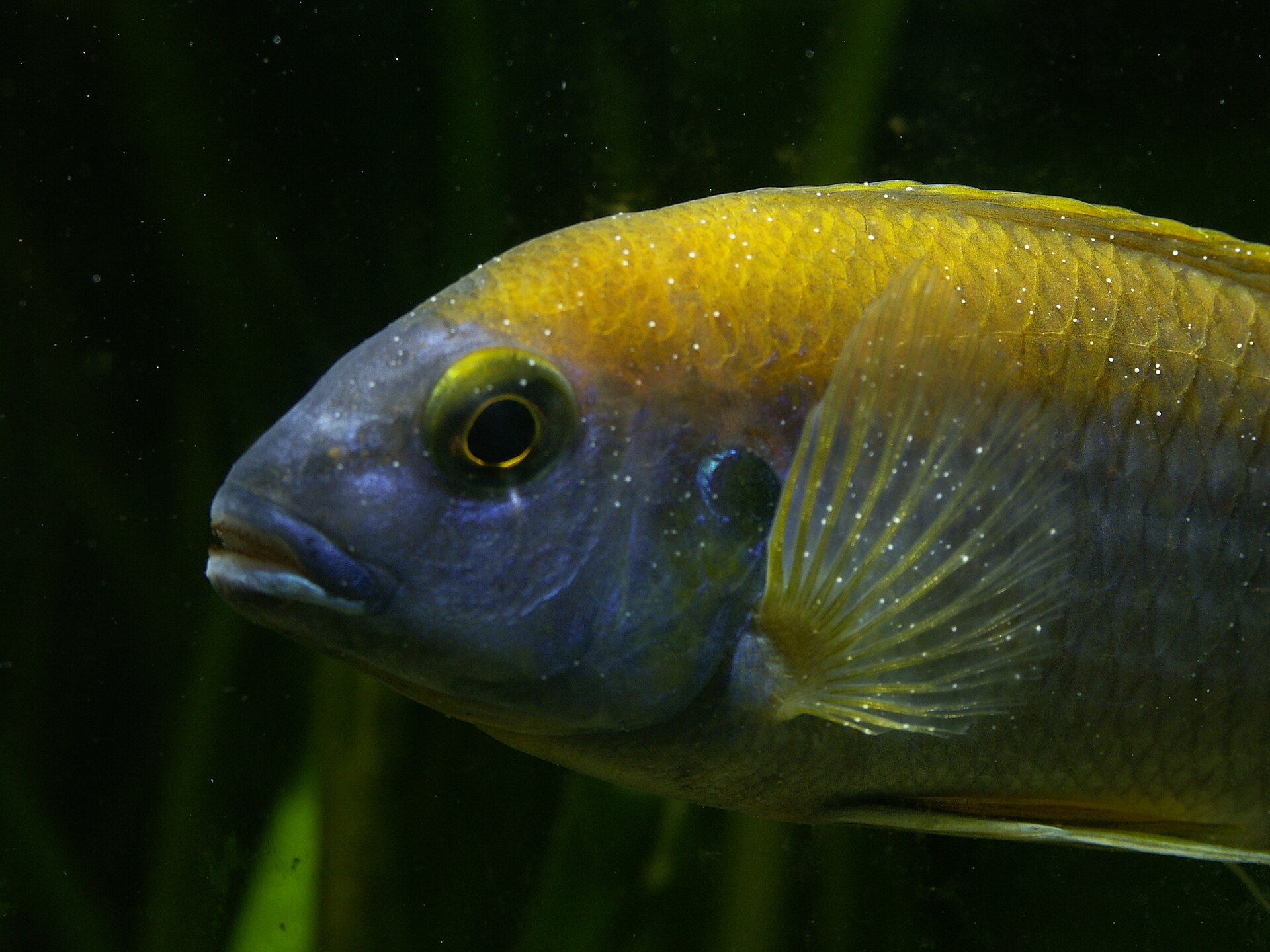
Sooner or later most fishkeepers meet white spot, and the first time is a fright. You look at a fish one evening and it is dusted with tiny white grains, as if someone had shaken salt over it. That is ich, short for Ichthyophthirius multifiliis, and it is probably the most common parasitic disease in freshwater tanks. The good news is that it is very treatable if you understand what you are dealing with. The bad news is that people lose fish to it constantly, almost always because they stopped treating too soon. I have cleared it out of my own tanks more than once, and the whole thing comes down to respecting the parasite’s lifecycle.
Free PDF
Free aquarium water cheat sheet (PDF)
Grab the one-page reference for your tank: target ranges for pH, hardness, ammonia, nitrite and nitrate, plus a plain walkthrough of the nitrogen cycle. No fluff, unsubscribe any time.
Free, unsubscribe any time. The download starts as soon as you sign up.
What ich is, and how to recognise it
Ich is a single-celled parasite, not a fungus and not a bacterial infection, which matters because it changes what actually works against it. The visible white spots are individual parasites that have burrowed under the fish’s skin or into its gills, where your treatments cannot reach them. Each spot is roughly the size of a grain of salt or fine sand, raised and distinct, scattered over the body and fins.
Alongside the spots you will often see behaviour that gives it away before the dots are obvious. Fish flick and scrape themselves against decor and substrate, trying to dislodge the irritation. They may clamp their fins, breathe rapidly, hang near the surface or the filter outflow where oxygen is highest, and go off their food. Gill-only infections are the sneaky ones, because the fish can be clearly distressed and breathing hard with barely a spot showing on the body. If you see the flicking and rapid gilling, start paying close attention even before the classic spots appear.
Why it takes hold
Ich is often present in small numbers without causing trouble; healthy fish fend it off. It flares when something knocks their immune system, and the usual trigger is stress. A chill from a failed heater, a rough journey home from the shop, poor water quality, or the arrival of a new fish carrying the parasite will all tip the balance. That last one is why the outbreak so often follows a new addition by a week or two.
This is the strongest argument I know for a quarantine tank. Most of my worst outbreaks traced straight back to a fish that went into the main tank without a settling-in period, and quarantine would have contained the whole thing. It also pays to rule out plain bad water first, because the stress that lets ich bloom is often a parameter problem; if you have not tested lately, the aquarium water parameters post covers what to check.
The book behind Lagonia
The Hard Water Aquarium
My practical guide to working with hard, alkaline tap water instead of fighting it: reading your water, choosing and setting up the tank, and keeping and breeding the fish that thrive in it, from livebearers to Rift Lake cichlids and shell-dwellers.
Ad · Amazon affiliate links. I earn a small commission on a purchase, at no extra cost to you.
The lifecycle, which is the whole game
You cannot treat ich sensibly without understanding its three stages, because only one of them is vulnerable to anything you add to the water.
- The feeding stage on the fish. This is the white spot you can see. Tucked under the skin, it is protected from medication and salt. You simply cannot kill it here.
- The reproductive stage. The mature parasite drops off the fish, falls to the substrate or decor, and forms a capsule in which it divides. Inside this capsule it can produce hundreds of new parasites. It is still fairly protected at this point.
- The free-swimming stage. The capsule bursts and releases a swarm of tiny free-swimmers that must find a fish within a day or two or they die. This is the only stage your treatment can actually kill.
The entire cycle takes anywhere from about a week to a fortnight in cool water, but speeds up sharply as it warms, running through in roughly five to seven days at 25 to 28 degrees C. That temperature dependence is the key to the whole treatment, and it is why patience beats panic. You are not trying to kill the spots you can see; you are waiting for every one of them to complete its cycle and release free-swimmers into water that will kill them.
How to treat it
There are two mainstream approaches, and I have used both.
Heat and salt. Raising the temperature speeds the parasites through their lifecycle so they reach the vulnerable free-swimming stage faster, shortening the ordeal. I take the tank up gradually, over a day or so, to around 28 to 30 degrees C, checking first that my fish can handle that (most tropical community fish can, but always confirm for your particular species). Warmer water holds less oxygen, so add an airstone or drop the filter outflow to break the surface. Alongside the heat, aquarium salt at roughly one tablespoon per 20 litres, dissolved before it goes in, is a gentle and effective treatment for many fish.
The important caveat: catfish including corydoras, loaches, and other scaleless fish are sensitive to salt and to many medications. If your tank holds any of these, use half the salt dose at most, or skip salt and choose a suitable medication instead. When in doubt, read the fine print.
Proprietary medication. White spot treatments are widely sold and work well when used exactly as directed. Follow the dosing for your actual water volume rather than the tank’s nominal size, since gravel and decor displace a fair bit; the volume calculator gives you the real figure. Remove any carbon from the filter first, because it will strip the medication straight back out. I am not going to name products, but any reputable white spot remedy from an aquatics shop will do the job if you respect the instructions.
Whichever route you take, keep going. This is where people fail. Because you can only kill the free-swimming stage, you must continue treatment until every parasite has cycled off the fish and been dealt with in the water. Carry on for a good week or two after the very last visible spot has gone. Stopping when the fish looks clean, which it will well before the job is done, is the single most common reason ich comes roaring back.
Throughout, keep the water clean. Daily or every-other-day water changes with gravel vacuuming physically remove capsules and free-swimmers before they can reinfect, and fresh water eases the load on already stressed fish. The water change calculator helps you size those changes.
Preventing the next outbreak
Once you have beaten it, prevention is mostly common sense. Quarantine every new fish for a fortnight before it meets the others; that alone would prevent most outbreaks I have seen. Keep the temperature stable, because chills are a classic trigger, and a properly sized heater matters here; the heater calculator will help. Avoid overstocking and keep on top of water changes, since a low-stress fish in clean water shrugs off the odd parasite that a stressed one cannot. If fish keep sickening despite your best efforts, the wider why do my fish keep dying checklist is worth a read.
The honest bottom line
White spot looks alarming and it can certainly kill, but of all the things that go wrong in a freshwater tank it is one of the most beatable. Identify it early from the flicking and the salt-grain spots, treat with heat and salt or a proper medication, and above all keep treating for a fortnight past the last visible spot. Do that and you will clear it. Rush it, and you will be back at the same battle in a week. The parasite is patient, so you have to be more patient still.