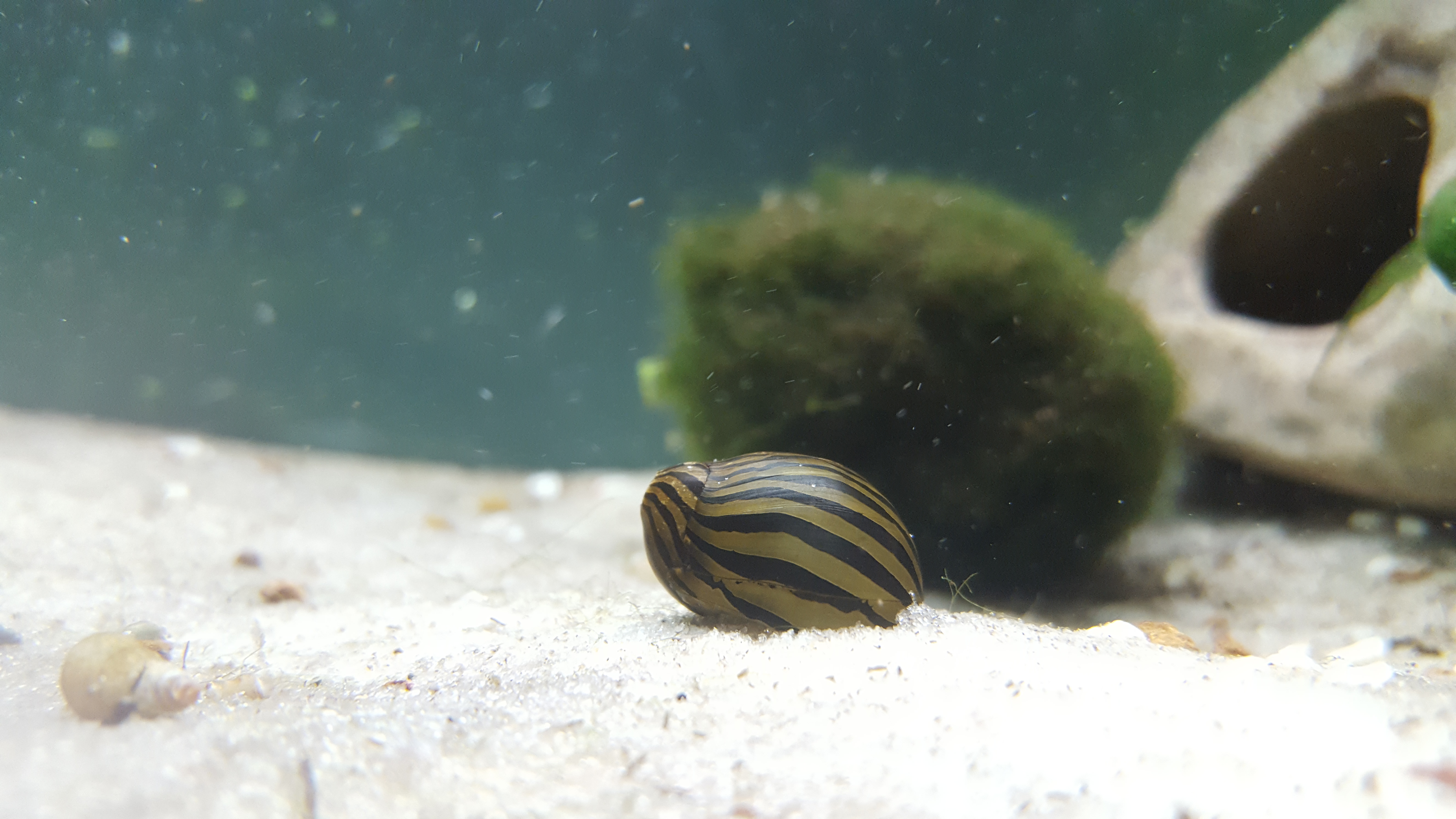
Of all the clean-up animals I have kept, the nerite snail is the one I recommend without hesitation, and it happens to be a perfect match for hard tap water. Most freshwater snails simply tolerate the minerals in hard water; the nerite depends on them. Those minerals are what keeps its shell hard and smooth, so the very water that troubles soft-water fish keepers is a gift to nerite keepers. If you have algae on your glass and hard water in your tap, this little snail is about as close to a purpose-built solution as the hobby offers.
Free PDF
Free aquarium water cheat sheet (PDF)
Grab the one-page reference for your tank: target ranges for pH, hardness, ammonia, nitrite and nitrate, plus a plain walkthrough of the nitrogen cycle. No fluff, unsubscribe any time.
Free, unsubscribe any time. The download starts as soon as you sign up.
Why hard water is exactly what they want
Nerites come from tropical rivers, estuaries and coastal zones, and many spend part of their lives in brackish water. Their shells are built from calcium carbonate, and they draw the raw material for that shell straight from the water and their food. In soft, mineral-poor water the shell starts to thin, pit and erode, often at the tip first, and once it goes far enough the damage cannot be undone.
Hard, alkaline water solves that problem before it starts. My tap runs at around 22.5 dGH with a pH comfortably above 7.5, and my nerites keep glossy, intact shells for years on it. If your water were soft you would be adding crushed coral or a mineral supplement to keep them healthy; with hard tap you get all that for free. It is one of the clearest cases where the site’s usual hard-water challenge turns into a plain advantage. If you are not sure how hard your water is, the GH and KH guide explains how to read those numbers.
What they actually eat
Nerites are the best all-round algae eaters I have used, and unlike a lot of so-called algae eaters they keep working long after they have settled in. They graze constantly across glass, rock, wood and broad plant leaves, and they will tackle types of algae that most animals ignore, including the tough green spot algae that cakes onto glass and hardscape. A couple of nerites will keep the front pane of a moderately lit tank clear with no effort from you.
The one thing to be honest about is that they only eat what is actually there. In a spotless, well-established tank the algae runs out, and a nerite can slowly starve while looking perfectly fine. I supplement mine in cleaner tanks with the occasional algae wafer or a piece of blanched vegetable, courgette and cucumber are both taken readily, and I never assume a tank grows enough film to feed a snail indefinitely. They will also clear up uneaten fish food, but they are grazers first and scavengers second. If a green film keeps coming back faster than the snails can manage, the real fix is upstream in light and nutrients; my algae article covers how to get on top of it.
The book behind Lagonia
The Hard Water Aquarium
My practical guide to working with hard, alkaline tap water instead of fighting it: reading your water, choosing and setting up the tank, and keeping and breeding the fish that thrive in it, from livebearers to Rift Lake cichlids and shell-dwellers.
Ad · Amazon affiliate links. I earn a small commission on a purchase, at no extra cost to you.
Tank size and water parameters
Nerites are small, the common zebra and tiger types reaching about two and a half centimetres, so they do not need much room. I would still not add them to a tank that is not fully cycled and stable, because like any invertebrate they are sensitive to ammonia and nitrite, and they dislike sudden swings in water chemistry. If your tank is new, cycle it first; the fishless cycling guide walks through it.
What I aim for:
- Temperature: 22 to 27 degrees Celsius, so ordinary tropical warmth suits them.
- pH: 7.0 and above, ideally 7.5 to 8.5.
- GH: high. Hard tap is ideal; soft water needs supplementing.
- Ammonia and nitrite: zero.
- Copper: avoid it. Copper-based medications and some plant fertilisers are toxic to snails and shrimp, so check labels before dosing.
Because they add so little to the bioload, a couple of nerites barely register on a tank’s stocking. If you are planning a community and want to see how much room your fish are really taking up, the stocking calculator is worth a look, and the volume calculator will give you the true water volume to work from. Keep an eye on the water line too, because nerites are escape artists and will happily wander up the glass and out through a gap in the lid. A snug-fitting lid saves you finding a dried-out snail on the carpet.
As a rough guide I allow one nerite for every twenty to thirty litres, scaling up only if the tank grows a lot of algae. Overstock them and they simply run out of food, which brings the starvation problem forward rather than solving anything.
Adding them, and how long they last
Nerites dislike a sudden change in water chemistry, so the way you introduce them matters more than for most fish. I drip acclimatise mine, adding tank water to the bag or a small container over half an hour or so, rather than tipping them straight in. It is a few minutes of patience that spares them the shock of a jump in temperature or hardness, and it noticeably improves how quickly they settle and start grazing.
Given decent conditions a nerite will live for one to two years, sometimes longer, and it will spend almost all of that time quietly working. The most common cause of an early death is not old age but a botched move between tanks, or copper contamination, so once they are settled the best thing you can do is leave the water stable and let them be. If you ever find one motionless for more than a day, lift it and give it a sniff; a healthy snail is odourless, while a dead one is unmistakable and needs removing before it fouls the water.
The white eggs, and why they will not take over
This is the question I get asked most, so let me settle it. Nerite snails will lay eggs in freshwater. You will see small, hard, white capsules, a bit like sesame seeds, stuck to glass, wood, rock and sometimes leaves. They are laid by females that have mated, and they are completely harmless.
The important part is that they almost never hatch in a normal freshwater tank. Nerite larvae need brackish or salt water to develop, so in your tropical community the eggs simply sit there and go nowhere. This is the great advantage of nerites over most other aquarium snails: you get a tireless algae eater with none of the population explosion that comes from the self-fertilising species. If you want the contrast, my piece on aquarium snails covers the ones that do breed prolifically and how to keep their numbers in check.
The only downside is cosmetic. The egg capsules are stubbornly glued on and can look untidy on the front glass. On a magnetic scraper they come off with some persistence; on wood and rock I usually leave them, since they fade into the background over time. If the eggs bother you, keeping a single snail avoids them entirely, because it takes a male and a female to produce them.
Tank mates and a few honest limits
Nerites are entirely peaceful and safe with almost everything. They will not touch healthy plants, they ignore fish, and they get along with shrimp, making them a natural partner for a cherry shrimp tank where both thrive in the same hard water. The animals to be wary of are the ones that see a snail as a snack: some loaches, larger cichlids and pufferfish will harass or eat them, so match the snail to peaceful company.
A couple of realities worth stating plainly. Nerites cannot right themselves as easily as some snails, so if one ends up on its back on open substrate it can get stuck; I flip any I find the wrong way up. And because they need that hard water for their shells, they are one of the few animals I would genuinely steer soft-water keepers away from without remineralising first. For the rest of us, on hard alkaline tap, they are as close to a maintenance-free helper as this hobby gets: no breeding to manage, no plants eaten, no bioload to speak of, and a front pane that stays clear. If you keep hard water, put a couple in and let them get on with it.