The first fish you keep matter more than almost anything else you buy. Get a hardy, forgiving species and the inevitable early wobbles, a missed water change, a slightly overdue filter clean, a parameter you did not quite understand, become survivable lessons. Pick something delicate and those same mistakes turn into a row of little bodies and a beginner who quietly decides the hobby is not for them. I have watched both stories play out many times, and the difference usually came down to the fish on that first shopping trip. So this is the list I give friends who are setting up their first tank, with a particular eye on the sort of water most of us actually have coming out of the tap.
Free PDF
Free aquarium water cheat sheet (PDF)
Grab the one-page reference for your tank: target ranges for pH, hardness, ammonia, nitrite and nitrate, plus a plain walkthrough of the nitrogen cycle. No fluff, unsubscribe any time.
Free, unsubscribe any time. The download starts as soon as you sign up.
What makes a fish good for beginners
A beginner fish needs three qualities. It has to be hardy, meaning it shrugs off the small mistakes everyone makes at the start. It has to tolerate a range of water conditions rather than demanding one precise set of numbers. And it should be peaceful enough to live in a community without turning the tank into a battleground. Bright colours and cheap price tags are nice, but they come a distant fourth.
There is a fourth factor that quietly decides success or failure, and hardly anyone mentions it in the shop: your tap water. Trying to keep a fish that wants the opposite of what your tap provides means fighting chemistry every single week, and beginners lose that fight. Which brings me to the single most useful thing you can know before you buy.
The hard-water advantage
A great many of us, myself included, have hard alkaline tap water. Mine runs at roughly 22.5 dGH, which is very hard, with a pH comfortably above 7.5. For years the hobby press treated this as a handicap, forever telling you to soften your water for tetras and other soft-water darlings. That advice is backwards for beginners. Some of the hardiest, most beginner-proof fish in the trade actively prefer hard, mineral-rich, alkaline water. If your tap water is hard, you are not disadvantaged; you have been handed the easy fish on a plate.
The livebearers are the headline act here, and it is no coincidence that they are also the classic first fish. Hard water suits them because they use those dissolved minerals for healthy bones, fins and, in the females, developing broods. Put a guppy in soft acidic water and it tends to sicken. Put it in hard alkaline water and it thrives. If you want to understand your own water first, my guide to hard water fish goes deeper on the species that suit it.
The book behind Lagonia
The Hard Water Aquarium
My practical guide to working with hard, alkaline tap water instead of fighting it: reading your water, choosing and setting up the tank, and keeping and breeding the fish that thrive in it, from livebearers to Rift Lake cichlids and shell-dwellers.
Ad · Amazon affiliate links. I earn a small commission on a purchase, at no extra cost to you.
Platies
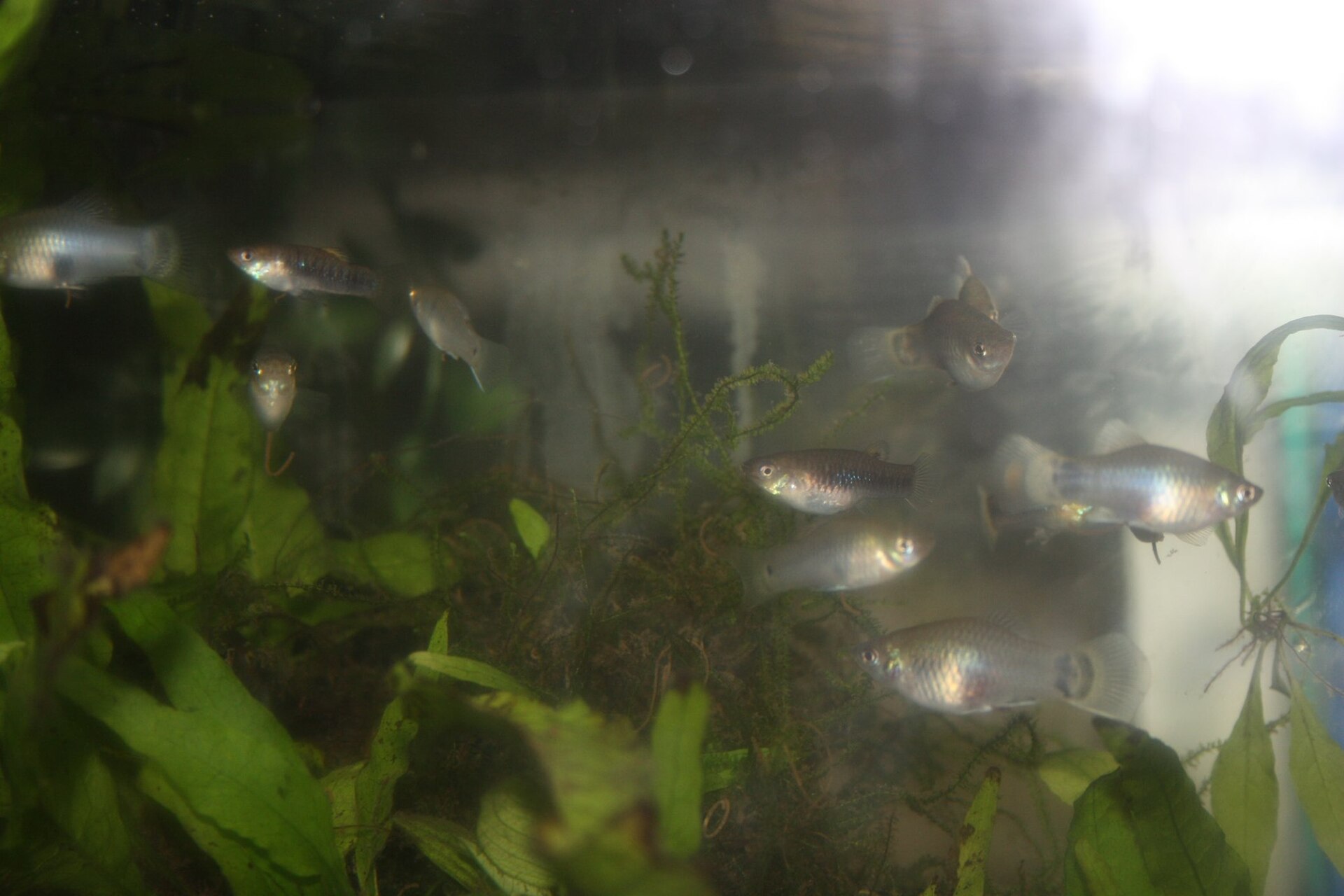
If I had to name one fish for a hard-water beginner, it would be the platy. They are peaceful, endlessly colourful, happy in a modest-sized tank, and about as tough as a tropical fish gets. Platies adapt readily to a wide range of conditions and positively enjoy the hard alkaline water many of us have. They are livebearers, so they give birth to free-swimming young rather than laying eggs, which means you will very likely end up with babies. Keep a group with more females than males to spread the males’ constant attention, and you have a lively, forgiving little community fish that will teach you the ropes without punishing every slip.
Guppies and Endler’s
Guppies are the fish half the hobby started with, and for good reason. They are cheap, dazzling, active, and they want exactly the hard alkaline water that comes out of so many taps. A pH between 7 and 8.5 and plenty of dissolved minerals is their happy place. The one caveat I will give honestly is that decades of breeding for extravagant tails have made some fancy guppy strains a bit more fragile than they once were; buy from a healthy tank and a decent source and you sidestep most of that.
Endler’s livebearers are guppies’ smaller, hardier cousins, and if anything I would nudge a nervous beginner towards them. They are tough as nails, breed just as freely, and their colours on the males are genuinely startling. Both take well to a community, and both will populate your tank if you keep the sexes together, which is worth knowing before you buy. My notes on breeding livebearers cover what to expect when the babies inevitably arrive.
Mollies
Mollies are the biggest of the common livebearers and they carry the hard-water preference furthest of all: they genuinely need hard, alkaline water and do poorly without it. In the right water they are handsome, characterful fish, and the black sailfin varieties in particular have real presence. Give them a bit more room than platies or guppies, since they grow larger and appreciate the space, and they will reward you. They are a slightly bigger commitment than the smaller livebearers but no less beginner-friendly in hard water.
White Cloud Mountain minnows
Not everyone wants livebearers, so here is an egg-layer that suits a beginner beautifully. White Cloud Mountain minnows are small, hardy schooling fish that tolerate a wide temperature range and do not mind hard water at all. They are happiest in a group of six or more, where the males colour up and display to one another. They even manage in an unheated room in a temperate climate, which makes them a genuinely easy fish. Keep them in a shoal and they are peaceful, active and undemanding.
Zebra danios
Zebra danios are another classic first fish and for once the reputation is deserved. They are almost indestructible, tolerant of a broad span of conditions including hard water, and forever busy near the top of the tank. The one thing to respect is their energy: they are fast, restless swimmers that want swimming room and the company of their own kind, so give them a group of at least six and a tank with some length to it rather than a tall narrow box. In return they are about as hardy as freshwater fish come.
Corydoras, with a small caveat
A shoal of corydoras catfish snuffling along the bottom is one of the quiet joys of the hobby, and they are peaceful, sociable and hardy enough for a beginner. I will be straight with you, though: most corydoras naturally come from softer, slightly acidic water, so very hard alkaline water is not their first choice. In practice tank-bred corydoras cope with hard water perfectly well, and I have kept them happily for years in mine, but they are the one entry on this list where you are working slightly against your tap rather than with it. Keep them in a group of six or more, on smooth sand or rounded gravel to protect their delicate barbels, and they will be fine.
Species to be careful with
For balance, a short honest warning. The fish beginners most often fall for in the shop are frequently the ones that suit hard water least. Neon and cardinal tetras, most of the dwarf cichlids like German blue rams, chocolate gouramis and many of the wild-type tetras all come from soft, acidic waters and tend to struggle in hard alkaline tanks. They can be kept by experienced aquarists who adjust their water, but for a first tank on hard tap water they are an uphill battle I would not set a beginner. There is no shame in choosing fish that match your water rather than fighting your water to match a fish.
Getting the start right
The best fish in the world will still die in a tank that is not ready for them, so a few words on the setup. Cycle the tank before any fish go in; the fishless cycling guide walks through it step by step and it is the single most important thing you will do. Stock slowly, adding a few fish at a time rather than a full load at once, and use the stocking calculator to keep the numbers sensible for your tank; if you are not sure how much water you actually have, the volume calculator sorts that out. Quarantining new arrivals before they join the main tank saves a lot of heartache later, as I explain in the quarantine guide.
Do those few things, choose fish that suit the water you already have, and the hobby becomes what it should be from the start: relaxing, colourful, and forgiving of the fact that you are still learning. Every one of the fish above has forgiven me plenty over the years, and they will do the same for you.