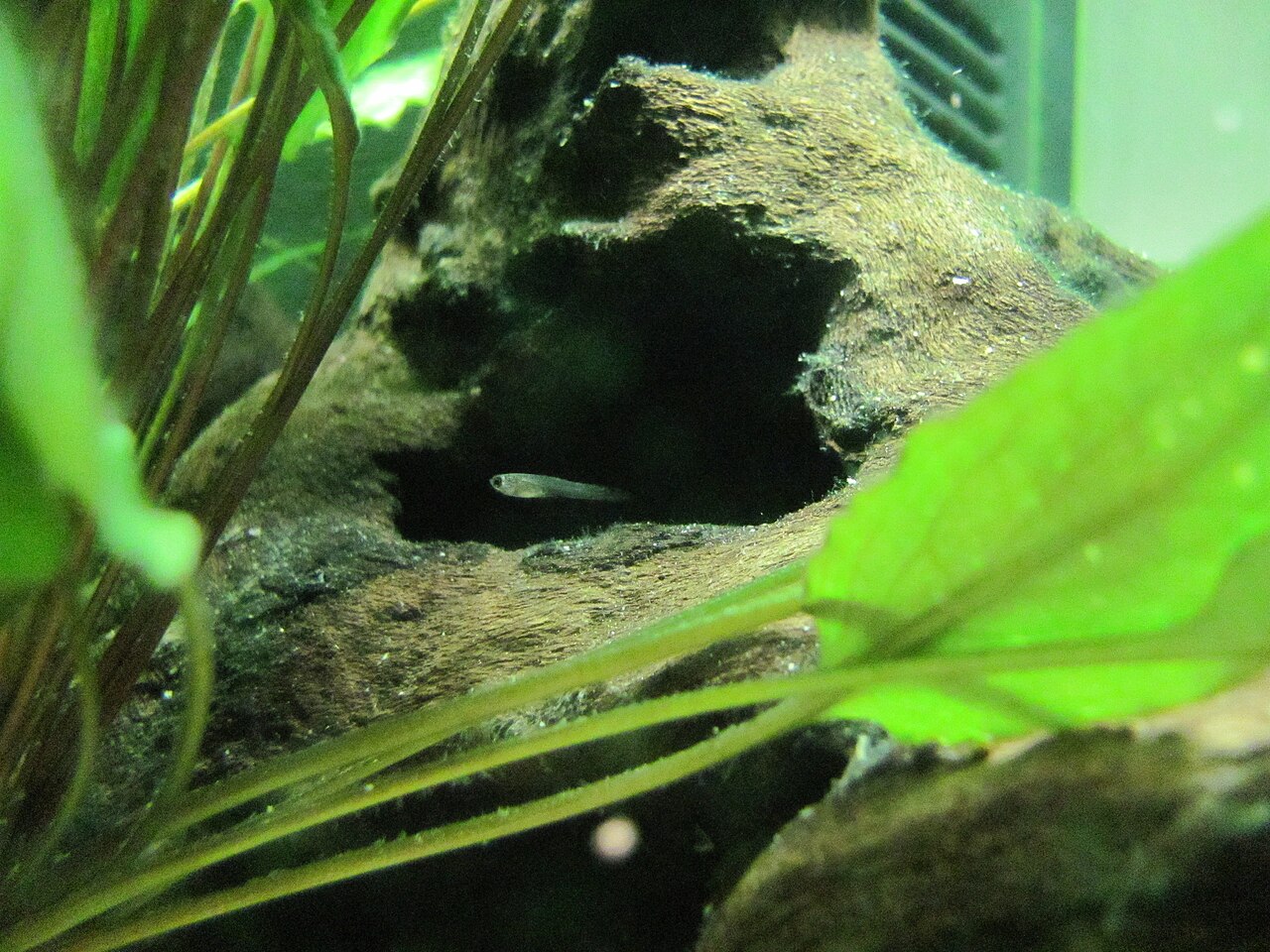
If your guppies are healthy and you have both sexes, you will have fry whether you planned them or not. The good news is that guppy fry are about the easiest baby fish there is to raise, and if you keep them in hard, alkaline tap water like mine, you already have one of the main ingredients for fast, strong growth without buying a thing. This is how I bring guppy fry on from a surprise batch in the morning to young fish you can sex and move on, and the honest limits of what hard water can and cannot do for them.
Free PDF
Free aquarium water cheat sheet (PDF)
Grab the one-page reference for your tank: target ranges for pH, hardness, ammonia, nitrite and nitrate, plus a plain walkthrough of the nitrogen cycle. No fluff, unsubscribe any time.
Free, unsubscribe any time. The download starts as soon as you sign up.
Hard water is a genuine advantage here
Most of this site is about working around hard water. Raising guppy fry is one of the few jobs where my liquid-limestone tap is a straight advantage, so I will lead with it. Livebearers evolved in hard, mineral-rich water, and growing fry use dissolved calcium and magnesium to build skeleton and scale. Soft-water keepers often have to add minerals to get good fry development, while I just do a water change and the minerals are already there at around 22.5 dGH. If you want the background on why that reading matters, it is in GH and KH explained, and the wider case for hard-water species is in fish for hard water.
I will not oversell it, though. Hard water helps fry grow, but it will not rescue weak stock. A lot of modern fancy guppies are heavily inbred for colour and finnage, and no amount of good water fixes bad genetics. If your adults are frail, as I discussed in are guppies actually hardy, expect to lose some fry no matter what you do. Good water gives healthy fry a head start; it does not perform miracles on a fragile line.
Where fry come from, and how fast
Guppies are livebearers, so there is no egg stage you can see. The female carries a developing brood for roughly three to four weeks, then drops twenty to sixty fully-formed, free-swimming fry over a few hours, usually around dawn. A well-fed female can do this every month, and she can store sperm from a single mating to produce several more broods with no male present. That is worth knowing, because a female bought already pregnant will keep dropping fry in a tank with no other guppies in it, which surprises a lot of first-timers.
The fry are tiny but competent from minute one. They swim, they hide and they eat straight away. Left in a normal community tank, most will be eaten within a day, and here is the uncomfortable part: the adult guppies, including the fry’s own mother, are the main predators. Guppies show no parental care whatsoever.
The book behind Lagonia
The Hard Water Aquarium
My practical guide to working with hard, alkaline tap water instead of fighting it: reading your water, choosing and setting up the tank, and keeping and breeding the fish that thrive in it, from livebearers to Rift Lake cichlids and shell-dwellers.
Ad · Amazon affiliate links. I earn a small commission on a purchase, at no extra cost to you.
The first decision: cover or separate
You have two realistic ways to keep fry alive, and I have used both.
The first is heavy planting. Fill a corner of the tank with fine-leaved plants or floating cover like guppy grass or a thicket of stems, and a decent share of each brood will hide in it and survive. This is the low-effort route and it is how guppies maintain a rolling population in a planted tank with no intervention from me. You will not save every fry, but you will keep a steady trickle coming through, which for most people is plenty.
The second is a separate grow-out tank. If you actually want to raise a whole brood, move the fry (or the heavily pregnant female) to their own small, cycled tank. I prefer moving fry after they are born rather than leaving a female in a cramped breeding trap, because those little plastic traps stress the mother and can bring on a premature, weak drop. A simple 20 to 40 litre tank with a sponge filter and some cover is far kinder and gives the fry room to grow. Keep the water the same temperature and chemistry as the tank they came from to avoid a shock on transfer.
Whichever you choose, do not use a bare tank with a strong filter intake, because fry get pinned to it or sucked in. A sponge filter solves both the gentle-flow problem and the food-trapping problem at once.
What to feed, and how often
Fry grow in proportion to how often they eat, not how much you dump in at once. Their stomachs are tiny, so the rule is little and very often. In the first week I feed four to six times a day if I am around; more is better if you can manage it.
The food itself is simple:
- Crushed flake, ground to a dust between finger and thumb, is a perfectly adequate staple and the fry take it from day one.
- Baby brine shrimp are the single best thing for growth. They are live, full of protein and fat from the yolk sac, and fry chase them down with obvious enthusiasm. Hatching your own is cheap and easy, and I walked through it in hatching baby brine shrimp.
- Microworms and powdered fry foods fill the gaps and are handy when you cannot hatch brine shrimp.
A fry raised on crushed flake alone will grow; a fry raised on baby brine shrimp once or twice a day on top of that will grow noticeably faster and fill out better. The general feeding principles still apply, and they are in feeding aquarium fish if you want them.
Water changes are the other half of growth
Frequent feeding means a lot of waste in a small volume, and nothing stunts fry like dirty water. In a grow-out tank I change a third of the water every couple of days, matched for temperature and topped up from the same hard tap, which keeps the minerals coming. Do not skip the dechlorinator just because they are only fry, and do not let a fry tank coast between changes the way a lightly-stocked display can. The payoff is fast, even growth; the price of neglect is a tank of permanently small, stunted fish. My general routine is in aquarium water changes.
Keep an eye on temperature too. Guppy fry do well a touch warmer than the adults, around 25 to 26 degrees, which speeds their metabolism and their growth. If you are setting up a grow-out heater, the heater calculator will size it for the small volume.
Sexing and moving them on
By three to four weeks the fry start to show their sex. Males stay slimmer, begin to colour up and develop the gonopodium, a narrow, pointed anal fin that is the male’s giveaway, while females stay plainer, rounder and show a dark gravid spot near the vent. They are sexually mature frighteningly early, often by eight to ten weeks, so if you do not want the next generation breeding with each other and with their parents, separate the sexes as soon as you can tell them apart. Leaving a mixed grow-out tank to its own devices is how you end up with a hundred guppies and a water-quality problem.
Which brings me to the thing nobody warns new keepers about: guppies are relentless. A single female can found a population, and a planted tank left alone will fill with guppies until it hits its limit. Before you commit to raising broods, have a plan for the surplus, whether that is a local shop that will take them, friends with tanks, or simply letting the community tank crop them naturally. And do a sanity check on numbers with the stocking calculator before a surprise brood turns into an overstocked tank. If you want the full breeding picture across platies, mollies and swordtails as well, I covered the family in breeding livebearers.
The short version
Raising guppy fry comes down to four things: keep them away from adult mouths, feed them little and often with some live food in the mix, change the water regularly, and separate the sexes before they breed. Hard water does the rest of the heavy lifting for you, which is a rare sentence to write on this site. For once, the limescale is on your side.