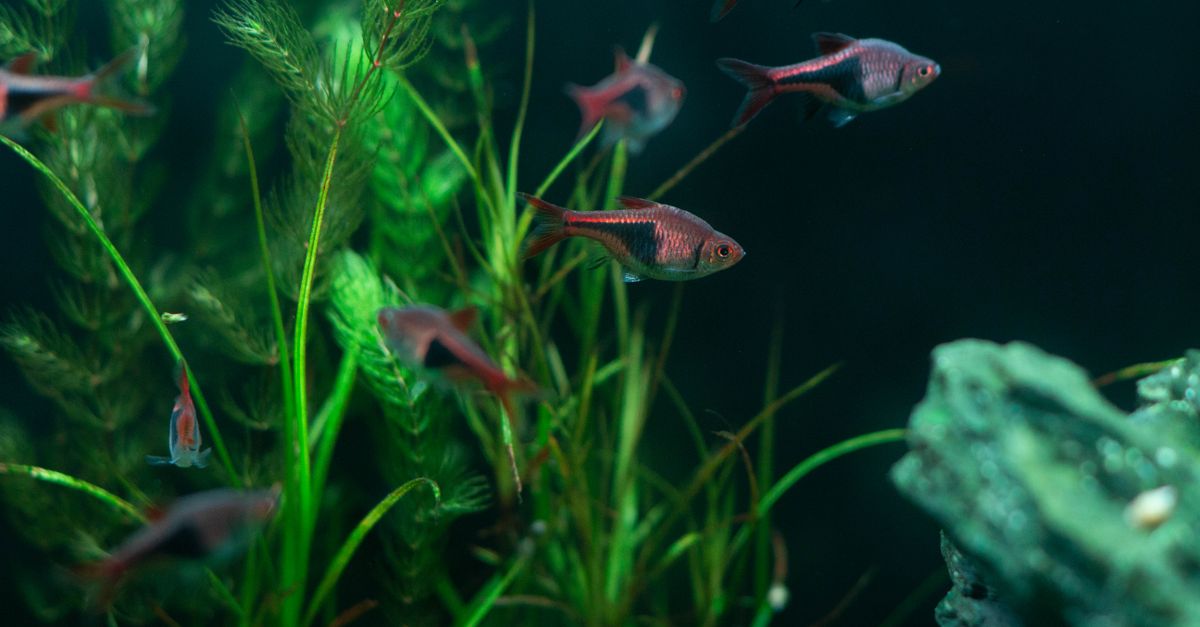
The single best upgrade I ever made to my fishkeeping was not a fancy filter or a bigger tank. It was a scraggly bunch of java fern tied to a piece of bogwood with cotton thread. Within a couple of months the tank looked alive rather than decorated, the algae on the glass slowed right down, and my water tests got boring in the best possible way. If you have been putting off live plants because you think they need pressurised CO2, blazing lights and a chemistry degree, I want to talk you out of that idea. A low-tech planted tank is cheap, forgiving, and honestly easier to run than a bare one.
Free PDF
Free aquarium water cheat sheet (PDF)
Grab the one-page reference for your tank: target ranges for pH, hardness, ammonia, nitrite and nitrate, plus a plain walkthrough of the nitrogen cycle. No fluff, unsubscribe any time.
Free, unsubscribe any time. The download starts as soon as you sign up.
Why bother with live plants at all
Plants are not just scenery. They are working parts of the tank.
First, they eat the stuff you are otherwise trying to remove with water changes. Ammonia, nitrite and nitrate are all nitrogen, and nitrogen is plant food. A well planted tank soaks up a meaningful chunk of the waste your fish produce before it ever has a chance to build up. Your filter bacteria still do the heavy lifting, but plants take ammonia up directly, which gives you a second line of defence when something goes wrong. Overfeed one evening, lose a snail behind the wood, miss a water change because life happened, and a planted tank shrugs off what a bare tank would sulk about.
Second, they add oxygen during the day and give the whole system more stability. Third, they give fish somewhere to be. Shy fish with cover are bolder, not more hidden, which sounds backwards but is true in every tank I have kept. A tetra that knows it can bolt into a vallisneria thicket will happily sit out in the open. And if you keep livebearers or anything that breeds in the tank, a clump of moss is the difference between fry surviving and fry becoming an expensive snack.
Finally, and this is the one that converts most people, plants compete with algae. Algae and plants want the same light and the same nutrients. Fill the tank with healthy plants and the algae gets the leftovers. It never disappears entirely, nothing makes it disappear entirely, but a planted tank with algae under control is very achievable. If you are already fighting a green tank, I have written more on beating algae separately, and the short version is that plants are half the answer.
The reassurance: you do not need CO2 or fancy kit
Somewhere along the way the internet decided that a planted tank means aquascaping, and aquascaping means pressurised CO2, high-output lighting, a drawer full of fertilisers and a lily pipe you polish weekly. That is one way to keep plants, and it produces stunning tanks, but it is the deep end of the hobby, not the entrance.
The truth is that a huge range of aquarium plants evolved in slow, murky, nutrient-rich water and will grow perfectly well in an ordinary tank with an ordinary light. This is what people call low-tech or low-energy planting. No CO2 injection, modest light, minimal dosing. Growth is slower than in a high-tech tank, which is actually a feature. Slow growth means less pruning, less dosing, and fewer sudden algae blooms when something drifts out of balance.
My first planted tank ran on the stock LED that came with the kit and a bag of cheap gravel. It was never going to win a competition. It was also green, healthy and stable for years.
The book behind Lagonia
The Hard Water Aquarium
My practical guide to working with hard, alkaline tap water instead of fighting it: reading your water, choosing and setting up the tank, and keeping and breeding the fish that thrive in it, from livebearers to Rift Lake cichlids and shell-dwellers.
Ad · Amazon affiliate links. I earn a small commission on a purchase, at no extra cost to you.
The near-bulletproof plants and how to actually plant them
Plant choice matters more than anything else in a low-tech tank. Pick from the easy list and you will succeed. Pick a demanding carpet plant because it looked lovely in a shop display and you will watch it dissolve. Here are the ones I would hand to any beginner, along with the bit shops rarely explain, which is how each one wants to be planted.
Anubias. Thick, dark, waxy leaves and nearly indestructible. Anubias grows from a rhizome, the thick horizontal stem the leaves sprout from, and this is the crucial bit: do not bury the rhizome. Bury it and it rots, and the plant dies, and you conclude that plants are hard when actually the plant was drowned. Instead, tie it to wood or rock with cotton thread or fishing line, or use a dab of superglue gel, which is aquarium safe once cured. The roots will grip the surface on their own within weeks. Anubias feeds from the water column, so it needs no special substrate at all.
Java fern. Same deal as anubias: rhizome plant, water-column feeder, attach it rather than plant it. It tolerates low light, hard water, soft water, nippy fish and neglect. New plantlets sprout from the tips of old leaves, which looks alarming the first time and is actually free plants.
Cryptocoryne. Crypts are the opposite: proper root feeders that want to be planted in the substrate with their crown just above it. They come in greens and lovely bronzy browns and they are tough as old boots once settled. The catch is crypt melt. When you move a crypt to a new tank it often drops most or all of its leaves within a fortnight. This looks like death. It is not death. The roots are fine, the plant is adjusting to your water, and new leaves suited to your tank will push up over the following weeks. Leave it alone, resist the urge to pull it out, and it will come back thicker than before. I have had crypts melt to nothing and return as the best plants in the tank.
Java moss and friends. Moss asks for nothing. Wedge it into a crevice, tie it to wood, or just let a clump drift. It is the single best fry cover there is, it hosts the tiny organisms fry feed on, and shrimp adore it. It can get untidy, so give it a trim now and then, and be aware that debris settles in it, so give it a gentle swish during water changes.
Vallisneria. Tall grassy ribbons that spread by runners along the substrate. A root feeder, so plant it in gravel or sand and push a root tab nearby. In a tank it likes, vallisneria goes from three plants to a jungle wall in a few months. Plant it at the back unless you want a jungle everywhere, which, to be fair, the fish would vote for.
Stem plants: hygrophila and water wisteria. These are the fast growers. Buy a bunch, snip the bottoms, and push each stem a few centimetres into the substrate. They root quickly and grow quickly, which makes them brilliant nutrient sponges in a new tank. When they get leggy, cut the tops off and replant the tops. Two plants where there was one. Hygrophila polysperma and water wisteria are about as close to unkillable as stems get.
Floating plants. Amazon frogbit, salvinia, red root floaters, even common duckweed if you are brave about never being rid of it. Floaters sit right under the light with their leaves in open air, so they grow ferociously and strip nutrients from the water faster than anything rooted. They also shade the tank, which many fish visibly prefer and which starves algae of light. In a new or struggling tank, floaters are my first response. The only maintenance is scooping out handfuls when they cover too much of the surface, because your rooted plants still need some light getting through.
The pattern to remember: anubias, java fern and moss feed from the water and get attached, not buried. Crypts, vallisneria and stems feed heavily through their roots and go into the substrate, ideally with root tabs. Floaters feed from the water and look after themselves.
Substrate and light for a low-tech tank
You do not need special substrate. Plain gravel or sand works fine for the plants above, provided you push root tabs, which are slow-release fertiliser capsules, into the substrate near the root feeders every few months. Sand should not be too fine and too deep or it compacts, but a few centimetres of ordinary aquarium sand or fine gravel is grand.
If you are setting up fresh and fancy spending a bit more, an aquasoil gives root feeders a running start and buffers the water slightly soft and acidic, which many plants like. It is a nice-to-have, not a requirement, and it does wear out after a couple of years, at which point you are back to root tabs anyway. Every one of the plants I listed will grow in gravel from a garden centre, rinsed well.
Light is where beginners most often go wrong, and they go wrong by having too much, not too little. Whatever light came with your tank is almost certainly enough for easy plants. Run it for six to eight hours a day on a cheap plug-in timer, because consistency matters more than duration. Longer photoperiods and brighter lights do not make easy plants grow faster in any useful way. What they reliably grow is algae, because algae can use the extra light and your low-tech plants, limited by the natural CO2 in the water, mostly cannot. If algae shows up, shortening the photoperiod by an hour is the first lever to pull. If you want to understand the balance between light intensity and carbon properly, the CO2 and light page goes into how the two trade off against each other.
Fertiliser and CO2: what you actually need
At the start, with a lightly stocked tank, fish food and fish waste supply a surprising amount of what easy plants need. Root tabs cover the crypts and vallisneria. That alone will keep things ticking over.
Once the plants are established and visibly growing, a small weekly dose of an all-in-one liquid fertiliser makes a real difference, especially for the water-column feeders and floaters. Start at half the bottle’s recommended dose and watch the tank for a few weeks. Pale new leaves or stalled growth means dose a little more. Algae creeping in means ease back or shorten the light. If you want to move past guesswork, the fertiliser dosing calculator will work out amounts for your tank volume, including cheap dry salts if you outgrow bottled ferts, which most people eventually do.
Pressurised CO2? Genuinely optional. It roughly triples growth rates and it is required for the demanding stuff, dense carpets of hairgrass or Monte Carlo, deep red plants, the competition-style layouts. None of the plants in this article need it. If the high-tech itch strikes you in a year, it will still be there. Start simple, succeed, then decide.
The honest bit: melt, patience and the ugly phase
Here is what nobody tells you in the shop. Almost every new plant looks worse before it looks better. Most aquarium plants are farmed emersed, meaning grown with their leaves in air, and when you submerge them they have to shed those leaves and grow new underwater ones. Crypts melt dramatically. Stem plants drop their lower leaves. Even hardy vallisneria can sulk for a month. Your tank at week three may look like a plant graveyard, and this is the point where beginners rip everything out and declare themselves cursed.
Do not rip anything out. Trim off leaves that have clearly died, keep the lights on their timer, keep up the water changes, and wait. Somewhere around week four to eight, the plants that have adjusted start to move, and once they move they accelerate. Six months in, my scraggly java fern was a bush I had to thin out, and I was handing cuttings to anyone who stood still long enough. That tank taught me more about stable water than any test kit did, and it started with cotton thread and one sad-looking rhizome. Yours can too.