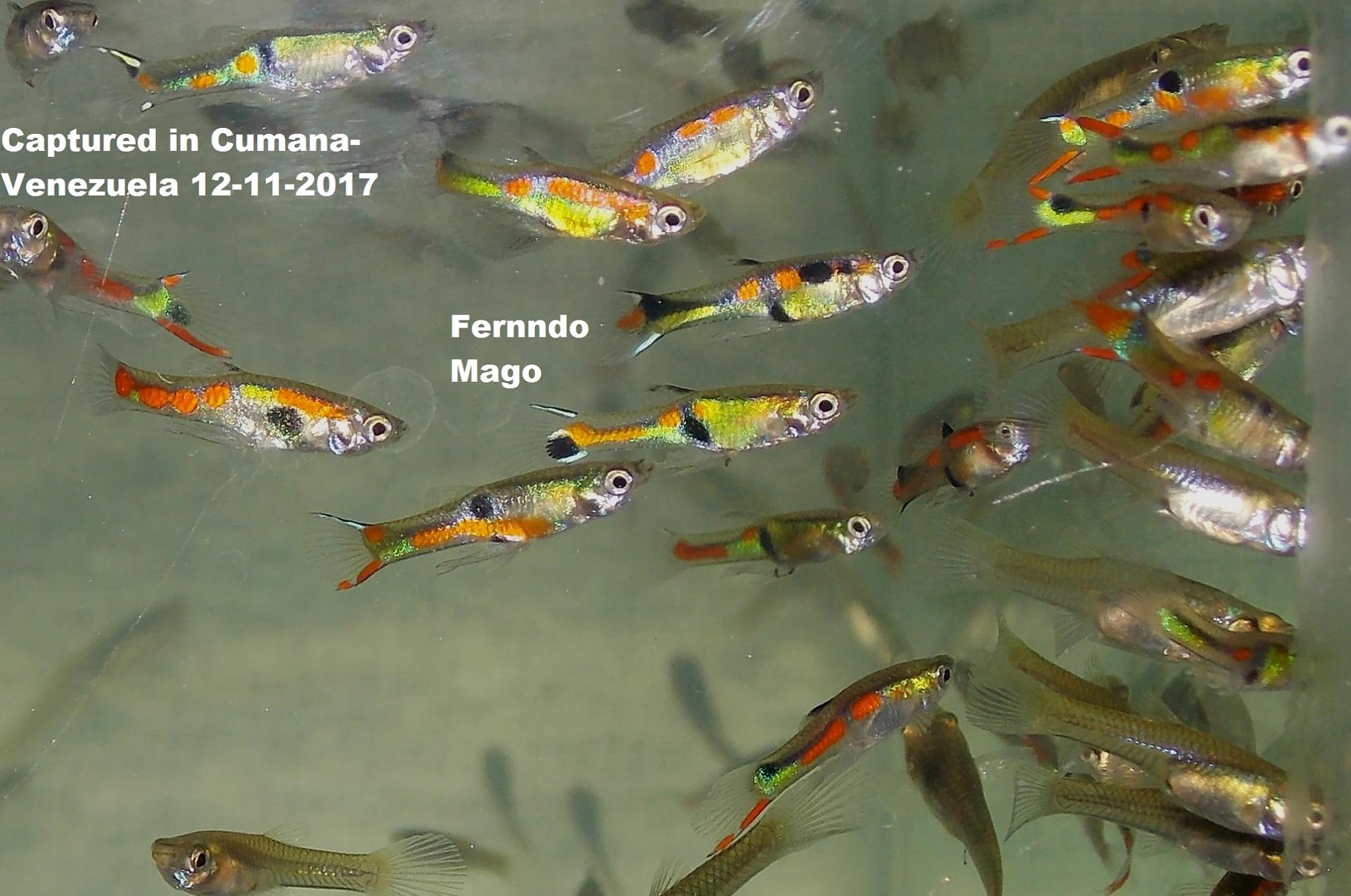
If you keep hard tap water and you want a splash of colour that will not sulk in it, Endler’s livebearers are one of the best small fish you can buy. I picked up my first group almost by accident, a handful of unlabelled males in a bag from a local keeper, and they turned a quiet 40 litre into something that stopped visitors mid-sentence. The males look like someone dipped a guppy in metallic paint and then shrank it. They are cheap, hardy, endlessly active, and they thrive in exactly the water that makes soft-water darlings like cardinal tetras miserable. This is how I keep them, what they actually need, and the one habit that will save you a lot of grief later.
Free PDF
Free aquarium water cheat sheet (PDF)
Grab the one-page reference for your tank: target ranges for pH, hardness, ammonia, nitrite and nitrate, plus a plain walkthrough of the nitrogen cycle. No fluff, unsubscribe any time.
Free, unsubscribe any time. The download starts as soon as you sign up.
What they are, briefly
Endler’s livebearer is Poecilia wingei, a close cousin of the common guppy from the coastal lagoons of north-eastern Venezuela. They are named after Dr John Endler, who brought them to wider attention in the 1970s, and they were only formally described as a separate species in 2005. Before that most hobbyists just called them wild guppies, which tells you how closely related the two are. That relationship matters more than it sounds, and I will come back to it.
The important thing for us is where they come from. Those Venezuelan lagoons are warm, mineral-rich and alkaline. Endlers evolved in hard water, so a keeper sitting on very hard alkaline tap does not need to fight their chemistry at all. That is a rare and welcome thing in this hobby.
Water parameters
Endlers are comfortable across a wide band, but they are at their brightest and longest-lived in water that mirrors home. Aim for a general hardness of roughly 10 to 30 dGH, a carbonate hardness of 8 dKH or above, and a pH somewhere between 7.0 and 8.5. If your tap runs around 22.5 dGH, as mine does, you are already inside that window with nothing to add. You can pour treated tap straight in and the fish will thank you for it.
The mistake I see most often is people softening their water for Endlers because they read a generic livebearer care sheet, or because they keep Endlers alongside soft-water species and split the difference. Soft, acidic water is the single most common reason keepers report short lifespans and washed-out colour. If you want to understand why the numbers matter, my piece on aquarium water parameters and the one on GH and KH explained go into the chemistry properly. For temperature, anywhere from 22 to 28 degrees Celsius suits them; I run mine at 24 to 25, which seems to be the sweet spot for colour and steady breeding. Many keepers run small Endler tanks with no heater at all in a warm room, though a stable temperature is kinder than a swinging one.
The book behind Lagonia
The Hard Water Aquarium
My practical guide to working with hard, alkaline tap water instead of fighting it: reading your water, choosing and setting up the tank, and keeping and breeding the fish that thrive in it, from livebearers to Rift Lake cichlids and shell-dwellers.
Ad · Amazon affiliate links. I earn a small commission on a purchase, at no extra cost to you.
Tank size and setup
These are genuinely small fish. Males top out around 2.5 cm and females reach maybe 4.5 cm, so you do not need a large tank to keep a proper group. A 40 to 60 litre tank holds a lively colony very happily. I would not go below about 20 litres, not because they need the swimming room so much as because small volumes swing in temperature and chemistry far too fast for comfort, and a stable tank is a healthy tank.
Plant it. Endlers come alive against greenery, and because they suit hard water you have easy options that will not demand soft water or injected CO2. Java fern, Anubias, Vallisneria and hornwort all cope well in liquid rock; my hard water aquarium plants guide covers the ones I lean on. Floating plants are especially good here, partly because the fish shelter under them and partly because they give newborn fry somewhere to hide, which brings us neatly to the fun part.
Filtration should be gentle. Endlers are not strong swimmers and a fierce filter outlet will exhaust them and blow fry around the tank. A sponge filter is close to ideal, and it doubles as a fry-safe intake. If you want to work out sensible stocking, the stocking calculator and volume calculator will keep you honest, though frankly the bigger risk with Endlers is not overstocking on day one. It is what happens over the following months.
They breed, whether you plan to or not
Endlers are livebearers, so the females give birth to free-swimming fry rather than laying eggs. A single healthy female can drop a brood of anywhere from 5 to 25 fry roughly every three or four weeks, and she can store sperm from a single mating to produce several broods without a male present. Buy a mixed group and you will have babies within a month, guaranteed.
In a planted tank a fair number of those fry survive on their own, tucked into the floating plants and picking at biofilm until they are big enough to join the shoal. This is delightful the first time and slightly alarming by the sixth month, when your 60 litre holds forty fish. I keep a lid on numbers by running the tank slightly leaner on plants than I otherwise might, so the adults thin the broods naturally, and by giving away young males to other keepers. If you actively want to raise them, the same principles I set out in breeding livebearers apply almost word for word, because Endlers and guppies breed the same way.
A note on ratios. Male Endlers court constantly, so a tank that is all males, or heavily male-biased, is a peaceful and colourful thing because there is nothing to squabble over. If you keep females too, give each one at least two or three males, or better still keep more females than males, so no single female is pestered ragged. An all-male colony is honestly my favourite way to keep them for pure display.
Keeping a strain pure
Here is the habit I promised. Because Endlers and common guppies are so closely related, they interbreed freely and will happily produce fertile hybrids. Put the two in one tank and within two or three generations the distinct Endler markings blur into generic guppy patterns, and you cannot undo it. If you care about keeping a clean Endler line, and it is worth caring about, never house them with fancy guppies. Keep the two species in separate tanks and be wary of “Endlers” sold cheaply in general community tanks, which are often already hybrids. Pure lines are usually sold with a class label (N, P or K) describing how well documented their wild ancestry is; you do not need to memorise that, but it is a sign the seller takes the line seriously.
Feeding and tank mates
Endlers are undemanding omnivores. A good quality crushed flake or micro pellet forms the base, and they relish small live or frozen foods such as baby brine shrimp, daphnia and microworms, which also bring the males into their best colour. Their mouths are tiny, so break dry food down small. A little vegetable matter, whether from algae in the tank or the occasional blanched greens, rounds things out. My general notes on feeding aquarium fish hold true here; the usual trap is overfeeding a fish this size, which fouls the water faster than you would expect.
For company, think small and peaceful. Other hard-water friendly fish that will not eat the fry work best: platies, smaller rasboras, Corydoras, and shrimp such as cherry shrimp, though adult Endlers will pick off the tiniest shrimplets. Avoid anything with a mouth big enough to treat an Endler as a snack, and avoid fin-nippers. Honestly, though, Endlers are so watchable on their own that a single-species tank of them is one of the easiest recommendations I can make to a new keeper with hard water.
Is an Endler right for your tank?
If you have hard alkaline tap water, a modest tank, and you want colour and activity without a shopping list of additives, few fish fit better. They are cheap to start, forgiving of beginner mistakes within reason, and they reward good water with constant motion and ridiculous colour. The two things to get right are simple: do not soften their water, and do not let them mix with guppies. Sort those and a group of Endlers will run itself, then quietly multiply while you are not looking. Before you buy, a five-minute read of keeping fish in hard water will show you where they sit among the other species that genuinely enjoy the water most of us are stuck with.