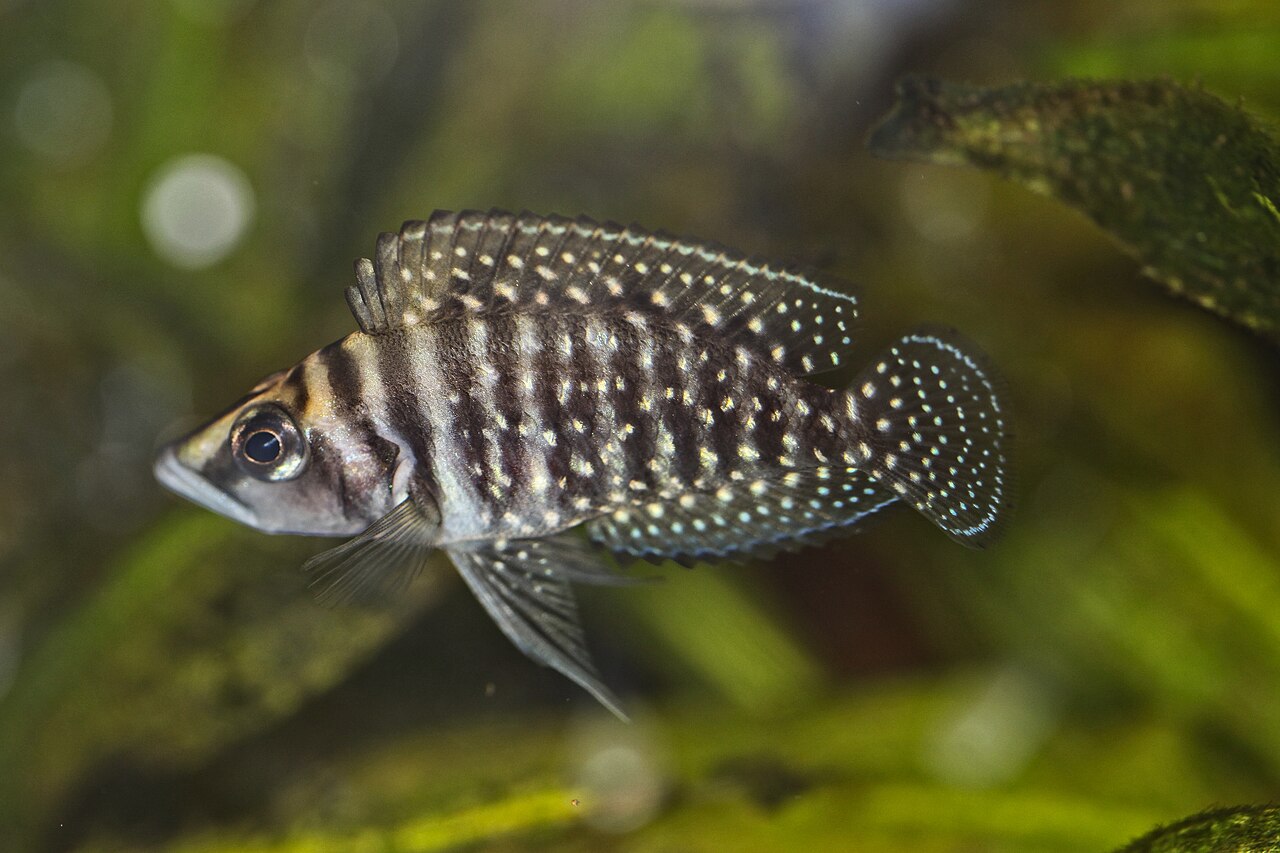
Some fish rush about and demand attention. Altolamprologus does the opposite. These are the still, watchful predators of Lake Tanganyika’s rocky shores, hanging almost motionless in the water with a flat, deep, armour-plated body, waiting for something small and foolish to swim past. I find them one of the most rewarding Rift Lake fish to keep precisely because they are not busy. A well-grown calvus with its pearly spangling, or a stocky compressiceps parked in a crevice, has real presence. And like every Tanganyikan, they are built for exactly the hard, alkaline water that comes out of my tap, which is a large part of why I recommend them to hard-water keepers who want something with more menace than a shell-dweller.
Free PDF
Free aquarium water cheat sheet (PDF)
Grab the one-page reference for your tank: target ranges for pH, hardness, ammonia, nitrite and nitrate, plus a plain walkthrough of the nitrogen cycle. No fluff, unsubscribe any time.
Free, unsubscribe any time. The download starts as soon as you sign up.
Two fish, one build
Altolamprologus calvus and Altolamprologus compressiceps are close cousins and are kept the same way, so I will treat them together and flag the differences as they come up. Both share the signature shape: a body flattened side to side like a coin, deep from top to bottom, and covered in unusually thick, tough scales. That armour is not decoration. It lets these fish barge into tight rock crevices after prey, and it makes them awkward for other predators to swallow.
Calvus is the taller, more pointed-faced of the two, and it comes in a run of regional colour forms, black, white and yellow among them, all carrying that fine pearly spotting once mature. Compressiceps is a fraction chunkier with a blunter head and also comes in several colour varieties. Males of both get to around 12 to 14 cm, with the females noticeably smaller and shorter-finned, which turns out to matter enormously when they breed.
The one thing everyone should know before buying is the speed at which they grow, which is to say barely at all. Altolamprologus is famously slow. A juvenile can sit at the same modest size for months while everything else in the tank shoots past it. If you want a big fish quickly, this is the wrong genus. If you are patient, you are rewarded with a fish that also lives a good long while.
Water: made for hard tap
This is the easy part, and the part that makes them such a natural fit here. Lake Tanganyika is hard and alkaline, and these fish want the same in the tank. A pH comfortably on the alkaline side, high general hardness, and a stable temperature in the middle twenties Celsius is the brief. My hard tap water, around 22 dGH and naturally alkaline, lands them right where they belong with no tinkering at all.
That is the honest selling point of the whole Tanganyikan group for anyone in a hard-water area. Where a soft-water keeper has to mineralise and buffer to keep these fish properly, I just do water changes with what comes out of the wall. If you are not sure where your own supply sits, a quick read of GH and KH explained will tell you what to test for, and if your water turns out soft you would use the remineralise calculator to bring it up to a Rift-friendly level. Whatever you do, do not soften water for these fish. Chasing a low pH they do not want is effort spent making them worse, a point I make repeatedly in do you actually need RO water.
Temperature stability matters more than hitting an exact number. If you need to work out the right heater for your tank volume, the heater calculator sizes it for you.
The book behind Lagonia
The Hard Water Aquarium
My practical guide to working with hard, alkaline tap water instead of fighting it: reading your water, choosing and setting up the tank, and keeping and breeding the fish that thrive in it, from livebearers to Rift Lake cichlids and shell-dwellers.
Ad · Amazon affiliate links. I earn a small commission on a purchase, at no extra cost to you.
Temperament: peaceful, until you are prey
Altolamprologus has a split personality that trips people up. Towards other fish too large to eat, they are calm to the point of being shy. They are not the aggressive, tank-ruling terror some Rift cichlids are, and a nervous new calvus will often skulk in the rocks for the first week or two before it settles. Do not mistake that shyness for poor health; it is just how they arrive.
Towards anything small enough to fit in that surprisingly large mouth, they are patient, committed predators. This is the crucial point for stocking. A calvus will happily ignore an adult fish its own size and then, over a few quiet weeks, eat every fry and every small fish in the tank one by one. They are ambush hunters that specialise in exactly the little things other Tanganyikans produce.
So the tank needs rockwork, and plenty of it: caves, crevices and overhangs where the fish can wedge itself, feel secure, and watch. A bare tank makes them stressed and reclusive. My approach to building stable, cave-rich Tanganyikan scapes is in aquascaping with hardscape rock and wood, and the broader Tanganyikan setup, substrate and layout is covered in setting up a Tanganyika tank.
Tankmates that work, and the ones that vanish
The rule is simple: nothing small enough to be eaten. That immediately rules out keeping Altolamprologus with a breeding colony of shell-dwellers you actually want fry from. A calvus parked next to a multifasciatus colony is a fox in the henhouse; the adults may be safe, but you will never raise a single baby. If you love the shellies, keep them in their own tank. Mine live away from any Altolamprologus for exactly this reason, and the colony life is described in keeping shell-dwelling cichlids.
What does work is other sturdy, similarly sized Tanganyikans that are too big to be a meal. Julidochromis species make good companions and share the same rocky habits, covered in Julidochromis care. Open-water shoalers that live up in the top of the tank, well clear of the ambush zone, are another good pairing; I keep Cyprichromis leptosoma with mine and the two occupy completely different parts of the tank. Tanganyikan Synodontis catfish also suit. Avoid the boisterous Malawi mbuna, whose constant aggression bullies these placid fish out of feeding.
Because they hunt slowly and hold territory rather than roam, you can keep a small group in a decent-sized tank if the rockwork breaks up sightlines. For a single pair, a tank around a metre long gives them room; work out your real volume with the volume calculator and check your overall stocking with the stocking calculator before you add them.
Feeding a fussy carnivore
These are meat eaters, and often picky ones. In the wild they eat invertebrates, fry and eggs, so in the tank they want meaty frozen and, where you can offer it, live foods. Frozen mysis, brine shrimp, krill and similar go down well. Many individuals flatly refuse dried food, at least at first, though some can be weaned onto a good carnivore pellet with patience.
The trap with Altolamprologus is the opposite of the bloat problem that plagues herbivorous mbuna. These fish will gorge if you let them, and a calvus that is fed rich food to excess gets fat and sluggish. Feed modest amounts, let them stay lean and active, and do not panic if a shy new fish ignores food for the first few days. General principles on portion sizes and not overdoing it are in feeding aquarium fish.
Breeding: the small female and the tiny cave
Breeding Altolamprologus is a lovely bit of natural engineering, and it hinges entirely on the size difference between the sexes. The female is much smaller than the male, and she spawns inside a cavity so tight that only she can get in. Empty snail shells and small rock caves both do the job, and the point of the tight fit is that the bulky male physically cannot follow her inside.
He fertilises the eggs from the entrance, she tends them within the cave, and because he cannot reach them he cannot eat them, which is the whole trick. A female can lay up to a couple of hundred eggs, and they hatch in a few days, with the fry free-swimming a week or so after that.
The standard way to get a pair is to buy a group of six or more juveniles and let them sort themselves out as they mature, which given how slowly they grow can take a year or two of waiting. There is no reliable way to sex young fish, so a group is the only sensible route. Once you have a settled pair and a suitable cave, they are fairly willing spawners for a Tanganyikan. Raising the fry is slow, in keeping with everything else about the genus, but a calvus or compressiceps you grew from a spotty juvenile is a genuinely satisfying fish to have on your hands.
If you are weighing up which Tanganyikan to start with, Altolamprologus is not the beginner’s choice; a shell-dweller colony is easier and faster. But for a hard-water keeper who has done the shellies and wants a patient, characterful predator that thrives on the water you already have, few fish reward the wait quite like these armour-plated ambushers.