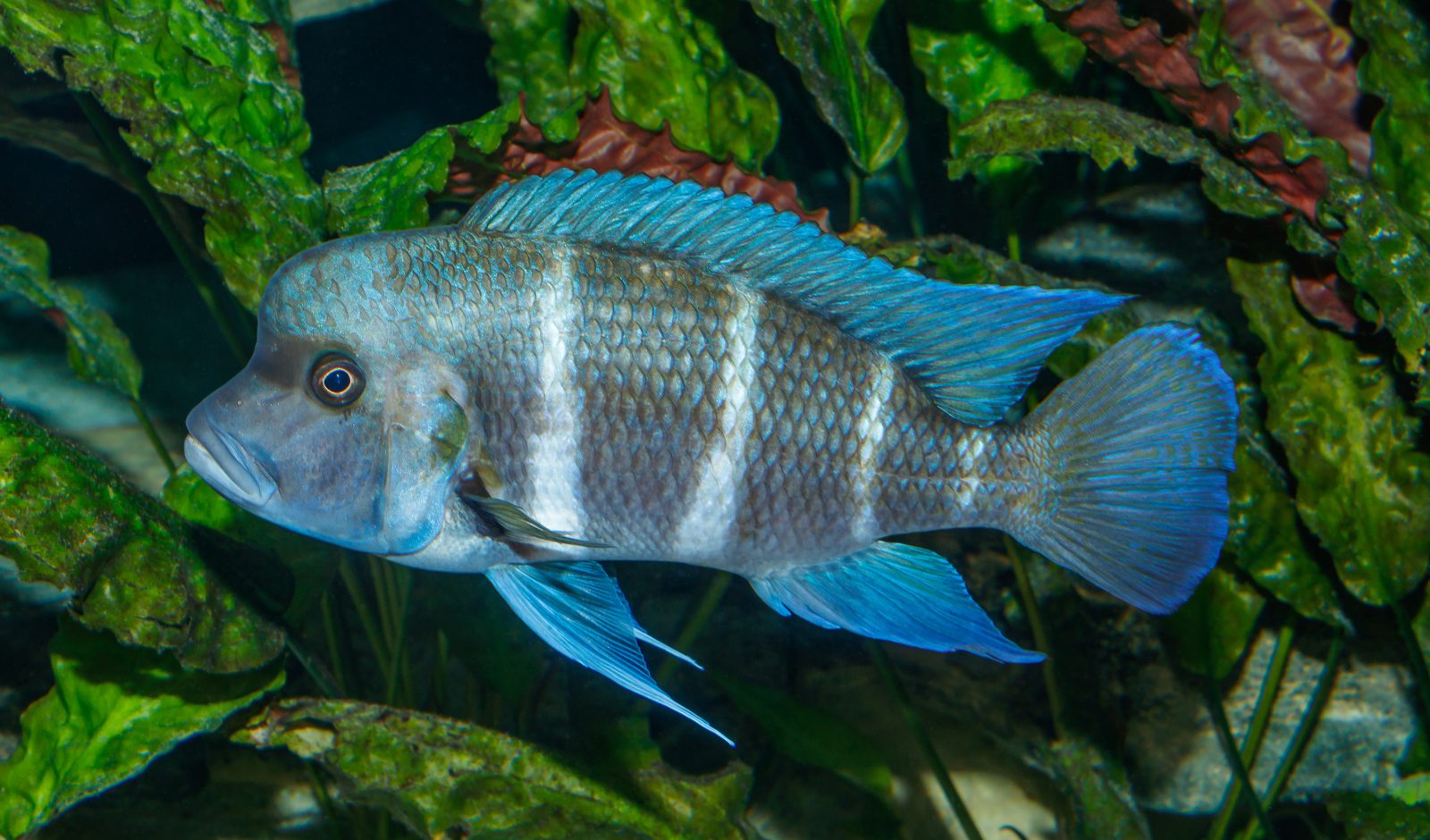
If you want one large, calm, genuinely impressive fish for hard alkaline water and you have the tank for it, the frontosa is hard to beat. Cyphotilapia frontosa is the humpheaded blue-and-white cichlid from the deep rocky slopes of Lake Tanganyika, and the water it evolved in is close to what comes out of my tap: hard, mineral-heavy and alkaline. That is the good news. The catch is size and patience. This is a fish that grows slowly, lives for well over a decade, and needs a tank most people underestimate. I keep a small colony, and the honest lesson from the first year was that I had bought a fish for the tank I wanted rather than the one I had. Let me save you that mistake.
Free PDF
Free aquarium water cheat sheet (PDF)
Grab the one-page reference for your tank: target ranges for pH, hardness, ammonia, nitrite and nitrate, plus a plain walkthrough of the nitrogen cycle. No fluff, unsubscribe any time.
Free, unsubscribe any time. The download starts as soon as you sign up.
What a frontosa actually is
Picture a stocky, deep-bodied cichlid, silvery white crossed by five to seven dark vertical bars, with a domed forehead that swells into a fatty nuchal hump as the fish matures. Males carry the biggest humps and grow larger, up to around 30 cm in a roomy aquarium; females tend to sit nearer 25 cm. In the lake they live deep, often well below 10 metres and sometimes far deeper, hanging over the sediment near rocky drop-offs. At night they drift up to pick off sleeping shoals of Cyprichromis. That single fact explains most of their behaviour in a tank: they are ambush hunters, unhurried by day, and anything small enough to fit in that mouth is food after lights-out.
A quick note on names. The southern populations were split off as Cyphotilapia gibberosa back in 2003, so a fish sold as a “Zaire blue” or “Blue Mpimbwe” is often gibberosa rather than true frontosa. For care it makes no practical difference. What matters is that you keep one variant together and do not mix them, because the colour forms interbreed readily and the offspring are a muddle nobody wants.
The tank size question, answered honestly
A single juvenile will potter about happily in a 200 litre tank for a while, and that is exactly how people talk themselves into trouble. A frontosa is a shoaling fish that does best as a group, it grows into a genuine bruiser, and it is long-lived, so you are planning for years, not months. For an adult colony of six to eight fish I would not go below 450 litres, and a footprint around 180 cm long by 50 cm or more front to back is what lets them settle. Length and width matter far more than height here; these are not fish that use the top of the water column much.
Work out your real volume before you trust the number on the box, because rock and sand steal a surprising amount. Our volume calculator gives you the true litres, and the stocking calculator will keep you honest about how few large cichlids a big tank actually holds. A frontosa colony is a lightly stocked tank by fish count and a heavily loaded one by waste, which is the opposite of how mbuna work.
If a six-foot tank is not on the cards, this is not your fish, and there is no shame in that. Look at the smaller Tanganyikans instead. My Tanganyika tank setup guide runs through the shell-dwellers and rock-dwellers that give you the same lake in a quarter of the space.
The book behind Lagonia
The Hard Water Aquarium
My practical guide to working with hard, alkaline tap water instead of fighting it: reading your water, choosing and setting up the tank, and keeping and breeding the fish that thrive in it, from livebearers to Rift Lake cichlids and shell-dwellers.
Ad · Amazon affiliate links. I earn a small commission on a purchase, at no extra cost to you.
Water and temperature
Here is where my tap earns its keep. Frontosa want hard, alkaline water: a pH around 8 to 9 and a general hardness up in the high teens or twenties of °dGH. My supply runs about 22 dGH straight from the cold tap, so the hardness is sorted with no effort at all.
The one thing worth watching is pH. Very hard tap does not automatically read high on the pH meter; mine sits around 7.2 at the tap because it is loaded with dissolved carbon dioxide. Left in an aerated tank the CO2 gasses off and the pH climbs on its own, and I firm it up further with a substrate of aragonite or coral sand, which slowly buffers the water towards the alkaline end and holds it there. If you are on soft water you will be fighting this fish’s chemistry constantly, and remineralising to Rift Lake levels is genuinely worth doing; the remineralise calculator sets a target, and it is worth reading why GH and KH matter before you start dosing anything.
Temperature is the detail most guides get slightly wrong. Because frontosa come from deep, cool water, they do not want to be cooked. I run mine at 24 to 25°C. Warmer speeds their metabolism, shortens their lives and, in my experience, makes digestive trouble more likely. Size the heater to the true volume with the heater calculator, and remember a big tank of cool water is cheaper to run than a small warm one; the running-cost calculator will show you the yearly figure before the electricity bill does.
Feeding without inviting bloat
Frontosa are carnivores that eat other fish in the wild, so their diet leans towards protein, but that does not mean fatty or endless. I feed a good-quality cichlid pellet as the staple, with frozen mysis, krill and the occasional prawn as treats. What I avoid is mammalian meat like beef heart, and I do not use live feeder fish, which are a reliable way to import disease for no benefit.
The bigger risk is simple overfeeding. These are slow, deliberate eaters, and a tank full of leftover protein sitting in warm water is how African cichlid bloat starts. I feed once a day, sometimes skip a day entirely, and I would rather see slightly lean fish than pot-bellied ones. If you ever see a fish hanging off on its own, refusing food, breathing hard with stringy white waste, act fast; my notes on African cichlid bloat cover what that looks like and what to do.
Tankmates that work
The frontosa’s temperament is a lovely contradiction. Among their own kind they are placid, almost stately, and serious aggression is rare if the group has room. Towards small fish they are simply predators, patient and effective. So the rule is straightforward: nothing that fits in the mouth, and nothing so frantic it stresses a calm fish or steals every scrap of food.
What has worked for me:
- Cyprichromis leptosoma, kept as an adult shoal. This is their natural prey, but grown Cyprichromis are too big to swallow, and their constant midwater movement draws the frontosa out and gets them feeding with confidence. My Cyprichromis care notes explain how to keep a proper group.
- Larger, mild-mannered Tanganyikans such as Julidochromis and the bigger Neolamprologus species, which hold their own without picking fights.
- Synodontis catfish as a bottom crew, provided they are grown out past bite-size.
What I would not do is mix frontosa with Lake Malawi mbuna. The mbuna are faster, nippier and want a herbivore diet, and the mismatch stresses everyone. Slow ambush predators and buzzing rock-grazers are two different tanks. The armoured Altolamprologus is another calm Tanganyikan predator that overlaps beautifully with frontosa if you want a second showpiece.
Setup, and the long game
Give them a soft sand bed and a few solid rock structures for shade and security rather than a maze of caves; frontosa like open swimming room with somewhere to loiter. Keep the lighting dim. Fish from deep, dark water are visibly happier under subdued light, and their colours read better against sand than under a blazing reef lamp.
Filtration needs to be generous because the bioload from big fish is heavy even when the numbers are low. Oversize it, keep on top of maintenance, and change water regularly to hold nitrate down; my maintenance schedule is built around exactly this kind of tank. And quarantine every new frontosa properly. They are not cheap, they are slow to replace, and introducing disease to an established colony is a heartbreak; here is how I quarantine new fish.
The real thing to understand about frontosa is time. They grow at a crawl, the hump takes years to fill out, and a colony only truly comes into its own once the fish are mature and settled. If you want instant colour and action, look elsewhere. If you want a fish that will still be the centrepiece of your living room in ten years, on water that most people have to work hard to fake, the frontosa is one of the great rewards of keeping hard, alkaline tanks.
Livestock, medication and dosing advice here is what has worked in my tanks on very hard water; your fish, your water and your test kit may differ, so treat the numbers as starting points rather than rules.