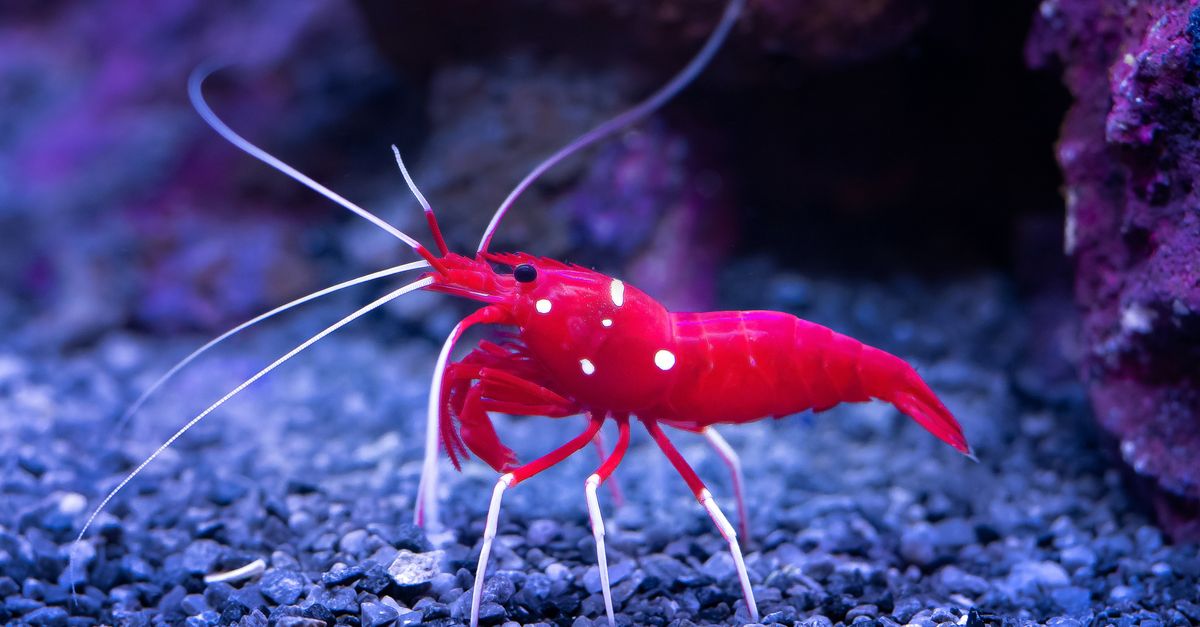
A cherry shrimp grazing in a planted aquarium

What Is the Ideal GH for Shrimp?

The ideal GH depends on the shrimp: Neocaridina, the common cherry shrimp and their colour forms, want a GH of roughly 6 to 12 dGH, while Caridina, the crystal reds and bee shrimp, want it far softer at around 4 to 6 dGH. GH matters more to shrimp than almost any other reading, because shrimp build a fresh calcium-rich exoskeleton every time they moult, and the water is where that calcium comes from. ...

July 23, 2026 · 2 min
An aquarium heater and thermometer in a tank

What Size Aquarium Heater Do I Need? (Watts per Litre)

For most tropical tanks in a normally heated room, size an aquarium heater at roughly 1 to 1.5 watts per litre. A 60 litre tank wants somewhere around a 75 watt heater, and a 100 litre tank a 100 to 150 watt one. That guide keeps the water at a stable tropical temperature without a heater that runs flat out or one that never keeps up. When to go higher than the rule The watts-per-litre rule assumes the tank sits in a room that stays reasonably warm. Push the wattage up towards the higher end, or beyond it, if any of these apply: ...

July 23, 2026 · 2 min
Testing the pH of aquarium water

What pH Should a Community Tank Be?

A general community tank is happiest at a stable pH anywhere between 6.5 and 8, and holding that number steady matters far more than hitting any exact figure. Almost every fish sold for a community aquarium is farm-bred and many generations removed from the wild, so it adapts comfortably to a wide band of pH as long as the water does not lurch about. A rock-steady 7.8 is far better for a shop-bought tetra than a tank that swings between 6.5 and 7.5 because someone keeps dosing it. ...

July 23, 2026 · 3 min
Planted freshwater aquarium with clear water

GH and KH Explained: What Aquarium Water Hardness Actually Means

Water hardness is the part of fishkeeping that sends more beginners into a spin than anything else, and most of the panic comes from muddling two numbers that are not the same thing. GH and KH sit on every test strip, get written into every care sheet, and yet almost nobody explains what they actually measure or which one your fish care about. So here it is, without the fog. GH is the mineral content your fish feel through their bodies. KH is the buffer that keeps your pH steady. They move independently, they do different jobs, and once you can read both, water chemistry stops being a mystery and becomes one of the most useful tools you own. ...

July 23, 2026 · 8 min
A planted freshwater aquarium with small fish

The Aquarium Nitrogen Cycle Explained

Most fishkeeping problems, once you dig into them, turn out to be the nitrogen cycle behaving in a way the owner did not expect. It is the single piece of biology that runs your tank, and it is completely invisible, which is why it trips up so many people. My fishless cycling guide covers the practical steps for getting a new tank ready. This piece is the companion to it: what is actually happening in there, and why each stage matters. Understand the cycle and a lot of the hobby stops feeling like guesswork. ...

July 15, 2026 · 7 min
Colourful livebearer fish that thrive in hard alkaline aquarium water

The Fish That Thrive in Hard Water (and the Ones I Stopped Fighting)

I spent my first year in this hobby quietly at war with my own tap. My water comes out of the mains very hard, around twenty-two to twenty-three degrees of German hardness, calcium dominant, alkaline, with a bit of nitrate already in it before it ever reaches a tank. Like most beginners I assumed this was a fault to be corrected, and I chased the fish I found prettiest online, most of which wanted the exact opposite of what I had. It took a while, and a few disappointments, to accept a simple idea that changed everything: my water was never the problem, my stocking list was. Once I started keeping fish that actually come from hard, alkaline water, the whole hobby got easier and more rewarding. This is the honest breakdown of what thrives in water like mine, what I eventually stopped fighting, and why stocking with your water beats stocking against it every time. I have written separately about the GH and KH side of hard water; this piece is about the fish. ...

July 8, 2026 · 8 min
Aquarium fish that thrive in hard water

Keeping Fish in Hard Water: GH, KH and the Species That Thrive

My tap water comes out of the mains at somewhere between 22 and 23 degrees of German hardness, mostly calcium, with a pH of about 7.2 and even a little nitrate already in it, around 15 ppm before it ever touches a tank. By any honest definition that is very hard water. When I started keeping fish I assumed, as most beginners do, that this was a problem to be fixed, and that somewhere out there was a bottle or a filter that would turn my liquid limestone into an Amazon blackwater stream. It took me a while to realise the truth, which is that my water was never the problem. My stocking list was. Once I started choosing fish that actually come from hard, alkaline water, everything got easier. No chemicals, no remineralising, no weekly fight with test kits. The fish breed, the snails have glossy shells, and water changes are just water changes. This article is the one I wish I had read at the start. ...

July 4, 2026 · 9 min
Testing aquarium water

Aquarium Water Parameters Explained: Ammonia, Nitrite, Nitrate, pH, GH and KH

Every tank I have ever kept has taught me the same lesson eventually: the water is the pet. The fish are just the visible part of a system that lives or dies on chemistry you cannot see. When something goes wrong in an aquarium, the answer is almost never in the fish themselves. It is in the numbers. The good news is that there are only a handful of numbers that matter, and once you understand what each one is actually telling you, testing stops being a chore and starts being a conversation with your tank. Here is what each parameter means, what a healthy reading looks like, and what to do when a reading is off. ...

June 22, 2026 · 11 min