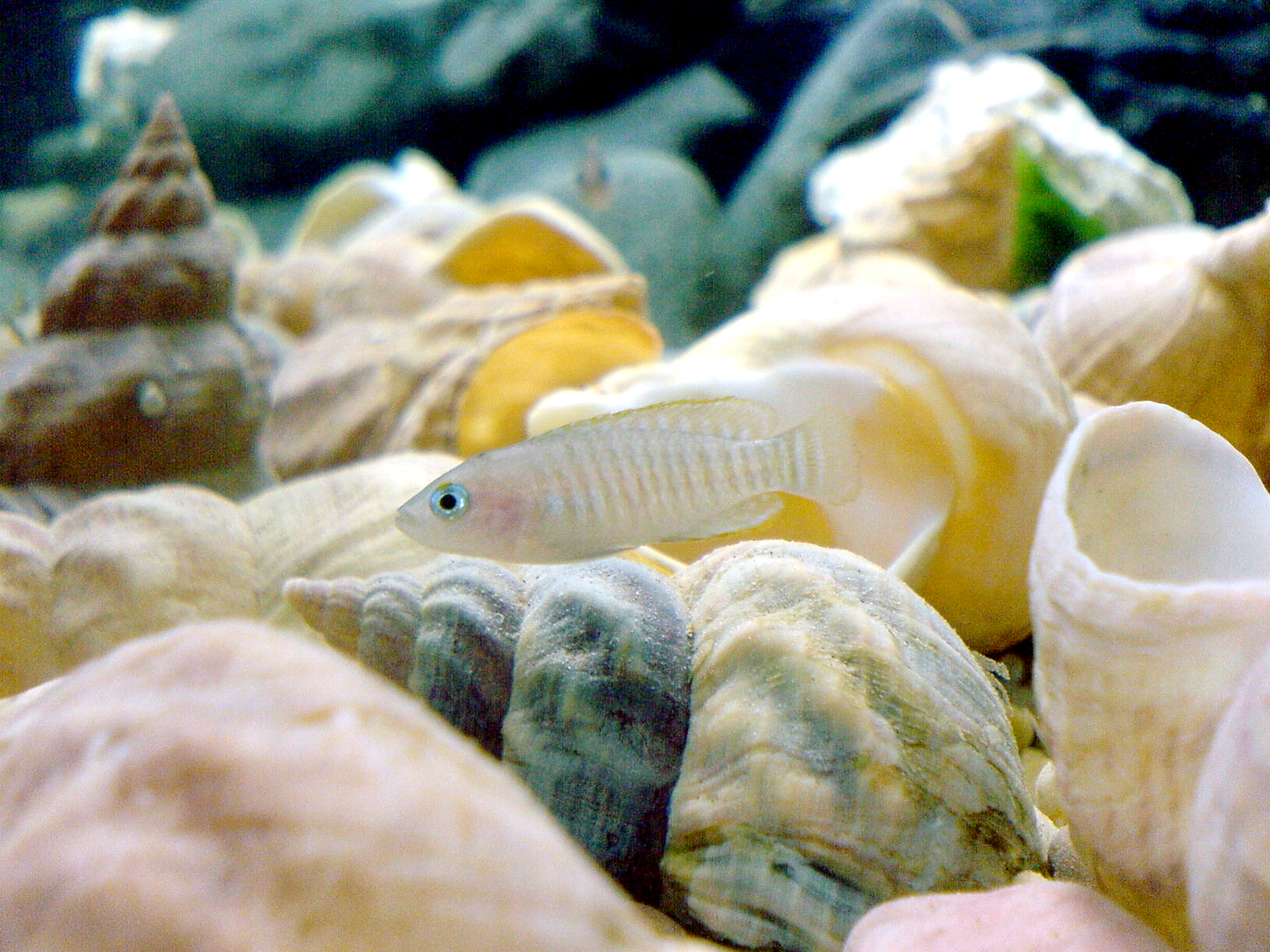
If you are choosing between multies and similis for your first shell-dweller tank, here is the practical steer: get whichever your shop actually has, correctly labelled, because the two are so alike in what they need that the choice barely changes your setup. If both are in front of you, I would nudge a first-timer towards multies, mostly because they are easier to find and a fraction more forgiving. But this is a close-run thing between two lovely little fish, so let me lay out where they actually differ rather than pretend one is plainly better. I keep both on hard tap, and I still catch myself squinting at the glass to tell which tank I am looking at.
Free PDF
Free aquarium water cheat sheet (PDF)
Grab the one-page reference for your tank: target ranges for pH, hardness, ammonia, nitrite and nitrate, plus a plain walkthrough of the nitrogen cycle. No fluff, unsubscribe any time.
Free, unsubscribe any time. The download starts as soon as you sign up.
The quick answer
Both are tiny Tanganyikan shell-dwellers from the Neolamprologus genus. Both want the same hard, alkaline water, the same sand floor, the same heap of shells, and both breed themselves into a colony with almost no help from you. If you have read either my multifasciatus care guide or my similis care guide, the second one will feel like déjà vu, because 90 per cent of the keeping is identical.
The differences are real but narrow: the stripe pattern on the face, a whisker of size, and a slightly different flavour of squabbling. None of them should decide the tank for a beginner. Availability and a correctly labelled fish matter more than the species itself.
Telling them apart
This is the difference you will use most, because shops mix them up constantly and sell one as the other without meaning to. Get your nose to the glass and look at the head.
- Multifasciatus: the fine vertical bars run down the body but stop around the gill cover. The head and face are comparatively plain. The bars read as darkish against a paler body.
- Similis: the barring carries on forward across the head and face, so the fish looks striped all over, right up to and behind the eye. Those forward stripes tend to look lighter in tone.
The face is the giveaway. Striped-all-over-the-head is similis; plain-faced with the stripes stopping at the shoulders is multies. If a shop fish has clear barring behind the eye, it is a similis whatever the tank label says. I have brought home “multies” that turned out to be similis, and vice versa, purely on shop mislabelling, so learn the face and trust it over the sticker.
The book behind Lagonia
The Hard Water Aquarium
My practical guide to working with hard, alkaline tap water instead of fighting it: reading your water, choosing and setting up the tank, and keeping and breeding the fish that thrive in it, from livebearers to Rift Lake cichlids and shell-dwellers.
Ad · Amazon affiliate links. I earn a small commission on a purchase, at no extra cost to you.
Size and looks
Both top out small, which is the whole appeal. Males of either species sit around 4.5 to 5 cm, and the females are noticeably smaller, often little more than half the male’s length. You are keeping fish that live their whole lives in the bottom few centimetres of the tank.
On which is bigger, reports genuinely conflict. Some sources have similis running a touch larger overall; others put multi males slightly ahead. In my own tanks the difference is small enough that I would not try to pick a species by adult size, and there is enough individual variation to make any firm claim shaky. What I will say is that a mature female similis often looks a shade chunkier to my eye than a female multi, but that is a soft impression, not a measurement.
Colour is muted in both: sandy brown to grey with the barring, a flash of iridescence in the fins under good light, and a bit of blue-white in the eye. Neither is a showy fish. Their charm is entirely in the behaviour, which is where they earn their keep.
Temperament and colony life
Here is the one place I want to be careful, because the tidy hobby line is “similis is the calmer, more sociable one” and the species databases will tell you similis defends its shell “with real venom”. Both statements are true, and they are not in conflict once you separate the individual fish from the colony.
Taken one fish at a time, a similis is a proper little terrier about its shell. It will square up to anything near its patch and will bump your hand if you go rooting around in there. Multies are feisty too, famously so for their size, all bluster and posturing.
Taken as a colony, though, my experience matches the common report: similis tend to pack a little tighter and bicker a little less constantly than multies at the same density. Multi colonies seem to run at a slightly higher background hum of chasing and shell-stealing. It is a difference of degree, not of kind, and in both species the fix is the same: give them far more shells than fish, and most of the aggression evaporates. I go into the whole shell question in detail in the best shells for shell-dwellers, but the headline is that a fish with a spare shell nearby has no reason to fight hard over its neighbour’s.
For what shares the tank with either species, the answer is the same and the honest one is “not much”. Both are far too small and territorial for most community fish, and the footprint they need is tiny. I have written the full picture in what can actually live with multies, and every word of it applies to similis too.
Water: identical, and both love hard tap
There is no daylight between the two on water. Both come from Lake Tanganyika, which is hard, alkaline and mineral-rich, and both want the same in a tank: a pH comfortably on the alkaline side of neutral, high general and carbonate hardness, and a temperature around 24 to 27 °C.
This is exactly why I keep bringing shell-dwellers up on this site. My tap water runs at roughly 22 to 23 °dH straight from the pipe, hard and alkaline, and for these fish that is not a problem to correct, it is the ideal handed to me for free. If your water is similar, both multies and similis are among the best fish you can possibly keep, no remineralising, no chasing pH, no fuss. The wider case for working with hard water instead of against it is in my guide to fish for hard water.
If you are on soft water, the calculus is the same for both species and it is honest: you would be remineralising every water change forever to hit Rift Lake numbers. That is doable with the remineralise calculator and a bit of routine, but go in with your eyes open. Neither species is a soft-water fish you can fudge.
Breeding
Both are shell-brooders that will spawn in a settled colony without any intervention from you. A female picks a shell, lays inside it, the male fertilises, and she guards the fry in and around the shell while they grow. You will often not notice until a scatter of tiny fry appears over the sand one morning.
If there is a nudge here, it is towards multies for a first breeding project. They are more commonly available, which matters more than it sounds, since a healthy, correctly identified starter group is half the battle. Reports on which spawns more readily and in larger numbers genuinely differ between sources, so I would not lean hard on that. Both breed well in hard water once the colony has sorted out its hierarchy, and both give you that same slow, self-running colony that is the entire joy of the group. For the mechanics of getting a colony established, my shell-dweller tank setup walks through it start to finish, and the stocking calculator helps you judge how many the footprint will take.
So which should you start with?
For a first shell-dweller, I would reach for multies, and the reason is boringly practical: they are the ones you can usually actually buy, correctly labelled, in a healthy group. They are a fraction more forgiving as a first colony, and there is more written about them if you hit a snag.
Pick similis if you have found a good, correctly identified group and you fancy the striped face and the marginally tighter colony. You are not signing up for a harder fish, just a slightly less common one that sometimes needs a keener eye at the shop to avoid a mislabelled tank.
Either way you end up with the same thing: a shallow, wide tank, a sand floor, a heap of shells, hard alkaline water, and a small civilisation of cichlids getting on with their lives at the bottom of it. On the water most of us are stuck with, that is about as good as fishkeeping gets.