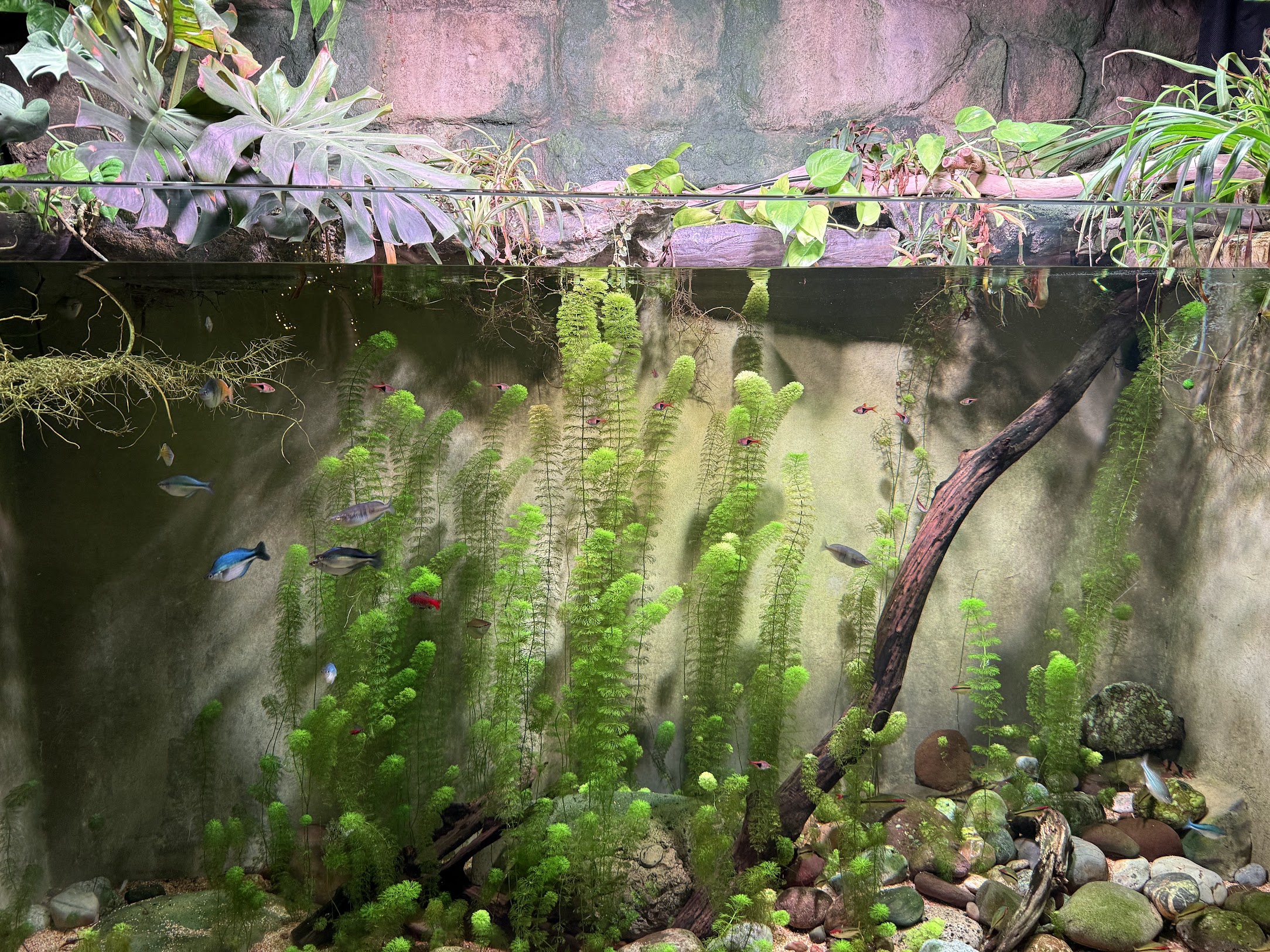
There is no salt in any of my freshwater tanks, and there has not been for years. That is the short version, and for a healthy community tank it is also the complete version. Aquarium salt has a reputation as a general tonic, a splash of it in every tank to keep the fish perky, and that reputation is mostly leftover folklore from decades ago. It does have one genuinely useful trick, and a couple of narrow treatment roles, but the “add a bit to be safe” habit does more harm than good. Let me untangle what it actually does from what it is claimed to do.
What aquarium salt is, and what it is not
Aquarium salt is sodium chloride, plain and simple. It is the same compound as table salt, just sold without the anti-caking agents and iodine that table salt sometimes carries. It is not the same thing as marine salt mix, which is a whole cocktail of minerals designed to make seawater, and it is not the same as the mineral products used to harden water for Rift Lake cichlids. If a bag just says “aquarium salt” or “tonic salt”, assume it is sodium chloride and nothing else.
That matters, because the single most common thing people expect salt to do is one of the things it cannot.
The hardness myth, cleared up
I hear it constantly: “my water is soft, I’ll add salt to harden it”, or the reverse, “salt made my hard water worse”. Both are wrong, and the reason is simple chemistry. Water hardness, the GH you test for, is a measure of multivalent mineral ions in the water, mostly calcium and magnesium, each carrying a double positive charge. Sodium carries a single charge, so it plays no part in hardness at all. You can pour sodium chloride into a tank and your GH test will not move a single degree.
So salt does not harden soft water, and it does not make hard water any harder. What it does is raise the total dissolved solids and the salinity, which is a different measurement entirely. If you genuinely need to raise hardness, for shrimp or Rift Lake fish or livebearers in soft tap water, you want calcium and magnesium, not sodium. The remineralise calculator works in the right units for that job, and the GH and KH guide explains why the distinction is worth caring about. On my hard, alkaline tap I have the opposite problem and never need to add hardness at all.
The one thing salt does brilliantly
Here is where salt earns its keep, and it is worth knowing even if you never use it: salt protects fish against nitrite poisoning.
Nitrite is the second stage of the nitrogen cycle, and in a tank that is not fully cycled it can spike to dangerous levels. Nitrite is toxic because it slips into the fish’s bloodstream through the gills and cripples the blood’s ability to carry oxygen, which is why the condition is called brown blood disease; the gills and blood literally turn a dull brown. The elegant part is that fish gills take up nitrite through the same channels they use to take up chloride. Flood the water with chloride, from sodium chloride, and those channels are kept busy with harmless chloride instead of toxic nitrite. The nitrite is still in the water, but far less of it gets into the fish.
This is real, mechanistic, and genuinely useful in an emergency. If a tank is mid-cycle and nitrite is climbing faster than water changes can hold it, a modest dose of salt buys the fish protection while you fix the underlying problem. It is a stopgap, not a cure; the actual fix is water changes and finishing the cycle. But it is the one context where reaching for the salt is sound rather than superstitious.
The treatment roles, kept in proportion
Salt turns up in a few disease treatments, and it does have a place there, but a narrower one than the old books suggest.
- Fin rot and minor bacterial trouble. A light salt dose can support a fish fighting a mild infection, alongside clean water, which is always the real medicine. I have written up the fuller approach in the fin rot treatment guide.
- Ich (white spot). Salt is one traditional part of treating white spot, usually combined with a careful temperature rise. The white spot guide covers how the parasite’s life cycle dictates the timing, which matters more than the salt.
- A general stress tonic. This is the claim to drop. A permanently slightly-salty tank does not make fish healthier; it just means they are always spending energy dealing with salt they do not need.
For any treatment use, dose deliberately against the tank volume and take it out again afterwards with water changes. Guess the volume and you guess the dose, so start from an accurate figure using the volume calculator rather than the number printed on the tank box, which is almost always optimistic.
The catch: salt does not evaporate
This trips people up more than anything else. Water leaves your tank through evaporation; salt does not. It stays behind, so every top-up with fresh water leaves the salt and slowly concentrates it. If you dose salt and then top up evaporation for a fortnight without realising, the salinity creeps upward with no ceiling.
The only way salt leaves a tank is in the water you physically remove during a water change. So salt is added with a dose and removed with a water change, and topping up evaporation does neither. If you are running a salt treatment, plan the water changes that will take it back out, and the water change calculator helps you see how many changes it takes to get most of it gone.
The fish and plants that pay the price
Plenty of aquarium life tolerates a bit of salt, and livebearers in particular are famously relaxed about it; mollies especially. But a fair few of the things we keep quietly suffer in it, which is the strongest reason not to dose a whole community tank “just in case”.
- Live plants. Most common aquarium plants dislike salt and will show it in melting leaves and stalled growth. A planted tank is a poor place to be casual with the salt bag.
- Scaleless catfish, corydoras and loaches among them, are more sensitive to salt than scaled fish and are best kept in salt-free water unless a specific treatment genuinely calls for it and you are watching them closely.
- Soft-water species generally. Many of the delicate tetras and other soft-water fish are not adapted to salt and gain nothing from it.
That mix is the core of the case. In a normal community tank you are as likely to be stressing a cory or melting a plant as helping anyone, and the fish you are supposedly protecting were never in danger to begin with.
So where does that leave the salt bag
Keep a bag of plain aquarium salt in the cupboard, because the nitrite-protection trick is worth having on hand for a cycling emergency, and it plays a supporting role in a couple of disease treatments. Then leave it in the cupboard the rest of the time. A cycled, well-maintained freshwater tank on sensible stocking needs clean water and stable parameters, not a permanent pinch of salt. If your fish keep looking off and you are tempted to reach for a tonic, the answer is almost always in the water tests and the maintenance routine, which I go through in the why do my fish keep dying checklist, rather than in the salt.