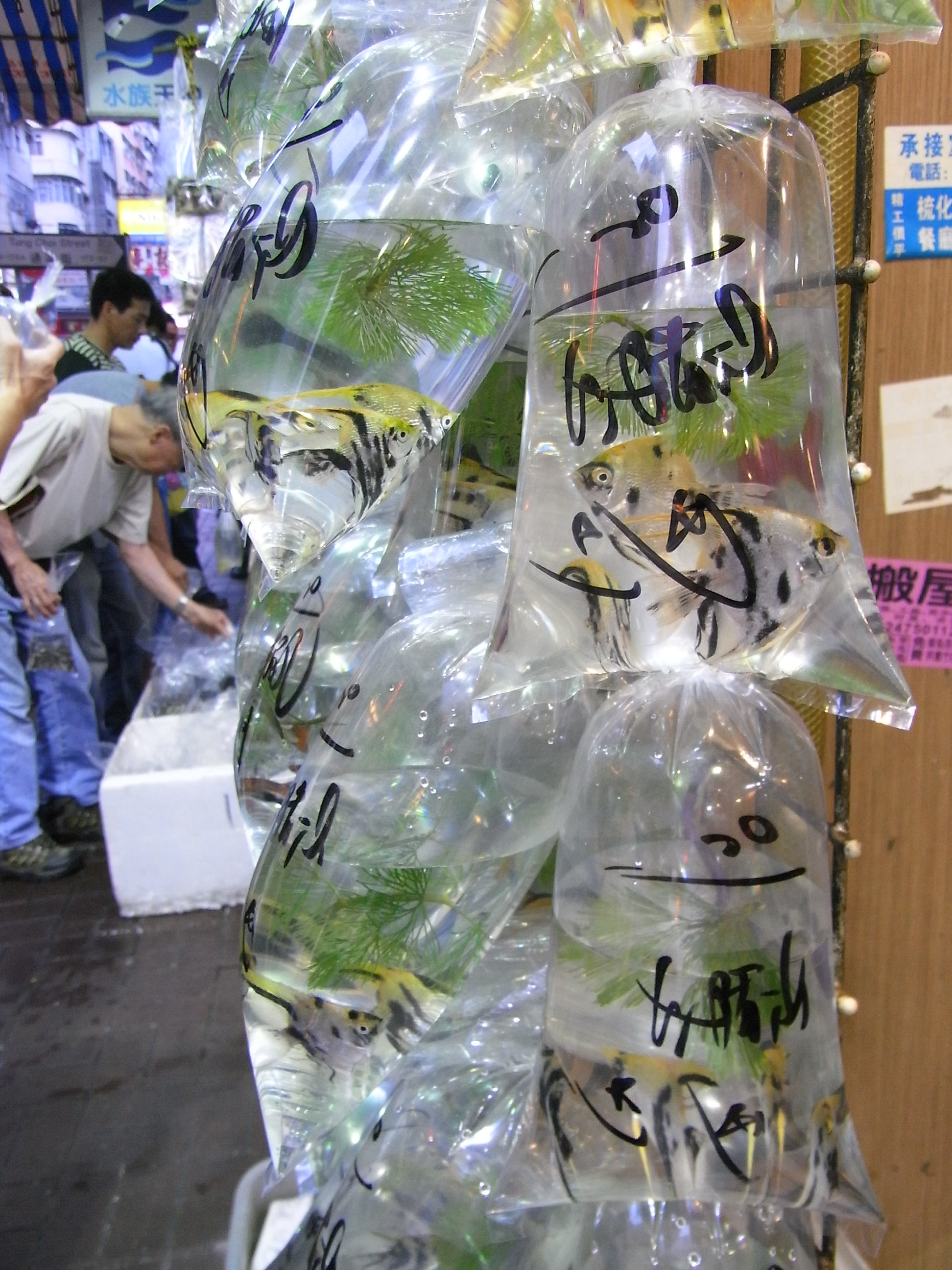
Float the bag for fifteen or twenty minutes to match the temperature, then net the fish out and let it go. For most shop-bought fish, on most tap water, that really is the whole job. The elaborate hour-long drip rituals you see online are the right answer for a specific situation, and quietly the wrong answer for the ordinary one. I spent my first couple of years drip-acclimating everything because a forum told me to, and I now think some of those fish would have done better if I had just got them out of the bag sooner. Here is what actually matters, and why.
Two different shocks, and only one of them is temperature
When people say acclimation they usually mean temperature. That part is real and simple: the shop tank and your tank are rarely the same warmth, and dropping a fish straight from one to the other is a jolt. Floating the sealed bag on your tank surface lets the two even out over a quarter of an hour, no cleverness required.
The second shock is the one the floating does nothing about, and the one the drip method is really designed for: a difference in the water itself. Hardness, pH and dissolved salts differ between the shop’s system and yours, and a fish moved quickly between very different water has to re-balance its internal chemistry against the new surroundings all at once. That is osmotic shock, and it is a chemistry problem, not a temperature one. Floating a bag for an hour will not soften the change by a single degree of hardness, because the tank water never gets into the bag.
So the honest question before you acclimate anything is not “float or drip”, it is “how different is my water from where this fish has been living”. If the answer is “barely”, keep it short. If the answer is “a lot”, slow down.
Why the bag turns against the fish once you open it
This is the part almost nobody explains, and it changed how I handle new arrivals. Inside a sealed bag, the fish is breathing out carbon dioxide, and that CO2 keeps the water slightly acidic. At a low pH, the ammonia the fish has been excreting sits mostly as ammonium, which is far less toxic. The fish is stewing in its own waste, but the chemistry is, for the moment, holding that waste in its harmless form.
Open the bag, and the trapped CO2 escapes into the air within minutes. As it goes, the pH climbs, and that rising pH flips the harmless ammonium back into free ammonia, the toxic kind, right there in the water around the fish. The longer you then leave the fish sitting in that opened bag, slowly dripping tank water in over an hour, the longer it marinades in ammonia that was not dangerous until you cracked the seal.
That is the sting in the tail of long drip acclimation for a fish that has had a rough trip. A drip is gentle on osmotic shock and brutal on ammonia, and if the bag water was already dirty from a long journey, the ammonia problem can be the one that kills. It is exactly why the “plop and drop” crowd exist: for fish that have been bagged a long time, getting them out of that fouling water quickly can matter more than a perfectly smooth hardness transition.
What I actually do
For a short trip home from a local shop, twenty minutes in the bag at most, my routine is deliberately dull.
- Turn the tank lights off before I start, and leave them off for the rest of the evening. A dim tank is a calmer arrival.
- Float the unopened bag for fifteen to twenty minutes to sort the temperature out.
- Open the bag, net the fish out, and let it swim into the tank. The bag water goes down the sink, never into the tank, because it carries whatever the shop’s system carries.
That is it. No dripping, no dechlorinator gymnastics, no drama. The fish is out of the fouling water fast and into clean, stable, cycled water, which is the best thing you can give it.
When the slow drip earns its place
I switch to a proper drip when the water gap is genuinely wide or the animal is genuinely sensitive:
- Shrimp. Cherry shrimp and their relatives hate sudden changes in hardness and are worth every minute of a slow drip. I go over an hour with them, no shortcuts. More on their needs in the cherry shrimp care guide.
- Fish coming from very different water. If a shop keeps its stock soft and acidic and your tap runs hard and alkaline, as mine does at around 22 dGH, that is a big jump and a slow drip softens the landing.
- Delicate or wild-caught species, and anything that has just endured a long courier journey and needs the osmotic side handled carefully.
The method: sit the opened bag in a clean bucket or float it in the tank, and use a length of airline with a loose knot or a valve to drip tank water in at a couple of drips per second. When the volume has roughly doubled, tip some out and repeat once. Then net the fish out. Do not let it run for hours; you are managing the ammonia clock the whole time it is open, so aim for around an hour and no more. If you have an ammonia binder, a drop in the bag as you open it takes the ammonia spike off the table entirely.
The problem the drip cannot fix
Here is the uncomfortable bit. A slow drip helps a fish survive a big water difference on day one. It does nothing for the weeks and months that follow, when the fish has to actually live in water it is not built for. A soft-water tetra dripped ever so gently into my hard tap has survived the transfer and still spends the rest of its life fighting my water chemistry.
That is the real argument for choosing fish that suit your tap in the first place. Test your tap for hardness and pH before you buy anything, using the numbers explained in the water parameters guide and the GH and KH guide, and stock towards species that match it. On my hard, alkaline water the livebearers and Rift Lake cichlids barely notice the move home; I have written up the ones that thrive in the hard water fish article. Acclimation is a good day’s insurance. Buying the right fish is the policy that pays out for years.
A few things that quietly go wrong
Adding too many at once. Even perfectly acclimated fish add bioload, and a cycled tank has only so much bacterial capacity. If you are stocking a group into a new-ish tank, add in stages and keep an eye on your ammonia and nitrite for a week. The stocking calculator gives a quick sense of whether the tank can carry the numbers you are planning before you commit.
Skipping quarantine because the fish “looks fine”. Acclimation and quarantine are different jobs. Acclimation gets one fish safely from bag to tank; quarantine protects everything you already own from what the new fish might be carrying. If you keep a stocked display tank, a couple of weeks in a separate box is cheap insurance, and I have set out the minimum kit in the quarantine guide.
Feeding straight away. A fish that has just moved house is not hungry, and uneaten food fouls the water on its first night. Leave it until the following day.
Chasing the bag temperature with your hand. Float, do not fuss. Opening the bag repeatedly to test the water just off-gasses the CO2 early and starts the ammonia clock sooner.
None of this is complicated, and that is rather the point. Match the temperature, respect the water gap where it is real, get the fish out of dirty bag water without dawdling, and let a dark, cycled, stable tank do the rest. The fish that struggle are almost never the ones that had a slightly bumpy fifteen minutes on arrival; they are the ones asked to live in the wrong water for good.