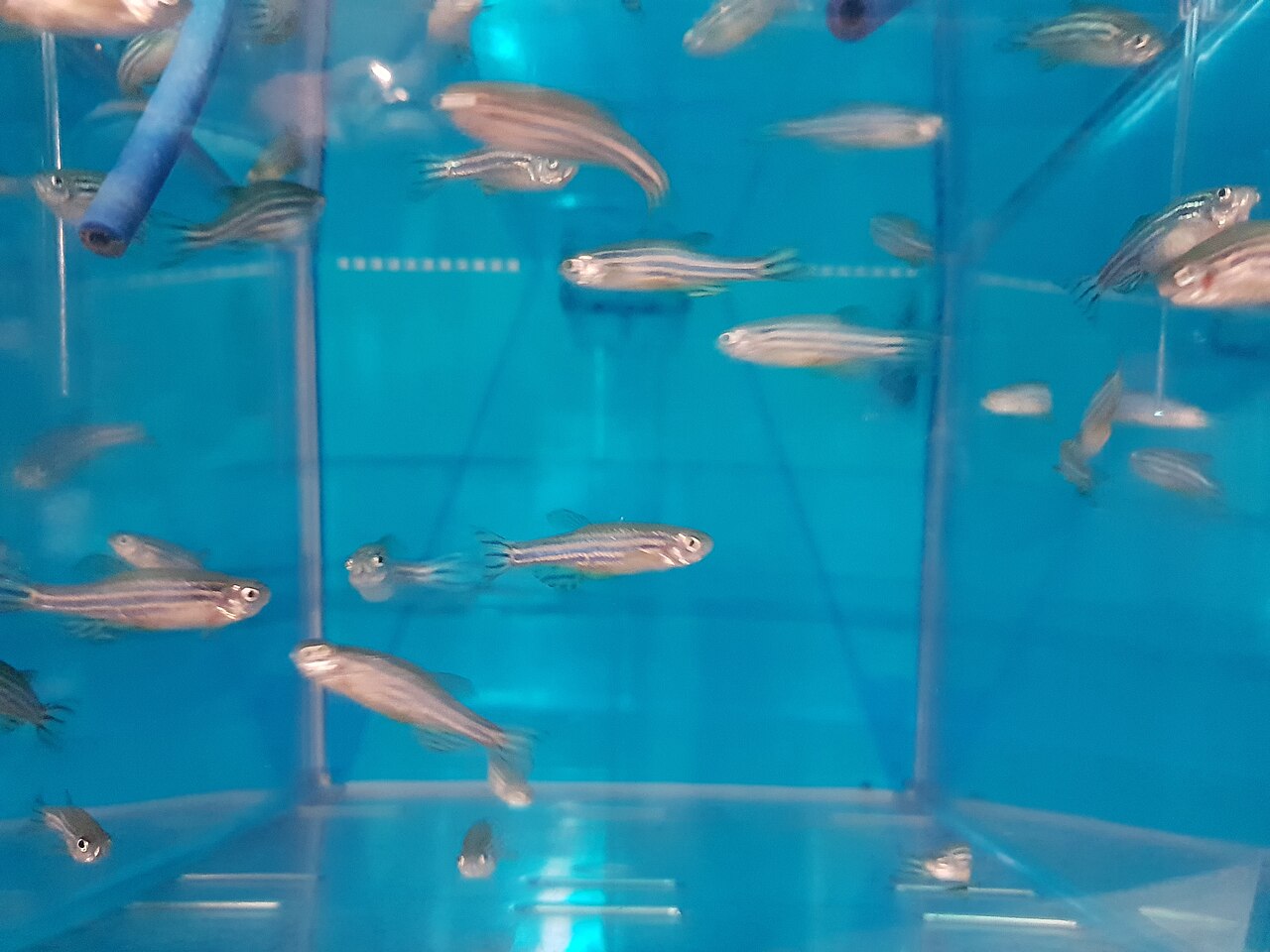
Some fish demand careful water and a gentle hand. The zebra danio is not one of them. It is a small, striped, endlessly busy little thing that behaves as though it has drunk far too much coffee, and it is about as forgiving a fish as exists in the hobby. If you have hard tap water and want a lively shoal that adds movement to the upper half of a tank, danios deserve a serious look. I have kept them as a dither shoal in community tanks for years, and they have shrugged off conditions that would have finished more delicate species.
Free PDF
Free aquarium water cheat sheet (PDF)
Grab the one-page reference for your tank: target ranges for pH, hardness, ammonia, nitrite and nitrate, plus a plain walkthrough of the nitrogen cycle. No fluff, unsubscribe any time.
Free, unsubscribe any time. The download starts as soon as you sign up.
A fish that copes with almost anything
Danio rerio comes from the streams, ditches and rice paddies of South Asia, habitats that swing widely through the seasons from cool and clear to warm and murky. A fish that evolved in that kind of variability is not going to fuss over a couple of degrees of hardness. Most references quote a workable range from soft water up to around 20 dGH, and in practice danios sail past even that. My tap water runs to about 22.5 dGH and firmly alkaline, and the danios could not care less. They breed in it, they colour up in it, and they live out their full span in it.
I will be honest where honesty is due: very hard water is a shade above the textbook maximum you will see quoted for the species. But danios are one of those genuinely adaptable fish, like guppies and platies, that treat the printed range as a suggestion. Stability matters far more to them than hitting a precise number, and hard alkaline water is at least stable and well buffered, which suits them. If you want the wider argument for stocking to your water rather than fighting it, I set it out in my guide to hard water aquarium fish.
Keep them in a proper group
This is the one rule with danios that is not optional. They are shoaling fish, and a lone danio or a pair is a stressed, badly behaved danio. Kept in too small a number they turn nippy and nervous, often taking their frustration out on the fins of slower tank mates. Give them company and that behaviour evaporates. I would not keep fewer than six, and eight to twelve looks far better and behaves far better. In a decent-sized shoal they spend their day chasing and darting in loose formation, which is the whole reason to own them.
Get the numbers right and danios are model tank mates. Get them wrong and they earn their occasional reputation as fin-nippers. The problem is almost always too few fish, not the species itself.
The book behind Lagonia
The Hard Water Aquarium
My practical guide to working with hard, alkaline tap water instead of fighting it: reading your water, choosing and setting up the tank, and keeping and breeding the fish that thrive in it, from livebearers to Rift Lake cichlids and shell-dwellers.
Ad · Amazon affiliate links. I earn a small commission on a purchase, at no extra cost to you.
Tank size, and why length beats volume
Danios are sprinters. They do not hang in the water like a gourami; they patrol, and they use every inch of horizontal space you give them. That makes tank shape more important than raw litres. A long, low tank suits them far better than a tall, narrow one of the same volume. For a starter shoal of six to eight I would want something around 60 to 80cm long, which usually means 60 litres or more.
You can keep a small group in less, but they will look cramped and spend their energy pacing the glass. If you are working out whether a particular tank gives them the run they need, the volume calculator will pin down the real capacity once substrate and hardscape are accounted for, and it is worth thinking in terms of floor length as much as total volume. When it comes to how many fish the tank can actually carry, the stocking calculator will give you a sensible ceiling, and there is more on the whole question in how many fish can I keep.
Temperature: cooler than you would think
Here is a genuinely useful quirk. Zebra danios are comfortable across a wide, coolish band, roughly 18 to 24 degrees C, and they do not need tropical warmth to thrive. In a room that stays reasonably warm they can be kept with no heater at all, which is unusual for an aquarium fish and makes them a good choice for an unheated tank or a cooler room.
I still tend to run a heater, but set low, around 22 degrees, mostly for stability rather than to push the temperature up. What danios genuinely dislike is heat. Kept too warm, above the mid twenties for long stretches, they burn through life faster and lose some of their sparkle. If you do fit a heater, size it properly with the heater calculator rather than dropping in whatever the shop had on the shelf.
Feeding and day-to-day care
Feeding danios is the easy part. They are unfussy omnivores that will take flake, small pellets, and frozen or live foods with equal enthusiasm, snatching most of it from the surface before it has a chance to sink. A good flake as the staple, varied with the odd portion of frozen daphnia, bloodworm or brine shrimp, keeps them healthy and well coloured. They feed fast and near the top, so in a mixed community make sure slower or bottom-dwelling fish still get their share. My post on feeding aquarium fish covers how to balance a community at mealtimes.
As with any fish, the hardiness is not a substitute for clean water. Danios tolerate a lot, but they still need a cycled tank and regular maintenance. Mature the tank through the fishless cycle before they go in, keep up a weekly water change of around a quarter, and use the water change calculator if you would rather not do the sums each time. Ammonia and nitrite at zero and nitrate kept low is the whole game; if you want to understand each reading, I break it down in aquarium water parameters.
Tank mates
A well-sized danio shoal makes an excellent dither for a hard-water community. They pair naturally with livebearers like guppies and platies, with Corydoras working the bottom, and with most peaceful, similarly hardy fish. Their constant activity actually helps shy species settle, since fish that see others swimming confidently in the open take it as a sign the coast is clear.
The pairings to avoid are the obvious ones. Long-finned, slow fish such as fancy guppies or bettas can end up with nipped fins, especially if the danio group is too small, and anything large enough to eat a two-inch fish is off the list. Keep the shoal at a proper size and match them with active or sturdy companions, and there is rarely any trouble. As always, quarantine new arrivals first; the routine is in my post on quarantining new fish.
Breeding, if you fancy a project
Danios are egg-scatterers, and they spawn readily. A well-fed group will often go through the motions in the main tank at first light, the females releasing eggs among plants or over the substrate while the males chase and fertilise. The catch is that danios show no parental instinct whatsoever and will eat their own eggs the moment they are laid. To raise any number you need to give the eggs somewhere to fall out of reach, such as a layer of marbles or a mesh across the bottom of a separate spawning tank, so they drop through and the adults cannot reach them.
Raise the temperature slightly, feed the group well for a few days beforehand, and a healthy pair can scatter a few hundred eggs in a session. It is one of the more achievable egg-layer breeding projects for someone stepping beyond livebearers, precisely because the fish are so willing.
The honest verdict
The zebra danio is a brilliant beginner fish and an underrated one. It is cheap, tough, active, and genuinely at home in hard alkaline water despite what the strict parameter charts imply. Give it a shoal of six or more, a tank with room to run, and cool rather than hot water, and it will reward you with years of movement for almost no effort. If your tap water is hard and you want life in the upper levels of a community tank, a shoal of danios is one of the safest bets you can make.