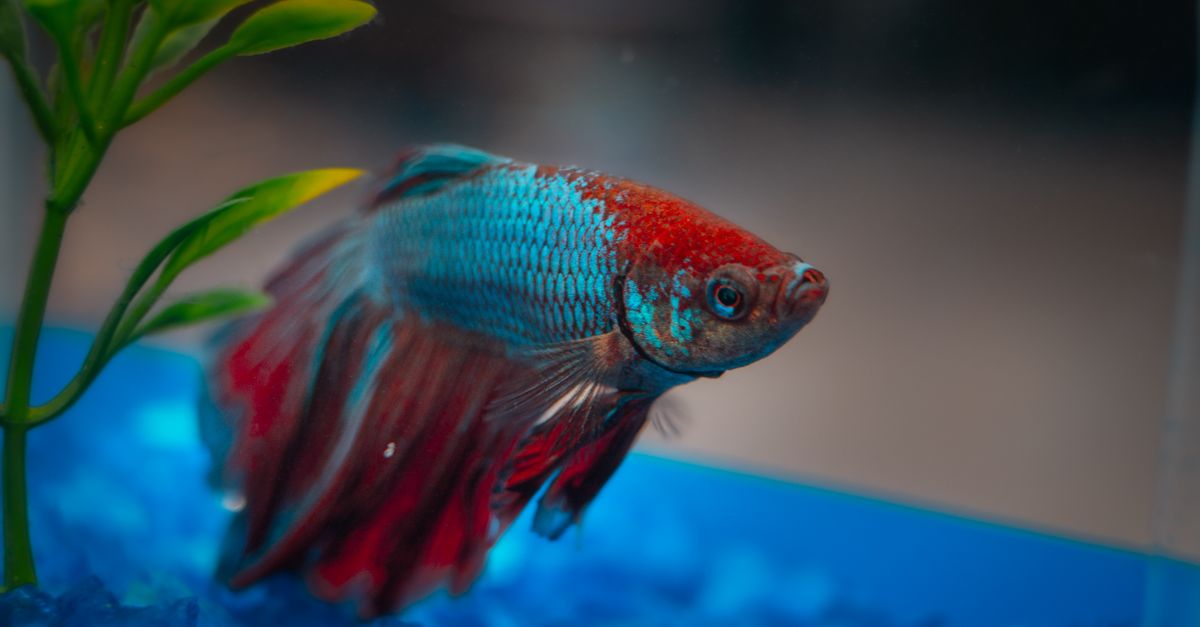
The betta, Betta splendens, is probably the most mistreated fish in the hobby, and not out of malice. Shops sell them in cups, the internet is full of vase setups, and the myth persists that because wild bettas live in puddles, a jar on a shelf is fine. Wild bettas live in rice paddies, marshes and slow floodplains, which are shallow but enormous, warm all year and full of cover. The puddle story comes from the dry season, when getting trapped in one is the worst thing that can happen to a betta, not its preferred address. I keep bettas on my desk in proper heated, filtered tubs, and the difference between a betta in decent conditions and one in a bowl is the difference between an active, curious, flaring fish and a listless one clamped in a corner.
Free PDF
Free aquarium water cheat sheet (PDF)
Grab the one-page reference for your tank: target ranges for pH, hardness, ammonia, nitrite and nitrate, plus a plain walkthrough of the nitrogen cycle. No fluff, unsubscribe any time.
Free, unsubscribe any time. The download starts as soon as you sign up.
Tank size: the bowl question, answered
A betta needs a real aquarium. My working minimum is around 20 litres, and 25 to 40 litres is comfortably better. Below that, two practical problems bite regardless of philosophy. First, small volumes are chemically unstable: ammonia climbs fast, temperature swings with the room, and there is no buffer for a missed water change. Second, you cannot fit a heater and a filter in a bowl and still leave the fish room to swim.
Shape matters as much as volume. Bettas are surface fish with labyrinth organs, meaning they breathe atmospheric air at the surface as well as through their gills. A long, shallow tank beats a tall, narrow one every time. Tall vases are close to the worst possible geometry, since a long-finned male has to haul heavy fins up a water column just to breathe. If you are choosing a tank from scratch, the general sizing logic in choosing your first aquarium applies here too: bigger is more stable, and footprint beats height.
And yes, cycle the tank first. A betta added to an uncycled tank sits in its own ammonia, and burned gills and fins are the usual price. The fishless cycling method works exactly the same for a betta tank as for anything else.
Heat is not optional
This is the requirement most casual setups skip. Bettas are tropical fish from Thailand and Cambodia and they need 24 to 27 °C, held steady. At normal northern European room temperatures of 18 to 21 °C, a betta does not die immediately. Instead its metabolism and immune system slow down, it stops eating properly, and it becomes a magnet for fin rot and fungus. Chronic cold is the hidden cause behind a huge share of “mystery” betta deaths.
Any small adjustable heater of 25 to 50 watts suits a betta tank. Buy adjustable rather than a preset stick-on type, and put a cheap thermometer at the opposite end of the tank from the heater so you are reading the water, not the heater’s own opinion of itself.
One more heat-related point: use a lid. Bettas jump, especially at night, and a labyrinth fish breathing cold, dry room air above warm water is prone to trouble. A lid keeps the air layer above the surface warm and humid, and keeps the fish in the tank.
The book behind Lagonia
The Hard Water Aquarium
My practical guide to working with hard, alkaline tap water instead of fighting it: reading your water, choosing and setting up the tank, and keeping and breeding the fish that thrive in it, from livebearers to Rift Lake cichlids and shell-dwellers.
Ad · Amazon affiliate links. I earn a small commission on a purchase, at no extra cost to you.
Filtration: gentle, not absent
Bettas need filtered water like any fish, but they are terrible swimmers by community-tank standards. Those long fins are decorative sails, and a strong current exhausts a male, pins him to the intake, and shreds fins over time. The answer is not to remove the filter, it is to choose a gentle one.
A simple air-driven sponge filter is close to ideal: full biological filtration, almost no current, and nothing for fins to catch on. That is what runs on my own betta tubs. If you prefer an internal or hang-on filter, baffle the outflow with a spray bar, a piece of sponge or a plant in front of the output until the surface barely ripples. A betta struggling against flow holds its fins clamped and rests on the bottom or on leaves constantly; that is your sign to turn things down. I have compared the main filter types in more detail in choosing an aquarium filter.
Water chemistry itself is undemanding. Bettas are farmed by the million in a wide range of water and adapt to most stable conditions, including hard water like mine. Steady beats perfect, as usual, and the numbers to actually watch are in aquarium water parameters. If you are worrying over the pH reading in particular, the short answer is in what is the best pH for a betta: stability beats chasing a number.
One male per tank, and the tankmate trap
The “fighting fish” name is earned. Male bettas are ferociously territorial towards their own kind, and two males in one tank will fight until one is dead or permanently battered. Divided tanks with a male each side keep both fish in a state of constant display and stress, and I would not run one. One male per tank, full stop. Females are less lethal but not peaceful; the fashionable “sorority” of several females is a stressed, hierarchy-driven arrangement that fails more often than it works, and I do not recommend it for beginners.
Tankmates in general are a gamble that depends entirely on the individual fish. Some males ignore everything, others kill shrimp, harass corydoras and attack anything with colour. Fin-nippers like tiger barbs, and flashy long-finned fish like male guppies, are the worst pairings, the first because they shred the betta, the second because the betta mistakes them for rivals. A single betta in a planted 25-litre tank, alone, is not a compromise. It is the setup where the fish shows its best behaviour. If you want it to double as a shrimp tank, read the tankmate section of cherry shrimp care first, because a betta and a growing shrimp colony are largely incompatible ambitions.
Feeding without the bloat
Bettas are insectivores with upturned mouths built for taking prey off the surface. A quality betta pellet is the sensible staple, fed at two to four pellets once or twice a day. Their stomach is roughly the size of their eye, and the begging is theatre; a betta will eat until it hurts itself. Constipation and swim bladder trouble in bettas are overwhelmingly feeding problems, not diseases.
Vary the diet with frozen or live foods once or twice a week: bloodworm, daphnia, brine shrimp, mosquito larvae in summer. Daphnia in particular acts as a mild laxative and is a good weekly habit. Skipping food entirely one day a week does no harm at all. The wider principles are in feeding aquarium fish, but the betta-specific rule is simple: less than you think, and never flake scattered by the pinch.
Fins: reading the early warnings
Long fins are the breed’s glory and its weak point. Three problems cover most cases. Fin rot shows as darkening, ragged edges that creep inward, and it is almost always a water quality or temperature problem first and an infection second. Test the water, fix ammonia or nitrate, warm the tank to 26 °C, and mild cases heal with clean water alone. Fin damage from decor or flow shows as clean splits and tears without darkened edges; run a tights test over ornaments (if it snags nylon, it will snag fins) and re-check your current. Tail biting, where a bored or stressed male chews his own fins, shows as sudden overnight chunks missing. More cover, dimmer light and something to explore help more than any medicine.
Clean, warm water regrows fins remarkably well. New growth comes in clear before it colours up, so a transparent fringe on the fin edge is a good sign, not a new problem. Keep on top of changes with a routine, and if you are unsure how much to change, the water change calculator will give you a sensible baseline for a small tank.
Give a betta the unglamorous basics, twenty-plus heated litres, gentle filtration, a lid, plants and restrained feeding, and you get a fish with more personality per centimetre than anything else in the hobby. The bowl betta and the tank betta are the same animal in name only.