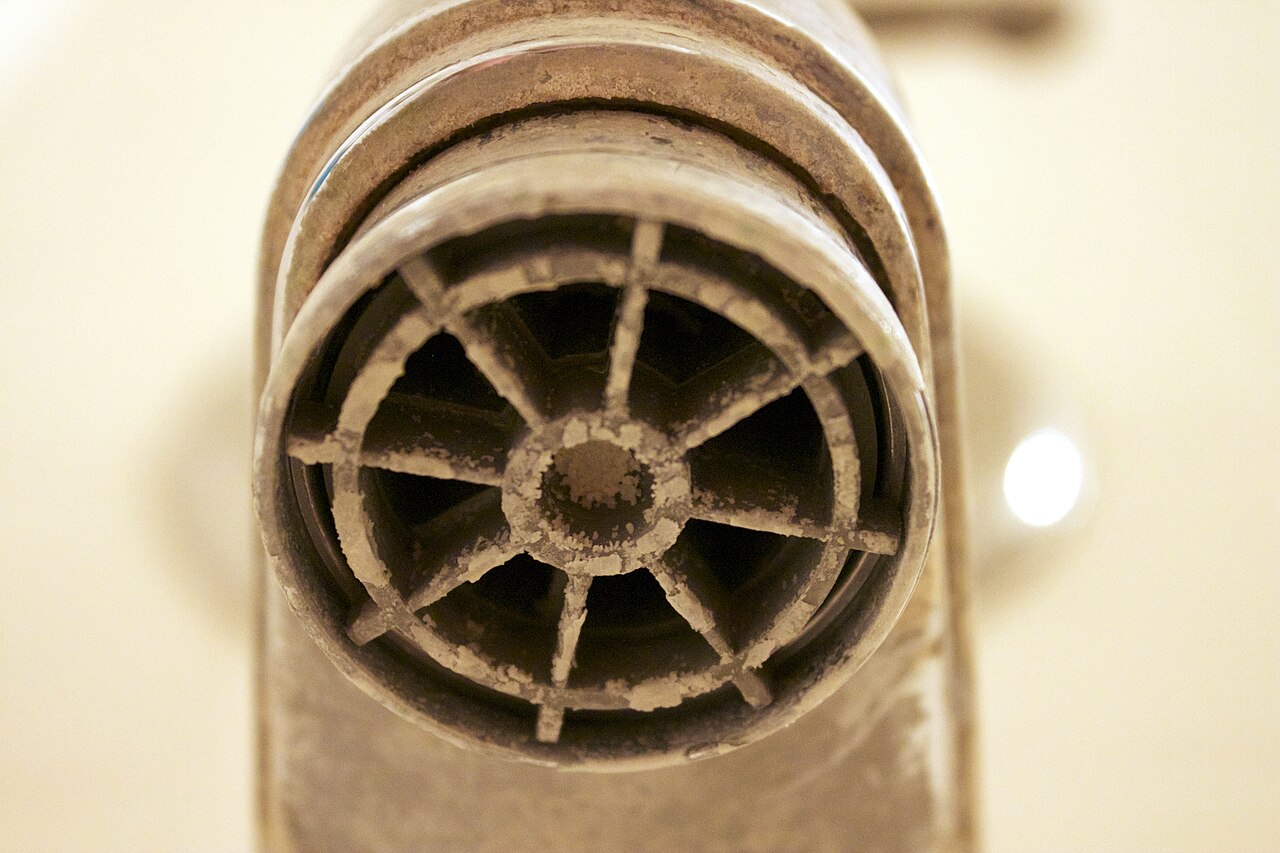
If your tap water is hard, you will meet limescale sooner or later. It shows up as a chalky white line where the water sits, a foggy film on the lid, and a crust creeping up the heater and the filter outlet. The first thing worth saying is that it will not hurt your fish. Limescale is a cosmetic nuisance, not a health problem, and once you understand what it is you can stop panicking about it and start managing it. I keep tanks on tap water that runs about 22 dGH, so I have scraped a fair amount of the stuff off glass over the years, and it turns out to be one of the easier problems in the hobby to live with.
Free PDF
Free aquarium water cheat sheet (PDF)
Grab the one-page reference for your tank: target ranges for pH, hardness, ammonia, nitrite and nitrate, plus a plain walkthrough of the nitrogen cycle. No fluff, unsubscribe any time.
Free, unsubscribe any time. The download starts as soon as you sign up.
What the white crust actually is
Limescale is calcium carbonate, the same mineral that furs up a kettle. Hard water carries a lot of dissolved calcium and magnesium. Where that water evaporates or splashes and dries, it leaves the minerals behind as a hard white deposit. The water goes; the calcium stays and builds up layer by layer.
That is why it always appears in the same places:
- The waterline on the glass, where the surface sits and micro-splashes dry just above it.
- The lid, cover glass and light unit, where warm humid air condenses and evaporates over and over.
- The heater, filter outlet and any equipment near the surface that gets wetted and dried.
- The rim of an auto top-up reservoir, if you run one, because that is a constant evaporation point.
The higher your general hardness, the faster it forms. If you have never tested your supply and you are seeing this crust, that alone tells you something about your water; my guide to GH and KH explains what the readings mean and how to take them. Hard-water keepers get more limescale than anyone, which is the small tax you pay for water that Rift Lake cichlids and shell-dwellers absolutely love.
Is it limescale, or something else?
Not every white mark in a tank is limescale, and treating the wrong thing wastes effort. Three deposits get confused.
Limescale. Hard, chalky, dead white. It builds at and above the waterline, does not wipe off with a finger, and needs a scrape or an acid to shift. If it crunches under a blade and sits where water dries, it is limescale.
Salt creep. If you dose aquarium salt or keep anything brackish, evaporating water leaves sodium chloride crystals behind. These look similar but are usually more crystalline, and they dissolve straight back into plain water, which limescale will not do. A wet cloth clears salt creep with no fuss; limescale laughs at it.
Biofilm and hard-water film. A faint white or grey haze on the glass just under the surface, sometimes slightly greasy, is often a protein and bacterial film, not a mineral. It wipes off easily with an algae pad. If your soft cloth clears it, it was never limescale.
The quick test I use: try to wipe it with a damp cloth. If it comes away, it was salt or film. If it stays put and feels gritty, it is limescale and you will need an acid to dissolve it.
The book behind Lagonia
The Hard Water Aquarium
My practical guide to working with hard, alkaline tap water instead of fighting it: reading your water, choosing and setting up the tank, and keeping and breeding the fish that thrive in it, from livebearers to Rift Lake cichlids and shell-dwellers.
Ad · Amazon affiliate links. I earn a small commission on a purchase, at no extra cost to you.
Shifting it safely
Calcium carbonate dissolves in a mild acid. That is the whole trick, and it means the cheapest things in the kitchen do the job better than any specialist product.
Above the waterline, with fish still in the tank. This is the common case, the crust on the upper glass, the lid and the light. White vinegar is my go-to. Soak a paper towel in undiluted white vinegar, press it onto the deposit, and leave it ten to fifteen minutes so the acid can work. Then the crust wipes and scrapes away with far less effort. Citric acid powder dissolved in warm water does the same and is less smelly if you have a lot to do. Keep either off the water as much as you sensibly can, wipe the area with a clean damp cloth afterward, and you are done. A small amount of vinegar reaching the water is not a disaster; it is a weak acid in a tiny quantity against a well buffered hard-water tank, and it will not move your pH in any way the fish notice.
On removable equipment. The heater, the cover glass, the filter outlet, spray bars and lids all come out. Soak them in a tub of white vinegar or a strong citric acid solution for an hour or two, longer for a thick build-up, then the scale rubs off easily. Rinse everything thoroughly in clean water before it goes back. This is the safest way to deal with the worst of it, because the acid never touches the livestock.
On an empty tank. If you are stripping a tank down anyway, lay it on its back, fill the affected area with neat white vinegar or a citric acid solution, and let it sit. Thick old scale that has built up over years may need a couple of goes and a plastic scraper. Rinse very well afterward.
A few sensible cautions. Use a plastic scraper or a razor blade made for glass, never an abrasive scourer, which will scratch the pane and leave marks worse than the scale. Take real care with a blade on acrylic tanks; it scratches far more easily than glass, so favour a longer acid soak and a soft pad there. And never mix vinegar with bleach or any other cleaner. Plain acid, plain water, patience.
Keeping it from coming back
You will not stop limescale entirely on hard water, but a few habits keep it from getting a grip. None of them takes real time; they just fold into the routine you already have.
- Wipe the waterline and lid at every water change. Fresh scale is soft and comes off with a damp cloth in seconds. Left for months it turns to rock. A quick wipe as part of your maintenance routine is by far the easiest prevention there is.
- Keep the glass lid clean and in place. A cover cuts evaporation, which cuts the deposit, and it also keeps the salty splashes off your light unit.
- Top up for evaporation with softer water where you can. When water evaporates, only pure H2O leaves; the minerals stay and concentrate. If you top up with more hard tap, you are adding yet more calcium to a tank that is already losing only water. Topping up evaporation with rainwater or a little RO holds the hardness steadier and slows the crust. This is one of the few jobs where a jug of soft water genuinely helps on a hard supply, though for water changes proper I still use plain tap; my reasons are in do you need RO water.
- Do not overfill. Leaving a slightly lower water level gives splashes less bare glass to dry on right at the top.
Worth being clear about what does not help. A limescale crust is not a reason to soften your whole tank or start fighting your water chemistry. If you keep hard-water species, and on a supply like mine you should, then your water is doing exactly what those fish want. Softening the tank to reduce a cosmetic deposit would be trading the health of the stocking for the look of the glass, which is the wrong way round. Work with the water and just wipe the evidence away. If you are still choosing what to keep, my list of fish that thrive in hard water is a better use of the hardness than resenting it.
The bottom line
Limescale is the visible sign that you have hard water, nothing more. It does not harm fish, it does not mean your tank is dirty, and it does not call for any change to your water chemistry. Wipe the waterline and lid when you do a water change, soak the heater and cover glass in vinegar when they fur up, and reach for a citric acid solution on anything stubborn. Ten minutes here and there keeps a hard-water tank looking clear, and the water underneath stays exactly the mineral-rich stuff your cichlids and livebearers were hoping for. If you want to know just how much water you are actually changing and topping up each week, the water change calculator will put a real number on it.