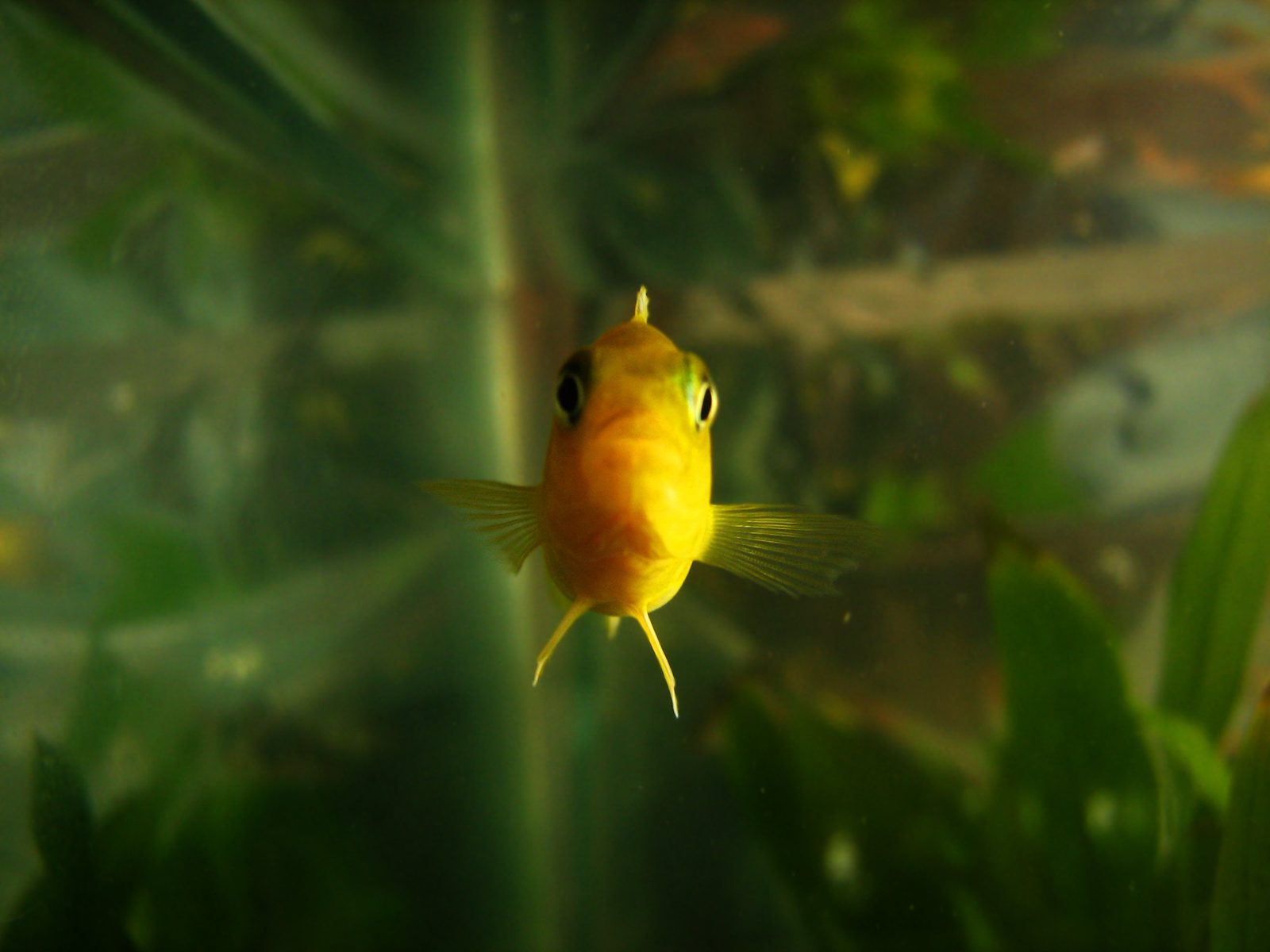
If you have hard, alkaline tap water and you want a tank that is loud with colour and constant activity, mbuna are one of the best things you can do with it. These are the rock-dwelling cichlids of Lake Malawi, small by cichlid standards but packed with personality and attitude, and the water they need is the water plenty of us spend money trying to get rid of. My tap runs around 22 dGH and buffers alkaline, and for a Malawi tank that is a head start most keepers would envy. This guide is how I set one up, and where the honest snags are, because a mbuna tank is brilliant fun but it is not a peaceful community and it is not forgiving of a soft-water mindset.
Free PDF
Free aquarium water cheat sheet (PDF)
Grab the one-page reference for your tank: target ranges for pH, hardness, ammonia, nitrite and nitrate, plus a plain walkthrough of the nitrogen cycle. No fluff, unsubscribe any time.
Free, unsubscribe any time. The download starts as soon as you sign up.
Why hard water is the whole point
Lake Malawi is a vast, ancient, mineral-rich body of water with a stable high pH and hardness. The fish that evolved there expect it. Mbuna do best at a pH somewhere between 7.8 and 8.6 and a general hardness up in the double figures of °dGH, and they want that stable rather than drifting about. If your tap is hard and alkaline, you are handing them their natural chemistry for free.
There is one wrinkle worth knowing. Very hard water does not always read high on the pH meter straight from the tap; mine comes out around 7.2 because it is full of dissolved carbon dioxide. Once it sits in an aerated tank the CO2 escapes and the pH rises on its own, and I firm it up with a carbonate substrate so it holds steady. If you are on soft water this is the fish group that punishes you for it, and you will need to remineralise properly; the remineralise calculator gives you a target, and GH and KH explained is worth reading first so you know which knob does what. If you are still working out whether your supply suits Rift Lake fish at all, my roundup of fish for hard water puts mbuna in context.
The tank and the rockwork
Footprint matters more than volume with mbuna. They live and fight along the rocky shore, so length and floor space are what let them carve out territories. I would treat 240 litres, around 120 cm long, as a sensible starting size for a proper mbuna community. Smaller than that and the aggression has nowhere to dissipate.
Rock is not decoration here, it is the whole structure of the tank. Build a stack of caves, crevices and sightline breaks, ideally piled from the base glass upwards so nothing collapses when a fish digs underneath. Every hidey-hole is a territory boundary, and the more of them you provide, the more the aggression gets spread thin instead of concentrated on one bullied fish. Pair the rock with a fine sand bed; aragonite or coral sand does double duty by gently buffering the water alkaline. My substrate guide covers the choices, and the volume calculator will give you the true litres once all that rock has displaced a chunk of the tank.
Skip the plants, mostly. Mbuna treat soft leaves as salad and dig up anything rooted. If you want greenery, tough options like Anubias or Java fern tied to rock stand a chance, but a classic Malawi tank is rock and sand, and it looks the part.
The book behind Lagonia
The Hard Water Aquarium
My practical guide to working with hard, alkaline tap water instead of fighting it: reading your water, choosing and setting up the tank, and keeping and breeding the fish that thrive in it, from livebearers to Rift Lake cichlids and shell-dwellers.
Ad · Amazon affiliate links. I earn a small commission on a purchase, at no extra cost to you.
Stocking: overstock, and stock all at once
This is the counterintuitive part, and it trips up everyone coming from community tanks. With mbuna you deliberately overstock. A crowded tank spreads aggression across so many targets that no single fish gets hounded to death, whereas a sparse tank lets a dominant male pick one victim and finish it. So you keep them in numbers, and you keep each species as one male to several females to take the heat off the females.
That does not mean ignore the bioload. Overstocking mbuna only works with serious filtration and frequent water changes, because all those fish and all that appetite make a lot of waste. Oversize the filter, read how I choose an aquarium filter, and be honest with yourself using the stocking calculator; my notes on how many fish you can really keep apply here even though mbuna bend the usual rules.
Two practical habits save a lot of grief. Add the fish as juveniles and in one large batch rather than a few at a time, so no established resident treats newcomers as invaders. And rearrange the rockwork whenever you add fish, which resets everyone’s territorial map at once.
Choosing species that will not turn to mush
Mbuna hybridise with depressing ease, and a tank of muddy brown mongrels is the usual fate of a badly planned Malawi setup. The way to avoid it is to pick species that look clearly different from one another, so males are not confused about who is a rival and who is a mate. Roughly one distinctly coloured, distinctly patterned species per niche.
Good, widely available, genuinely hardy starting points:
- Labidochromis caeruleus, the electric yellow, is the gentle one of the group and a superb first mbuna; I have a full profile on electric yellow cichlid care.
- Pseudotropheus and Metriaclima zebras and their relatives bring the blues and barred patterns.
- A yellow-tail or a contrasting Cynotilapia adds a different shape and shade.
Keep the number of species sensible, keep their colours apart, and do not mix mbuna with the calmer Tanganyikans; the pace and temperament clash, and my Tanganyika tank setup guide explains why those lakes are better kept as separate tanks.
Feeding, and the bloat trap
Most mbuna are grazers. In the lake they rasp algae and the tiny life within it off the rocks, so their guts are built for a vegetable-heavy diet. Feed them like carnivores and you invite Malawi bloat, the digestive disease that kills more mbuna than anything else. I feed a quality spirulina or vegetable-based cichlid pellet as the staple, keep protein treats occasional and small, and never overfeed. Little and often beats one big meal, and a slightly hungry mbuna is a healthy one.
If a fish stops eating, hides, hangs at an odd angle and passes stringy white waste, treat bloat as the prime suspect and act quickly; my guide to African cichlid bloat walks through the signs and the response. Prevention really is mostly diet and clean water.
Temperature, upkeep and the honest trade-offs
Run the tank at 24 to 26°C. Size the heater to the real volume with the heater calculator, and if you want the yearly electricity figure before you commit, the running-cost calculator will tell you.
Water changes are non-negotiable with a stocked mbuna tank. I change a good chunk weekly to keep nitrate down, and because my tap already matches the tank chemistry, top-ups and changes do not shock the fish; the water change calculator helps size each one. Quarantine new arrivals before they meet the colony, the same as any tank, using this routine.
Now the honest part. A mbuna tank is not calm, and it is not for delicate community fish. There will be chasing, there will be the occasional torn fin, and now and then a fish that simply does not fit the pecking order and has to be moved on. What you get in return is a tank of impossible colour, fish with real intelligence and character, and a setup that thrives on exactly the hard, alkaline water that makes soft-water hobbyists miserable. For anyone on a supply like mine, that is a trade I will take every time.
Stocking densities, dose rates and hardness bands here are guides from my own hard-water tanks, not laws; tanks and test kits vary, so use them as a sensible starting point and adjust to what you actually measure.