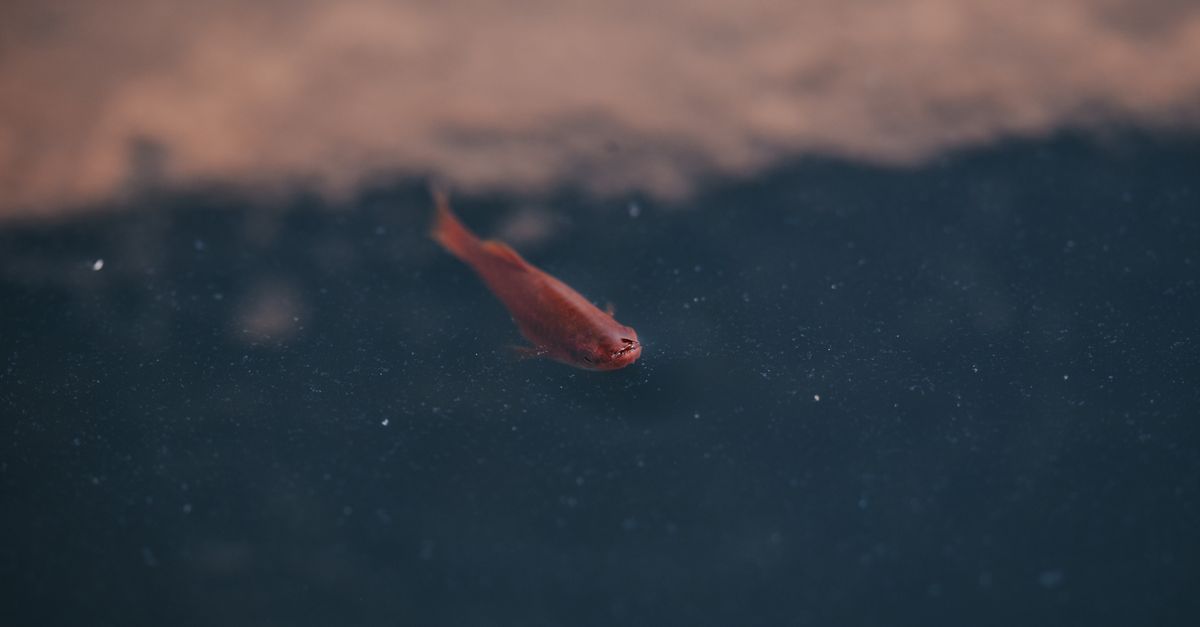
I spent my first year in this hobby quietly at war with my own tap. My water comes out of the mains very hard, around twenty-two to twenty-three degrees of German hardness, calcium dominant, alkaline, with a bit of nitrate already in it before it ever reaches a tank. Like most beginners I assumed this was a fault to be corrected, and I chased the fish I found prettiest online, most of which wanted the exact opposite of what I had. It took a while, and a few disappointments, to accept a simple idea that changed everything: my water was never the problem, my stocking list was. Once I started keeping fish that actually come from hard, alkaline water, the whole hobby got easier and more rewarding. This is the honest breakdown of what thrives in water like mine, what I eventually stopped fighting, and why stocking with your water beats stocking against it every time. I have written separately about the GH and KH side of hard water; this piece is about the fish.
Stop fixing your water and read it instead
Before any of the stocking advice, one mindset shift. Hard, well-buffered water is not a compromise. It is a habitat, and a very forgiving one. High carbonate hardness means your pH sits still month after month, through heavy feeding and the odd missed water change, and fish are far more stressed by a swinging pH than by a stable one that happens to be a little higher than a care sheet prefers. If your tap runs hard, you have been handed one of the most stable starting points in the hobby, and the sensible response is to lean into it rather than dose it away.
So the first job is not shopping, it is measuring. Get a liquid GH and KH test kit, test your tap water and not just your tank, and look up your water company’s quality report for your zone, which is usually free online. That report is how I learned my water is calcium dominant and carries its nitrate from source. Knowing your real numbers tells you more about your future in this hobby than any shop assistant will, and it is the difference between choosing fish that fit and buying fish that struggle.
Livebearers: the obvious, easy win
If your water is hard and you want a tank that more or less runs itself, start with livebearers. Guppies, endlers, platies, swordtails and mollies all evolved in hard, mineral-rich, often alkaline water, and they are at their absolute best in exactly the conditions most people are trying to soften away.
Mollies are the clearest example. In soft water they sulk, clamp their fins and develop the shimmies, a telltale rocking that says the water is wrong. In my hard tap they are bulletproof. I keep a line of endler and guppy hybrids that breed so freely that population control, not water chemistry, is the actual husbandry challenge. That is worth planning for rather than being surprised by, because a tank of livebearers becomes a tank of many more livebearers with startling speed. Before you stock, it is worth running the numbers on how much life the tank can really carry with the stocking calculator, and checking the true volume with the volume calculator, because livebearer tanks tend to fill up from the inside. If you enjoy a colourful, active, self-sustaining tank, hard water plus livebearers is very close to cheating.
Rift Lake cichlids: character in hard water
The African Rift Lakes, Tanganyika and Malawi, are enormous, ancient, mineral-saturated bodies of water sitting high on the pH scale, and their fish want water very like mine straight from the tap. These are my personal favourites, and they are where hard water stops feeling like a limitation and starts feeling like a licence.
Tanganyikans have my heart. I keep a colony of shell-dwelling cichlids, Neolamprologus multifasciatus, tiny fish that live and breed inside empty snail shells and give you full cichlid behaviour in a tank that fits on a shelf. They colonised their shells and started producing fry with no intervention from me beyond food and water changes. I also keep Neolamprologus brichardi, whose extended-family group behaviour, with older siblings helping guard younger fry, is unlike anything else in fresh water.
Malawi cichlids, the mbuna and their relatives, are the other big Rift Lake option and are famous for colour, though they need more space and a plan for their sharper tempers. Both lakes ask for the same thing your hard tap already provides, so if you have the water and the room, a Rift Lake tank is one of the most rewarding things you can keep on it.
Rainbowfish and the invertebrates
Two more groups deserve a mention because they are underrated in hard water.
Rainbowfish, the Melanotaenia species, suit hard, alkaline water well and are genuinely happiest in it. Most sources are clear that they prefer harder, more alkaline conditions and are a poor fit for soft water. They are active, peaceful, glittering shoal fish that colour up more the older they get, and they are criminally overlooked for larger community tanks running on hard tap. If you have the length for a shoal, they earn their place.
Then the invertebrates. Snail shells and shrimp exoskeletons are built from calcium carbonate, and in soft water they slowly pit and erode. In hard water the opposite happens. My ramshorns, nerites and Malaysian trumpet snails grow thick, glossy shells, and my Neocaridina shrimp, the cherry shrimp and their many colour forms, moult cleanly and breed readily with no mineral supplement ever added. Hard water is exactly what these animals want, and it shows.
The ones I stopped fighting
Here is the part beginners least want to hear, and the part that saved me the most grief once I accepted it. Some fish are a poor fit for water like mine, and no amount of enthusiasm changes that. Pretending otherwise buys you slow declines and disappointment.
Most wild-type South American characins are the first group I let go of. Cardinal tetras and many of the more delicate tetras come from extremely soft, acidic forest streams. Tank-bred neons and similar farmed strains are more adaptable and often cope in moderately hard water, but at twenty-two degrees you are asking a lot, and breeding them is off the table. Discus are the extreme end of the same story, a soft, warm, acidic-water fish that is a genuine commitment even for people whose tap suits them, and a losing battle in liquid limestone.
Dwarf cichlids like Apistogramma are next. They may survive in hard water, but they rarely thrive, colour up properly or spawn in it. Most Corydoras catfish prefer softer water too, and while the common farmed species tolerate a fair range, very hard water is not where they are at their best. And the Caridina shrimp, the crystal reds and bee shrimp, are simply the wrong project for hard tap. They want soft, acidic conditions and will fade slowly in anything else, so I keep Neocaridina instead, which are just as pretty and actually built for my water.
None of this means those fish are forbidden. It means they are an advanced project with a real, ongoing cost attached, and that cost is reverse osmosis.
When RO water actually earns its keep
Reverse osmosis strips your tap water back to almost nothing, and you then rebuild it with remineralising salts to whatever profile you want. Done properly it works, and it is the honest route to keeping soft-water species in a hard-water region. It is also a permanent commitment. Every water change, forever, means producing, storing and reconstituting water, and the unit wastes several litres of tap for every litre it makes.
That effort is genuinely worth it in a few cases: breeding soft-water species that will not spawn otherwise, keeping wild-caught fish whose bodies never adapted to captivity chemistry, or serious Caridina shrimp keeping. If one of those is truly your passion, buy the unit with open eyes and run it properly. If you do go that way, the RO mix calculator takes the guesswork out of blending RO and tap to a target hardness, which is the difference between a stable soft-water tank and a chemistry experiment that lurches every week.
For the large majority of hobbyists, though, RO is money and effort spent making your tanks more fragile. You trade a stable, self-buffering system for one where you personally own every parameter. I looked hard at buying an RO unit in my first year, and I am glad I never did.
Stock with your water, not against it
Somewhere along the line the hobby absorbed the idea that soft, acidic water is the default and everything else needs correcting. It is not true. My tanks run on untreated hard tap water that plenty of care sheets would call unusable, and they are full of breeding shell-dwellers, swarming livebearer fry, glittering rainbowfish and snails with shells like polished stone.
The recipe is boring and it works. Test your tap once, read your water report, then choose fish that call that chemistry home. Admire the soft-water species in other people’s tanks, or commit properly to RO if one of them is a real passion, but do not fight your own water day after day for a fish that will only ever tolerate it. The easiest, healthiest tank you will ever keep is the one your tap was quietly trying to give you all along. I stopped fighting mine, and the hobby has been better ever since.