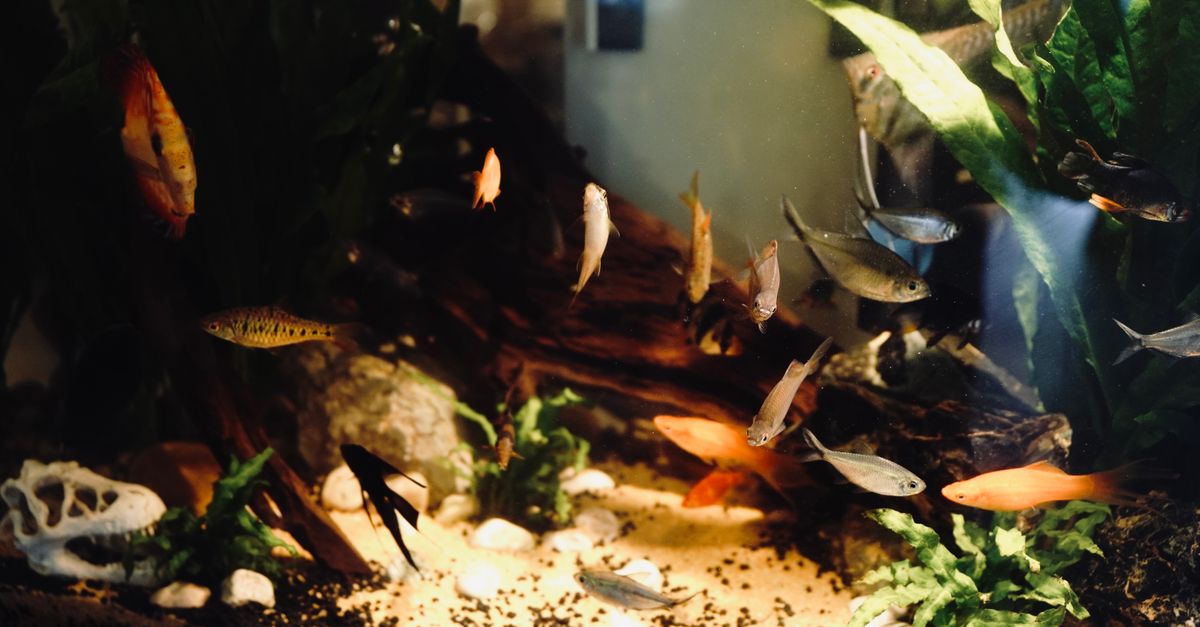
Cloudy water is probably the most common problem I get asked about, and it is also one of the most misdiagnosed. The panicked new keeper does a massive water change, the cloud comes back worse the next morning, they change more water, and around it goes. I have run a lot of tanks over the years, from shell dweller setups to outdoor tubs, and I have seen every flavour of cloudiness there is. The good news: the colour and timing of the cloud tell you almost exactly what is going on, and most of the fixes cost nothing. The bad news, if you can call it that: the most common cause is fixed by doing less, not more, and doing less is genuinely hard when your tank looks like dishwater.
Free PDF
Free aquarium water cheat sheet (PDF)
Grab the one-page reference for your tank: target ranges for pH, hardness, ammonia, nitrite and nitrate, plus a plain walkthrough of the nitrogen cycle. No fluff, unsubscribe any time.
Free, unsubscribe any time. The download starts as soon as you sign up.
Start with the colour, then the timing
Before you touch anything, look at the water and answer two questions. Is the cloud white and milky, green, or just a general dull haze? And when did it start, right after setting up the tank, a few days into a new tank’s life, after stirring up the gravel, or gradually over weeks in an established tank?
Those two answers narrow it down to one of four causes, and each has a completely different fix. Applying the wrong fix is worse than doing nothing, because two of the standard panic responses (big daily water changes and scrubbing everything clean) actively feed the most common type of cloud. So diagnose first.
White or milky cloudiness: a bacterial bloom
If your tank is a few days to a few weeks old and the water has gone white, grey or milky, almost like someone poured a splash of skimmed milk in, you have a bacterial bloom. This is by far the most common cause of cloudy water and it catches nearly everyone on their first tank. It caught me on mine.
What is happening is a population explosion of heterotrophic bacteria, free floating in the water column. These are not the beneficial filter bacteria you grow while cycling a new tank; those live attached to surfaces and process ammonia. Heterotrophs eat dissolved organic material, the soup of nutrients that a new tank is full of: leached compounds from new substrate and wood, uneaten food, dying plant matter, fish waste that nothing is processing yet. In a mature tank, established colonies on the filter media and substrate mop this up invisibly. In a new tank there is a banquet and no established residents, so opportunists bloom in open water, and there are so many of them that the water turns visibly white.
The same thing can happen in an established tank if you suddenly hand the heterotrophs a feast. Heavy overfeeding will do it. So will digging up a mature substrate during a rescape (I have clouded a five year old tank this way), or an overzealous cleaning session where you scrub the filter media and gravel vac the entire tank on the same day, killing off the attached colonies and releasing a pulse of organics at once.
Here is the part beginners hate. The fix is patience. A bacterial bloom clears on its own, usually within one to two weeks, once the free floating bacteria run out of easy food and the attached colonies in your filter mature enough to outcompete them. In the meantime:
- Do not do big daily water changes. This is counterintuitive, but fresh water does not remove the bloom (the bacteria repopulate within hours) and in a new tank it can slow the maturing of your biofilter. You are essentially resetting the race the good bacteria need to win. A normal weekly change is fine. Daily fifty percent changes are not helping.
- Feed less. Every flake that goes uneaten is fuel for the bloom. During a bloom I feed lightly once a day, or skip a day entirely. Healthy fish are completely fine with this.
- Do not clean the filter. The attached bacteria in there are the long term solution. Rinse nothing, replace nothing, and never swap out the media because it “looks dirty” mid bloom.
- Keep the air moving. Dense blooms consume oxygen, especially overnight. Make sure your filter outlet is agitating the surface, or add an airstone. This protects the fish while you wait.
Then wait. It genuinely does clear, and when it does, it tends to clear fast, sometimes overnight. A tank that has been through a bloom and come out the other side is more stable than it was before, because the bloom is really a sign of a filter ecosystem sorting itself out.
The book behind Lagonia
The Hard Water Aquarium
My practical guide to working with hard, alkaline tap water instead of fighting it: reading your water, choosing and setting up the tank, and keeping and breeding the fish that thrive in it, from livebearers to Rift Lake cichlids and shell-dwellers.
Ad · Amazon affiliate links. I earn a small commission on a purchase, at no extra cost to you.
Green water: an algae bloom
Green cloudiness is a different organism entirely. This is a bloom of free floating single celled algae, and it is driven by the same two things that drive all algae: light and nutrients. Usually it takes both. A tank getting direct sunlight through a window is the classic trigger, and I would put money on sunlight being involved any time someone tells me their tank “suddenly went green in spring”. Long lighting periods (ten hours plus), strong lights over an unplanted tank, and high nitrate or phosphate from overfeeding and infrequent maintenance all stack the odds.
The frustrating thing about green water is that water changes barely touch it. You remove half the algae with the old water, the remaining half has fewer competitors and plenty of light, and it is back to full density within a day or two. People do this cycle for weeks. Skip it. The fixes that actually work all attack light or nutrients:
- Cut the light. Drop your lighting to six hours a day on a timer, and block any sunlight hitting the tank, even an hour of direct sun is enough to sustain a bloom. For many tanks this alone solves it within a week or two.
- A full blackout. The nuclear option, and it works. Lights off, tank wrapped in blankets or cardboard so no light gets in at all, for three days. No peeking, because even brief light lets the algae recover. Fish are fine in the dark for three days; skip feeding or feed once, minimally. Plants sulk slightly and recover. The algae, which has no reserves, mostly dies. Do a water change afterwards to remove the dead material.
- Outcompete it. Fast growing and floating plants (hornwort, water sprite, frogbit, salvinia) strip nitrate and phosphate from the water faster than algae can, and floaters shade the water column as a bonus. This is my preferred long term fix because it also prevents recurrence.
- A UV steriliser. An inline UV unit kills free floating algae reliably and usually clears green water within days. It costs money and treats the symptom rather than the cause, but it works, and for a display tank with a stubborn recurring bloom it is a reasonable purchase.
- Daphnia. A slightly eccentric option, but green water is exactly what daphnia eat, and a culture added to a fishless or lightly stocked tank will graze it clear. In a stocked tank your fish will eat the daphnia before the daphnia eat the algae, so this one is situational. I keep daphnia cultures going outdoors partly for this reason; green water is free daphnia food, not a crisis, once you have somewhere to put it.
Address the cause afterwards or it returns: shorter photoperiod, less food, more plants, regular maintenance.
Cloudy immediately after filling: substrate dust
If the water clouded the moment you filled the tank, or within the first day, and it looks grey or slightly tea coloured rather than milky, it is almost certainly dust from the substrate. Sand, gravel and especially aquasoils carry fine particles, and however well you think you rinsed them, some dust always escapes on the first fill.
This one is completely harmless and needs no diagnosis beyond the timing. Run the filter and the mechanical media will pull the particles out, typically within a few hours to a day. Filter floss or fine wool in the filter speeds it up noticeably. If the water is so thick you cannot see the back glass, it is sometimes quicker to drain, rinse the substrate properly in buckets until the water runs clear, and refill. Since there are no fish in a tank this new (there should not be, it is not cycled yet), there is no harm in starting again.
The persistent haze: too much going in, not enough coming out
The last type is the one established tanks get. Not a dramatic white cloud or green soup, just water that never looks quite crisp. A dull haze that returns a day or two after every water change. This is a symptom of organic load: the tank is receiving more food and waste than its filtration and maintenance can process, so there is always a standing population of bacteria and suspended particles in the water.
The causes are unglamorous. Too many fish, too much food, a filter that is undersized or overdue for a rinse, a deep bed of mulm in the substrate. The fixes are equally unglamorous, which is why people would rather buy a bottle of “water clarifier” (a flocculant that clumps particles so the filter catches them, treating the symptom for a few days while the cause carries on):
- Feed less. Most tanks I see are fed at least double what the fish need. Everything uneaten becomes haze.
- Look honestly at stocking. Run your tank through the stocking calculator and see whether the bioload is simply beyond what the volume and filter can carry.
- Improve filtration, either with a larger filter, better media, or simply more regular rinsing of the existing one in old tank water.
- Get the maintenance rhythm consistent. A weekly water change with a light substrate vac beats a heroic monthly deep clean every time.
Crisp water in a mature tank is not a product you can buy. It is the visible result of inputs and processing being in balance.
When to actually worry
Cloudy water itself is rarely an emergency. The fish do not care that you cannot see them clearly. But if the cloudiness comes with fish gasping at the surface, sitting on the bottom breathing hard, or going off their food, you are looking at a different problem wearing a cloudy disguise. Dense bacterial blooms can pull oxygen out of the water overnight, and a new tank cloudy with a bloom may also be spiking ammonia because it was never cycled. Test for ammonia and nitrite immediately; if either reads above zero, that is the real problem, and it needs water changes now regardless of what I said about patience above. Add surface agitation for oxygen, and deal with the cloud later.
Otherwise, match the colour to the cause, apply the one fix that fits, and give it time. Nearly every cloudy tank I have ever seen cleared with less intervention than the owner wanted to throw at it.